
Contents
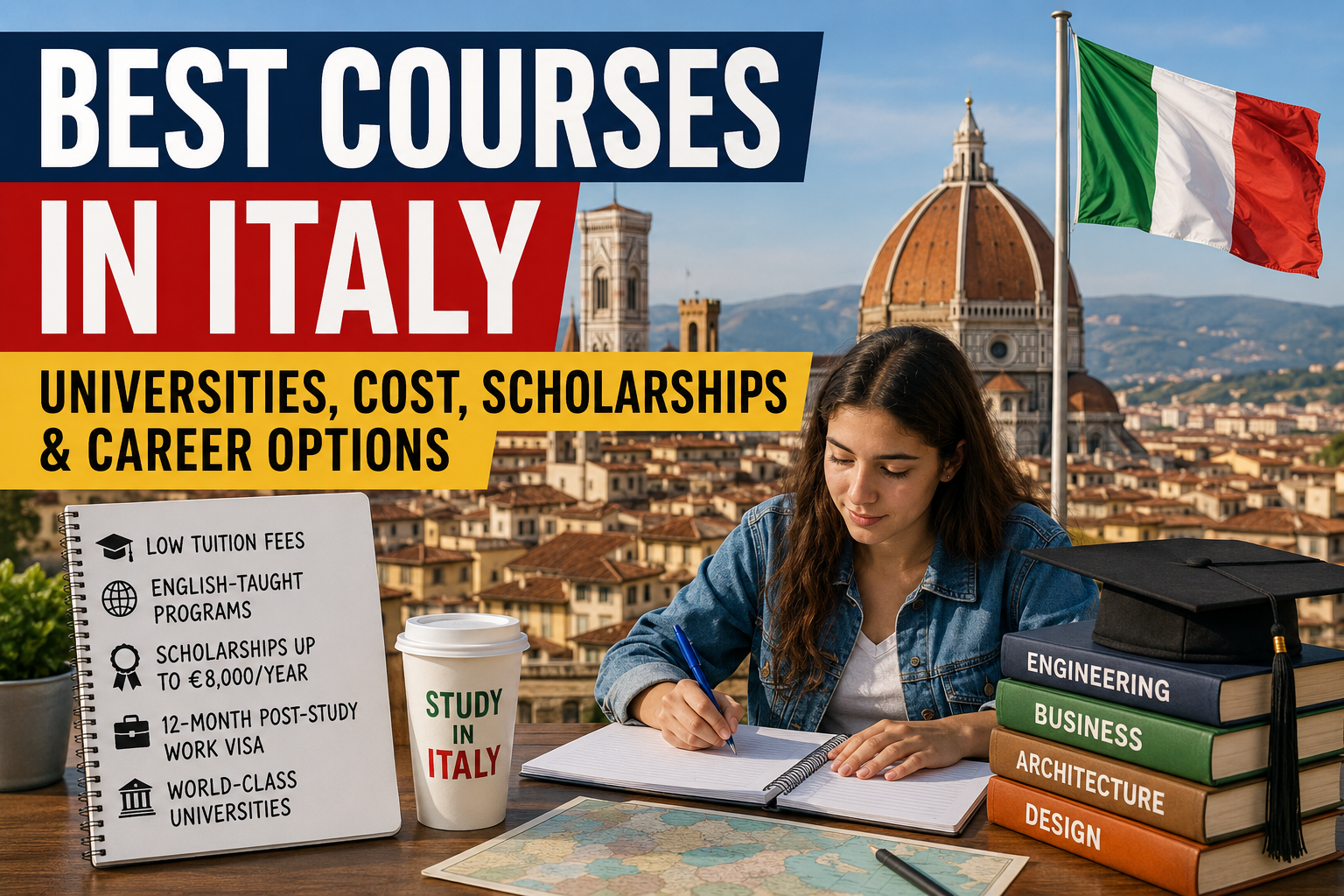
Italy draws international students not just for its history, but for a genuinely wide spread of courses in Italy taught in English, backed by low tuition and globally recognised universities. If you're trying to figure out which course to pick, which university offers it, and what it will cost, here's the full picture.
Why Do Students Choose Italy for Higher Education?
Italian public universities charge some of the lowest tuition fees in Western Europe, and several — including the University of Bologna, Sapienza University of Rome, and Politecnico di Milano — rank consistently among the world's best. Add a growing number of English-taught programs, government and university scholarships, and a 12-month post-study work visa, and it's easy to see why Italy has become a serious alternative to the UK or US for students who want quality without the debt.
What Are the Best Courses in Italy?
Course choice usually comes down to two things: what the country is known for, and where the job market is heading. Italian universities group their English-taught programs into four broad areas — Business, Engineering, Health Sciences, and Social Sciences — and each one leads somewhere different.
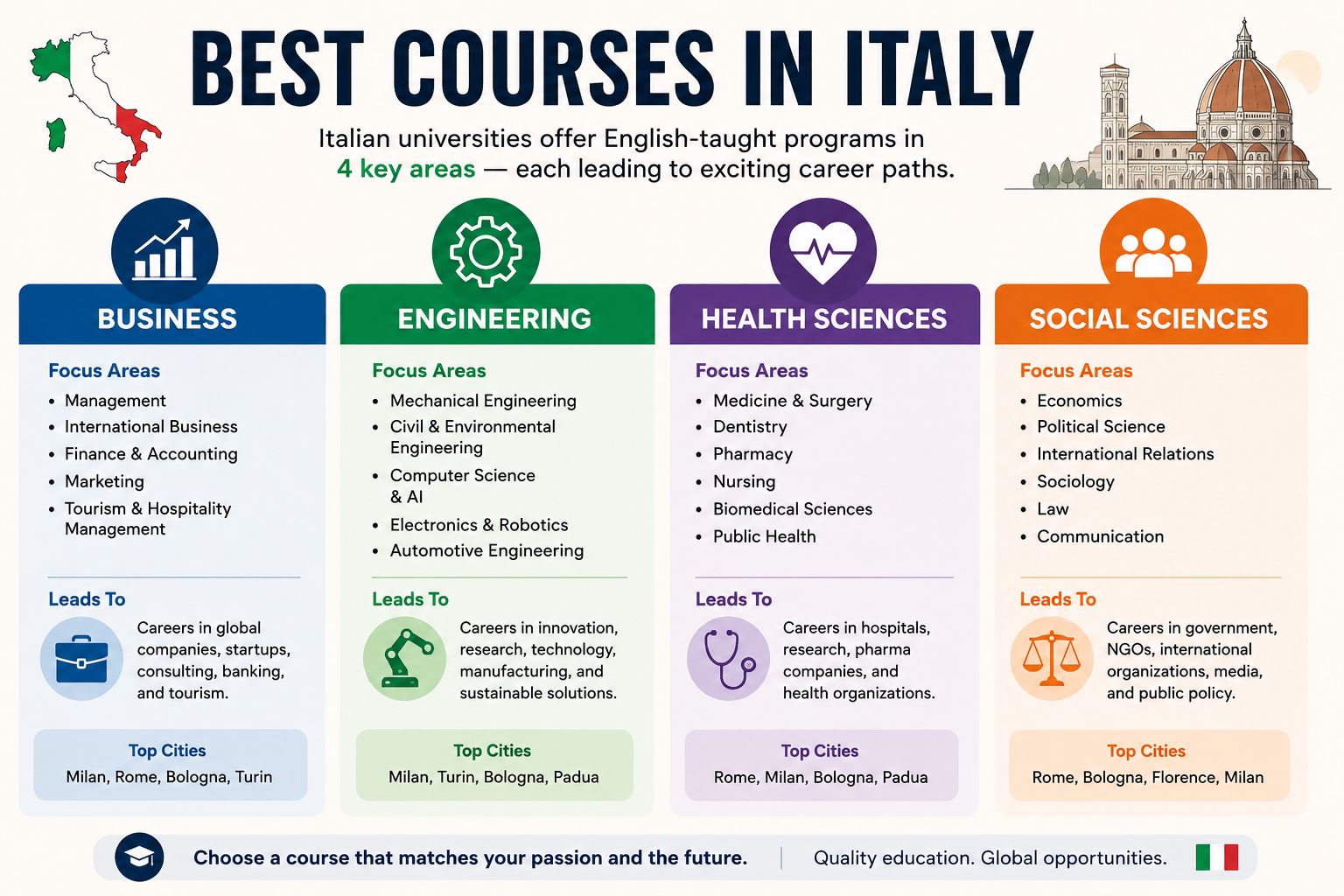
A few disciplines don't map neatly into the four categories above but are still worth knowing about: Fashion Design & Luxury Brand Management (Milan, one of the world's four fashion capitals), Architecture & Design, and Culinary Arts & Hospitality Management — all built around industries Italy genuinely leads in.
Example Programs You Can Apply To
Which Degree Level Should You Apply For?
Most non-EU applicants aim for Bachelor's or Master's programs, since these are the ones most commonly taught fully in English.
Which Universities in Italy Offer the Best Courses?
How Much Do Courses in Italy Cost?
Tuition depends heavily on whether the university is public or private:
Medicine, engineering, and design programs tend to sit at the higher end of these ranges. On top of tuition, budget for living costs:
Most students should plan for €700–€1,200/month in total living expenses, more in Milan and Rome.
Can You Study in Italy for Free?
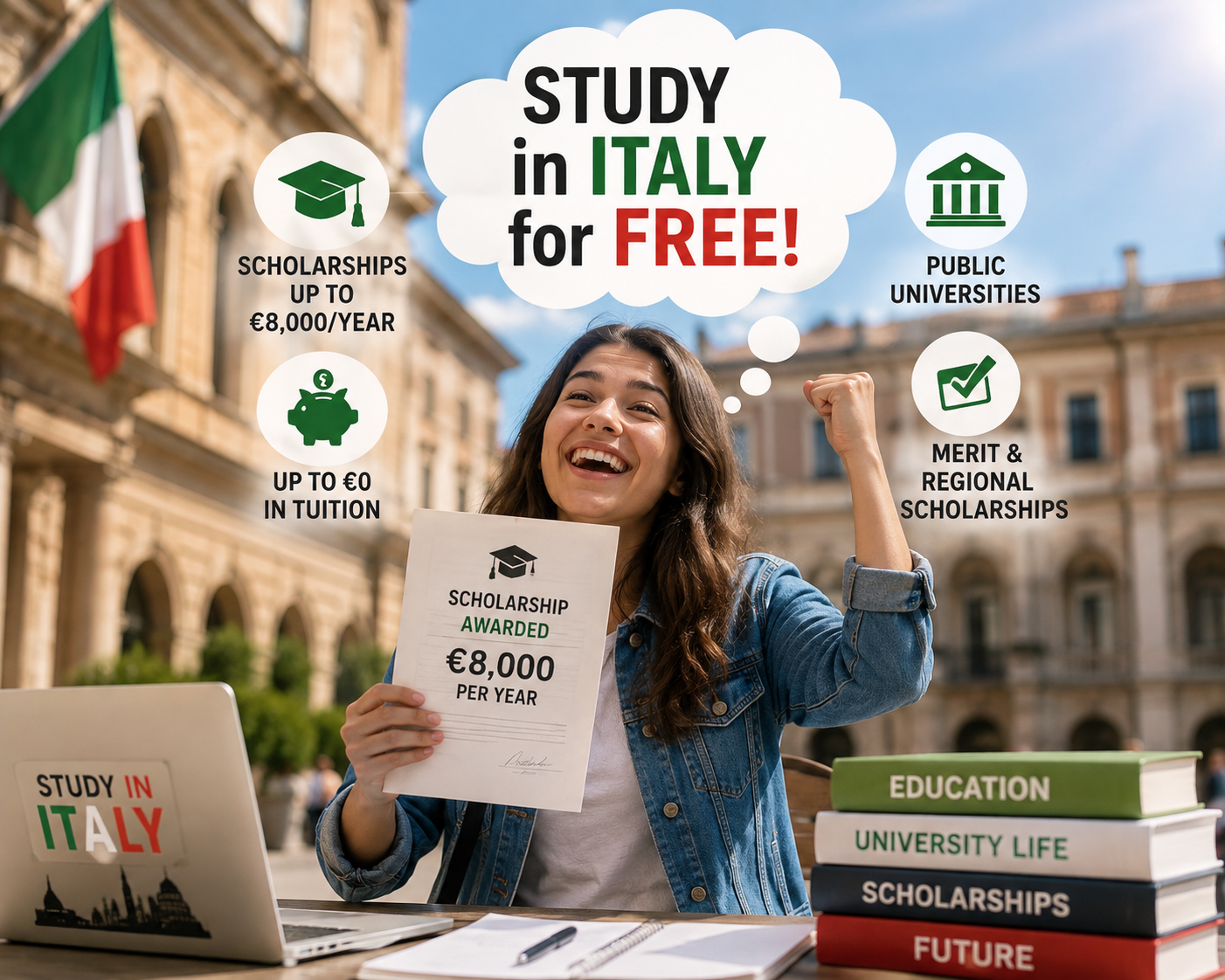
More often than people expect. A large share of programs at Italian public universities carry regional or merit-based scholarships worth up to €8,000/year, and some students end up paying close to €0 in tuition once these are applied — final awards are decided by the regional authorities, not the university itself, so eligibility depends on your income bracket and academic profile. It's worth checking scholarship eligibility for a course before ruling it out on cost alone.
What Are the Eligibility Requirements for Courses in Italy?
Documents fall into two buckets: what every applicant needs, and what only applies to certain courses.
Always required:
- A clear scan of your passport photo page
- Complete, up-to-date academic transcripts
Only if it applies to your course:
- Portfolio – Arts, Architecture, Landscape, or Urban Engineering programs
- IELTS/TOEFL – needed later for your visa; not required at application stage if you already studied in English
- Letter of Recommendation – only if the specific university asks for it
- IMAT score – only for Medicine & Dentistry applicants
Non-EU students also need proof of funds — generally around €460/month — and health insurance to apply for a D National Visa.
How to Choose the Right Course in Italy?
- Match the course to your interests, not just rankings — motivation matters more over 3–5 years than prestige.
- Check the language of instruction and be honest about your current proficiency.
- Compare tuition against your budget, factoring in the city's cost of living.
- Look at entry requirements early — portfolio and entrance-exam courses need months of prep.
- Research post-graduation demand for that field, both in Italy and back home.
What Career Opportunities Are There After Studying in Italy?
While you study, international students can work up to 20 hours a week (1,040 hours a year) on a student permit — average pay sits around €8–9/hour (roughly €720/month), enough to cover rent and groceries in most cities. Tutoring, language-assistant roles, and research work pay more, often €13–18/hour. Semester breaks allow full-time hours.
After graduation, the path runs in two steps:
- Job-Search Residence Permit – apply within 12 months of graduating; valid for up to 12 months while you look for work or launch a business.
- Work Permit – convert your job-search permit once you sign an Italian employment contract; your employer handles most of the paperwork.
Stay on continuously for 5 years (study + work time both count) and you can qualify for the EU Long-Term Residence Permit — Italy's route to permanent residency, which also opens up work rights across the Schengen Area without needing extra visas for short stays.
Strongest hiring sectors by course area include fashion and luxury design (Gucci, Prada, Versace, Armani), automotive and mechanical engineering (Ferrari, Lamborghini, Ducati), business and tourism, and healthcare — largely mirroring Italy's own industrial strengths.
FAQs
Which course is best to study in Italy?
Fashion design, architecture, and engineering are Italy's strongest fields, but "best" depends on your career goals and budget.
Are English-taught courses available in Italy?
Yes — most top universities offer a growing number of Bachelor's and Master's programs fully in English, particularly in business, engineering, and design.
Can I study in Italy without knowing Italian?
Yes, if you choose an English-taught program. Italian isn't required for admission, though it helps with daily life.
What documents are required to apply for courses in Italy?
A passport scan, academic transcripts, and — depending on your course — a portfolio, IMAT score, or letter of recommendation.
Which city in Italy is best for international students?
Milan for business and fashion, Bologna for a classic university-town experience, and Rome for humanities, health sciences, and law.
What are the best short-term courses in Italy?
Foundation and pre-Master's programs (6–12 months) in language, business prep, or portfolio-building are the most common short courses for international students.
Can international students get free tuition in Italy?
Yes, in many cases. Regional and merit-based scholarships worth up to €8,000/year are available at public universities, and eligible students can end up paying close to €0 in tuition — awards are decided by regional authorities based on income and academic profile.
Final Takeaway
Study in Italy for the real reason: tuition under €4,000/year, and scholarships up to €8,000/year that can bring it close to zero.
Pick your course first, then your city — health sciences in Rome, engineering in Turin and Milan, business in Rome and Milan.
Budget €700–1,200/month for living costs, and only prep the extra documents your course actually needs — portfolio, IMAT, etc.
After graduation: 12 months to find work, then a work permit, then a path to EU residency in 5 years.
Ready to Find Your Course in Italy?


.jpeg)