.jpeg)

Contents
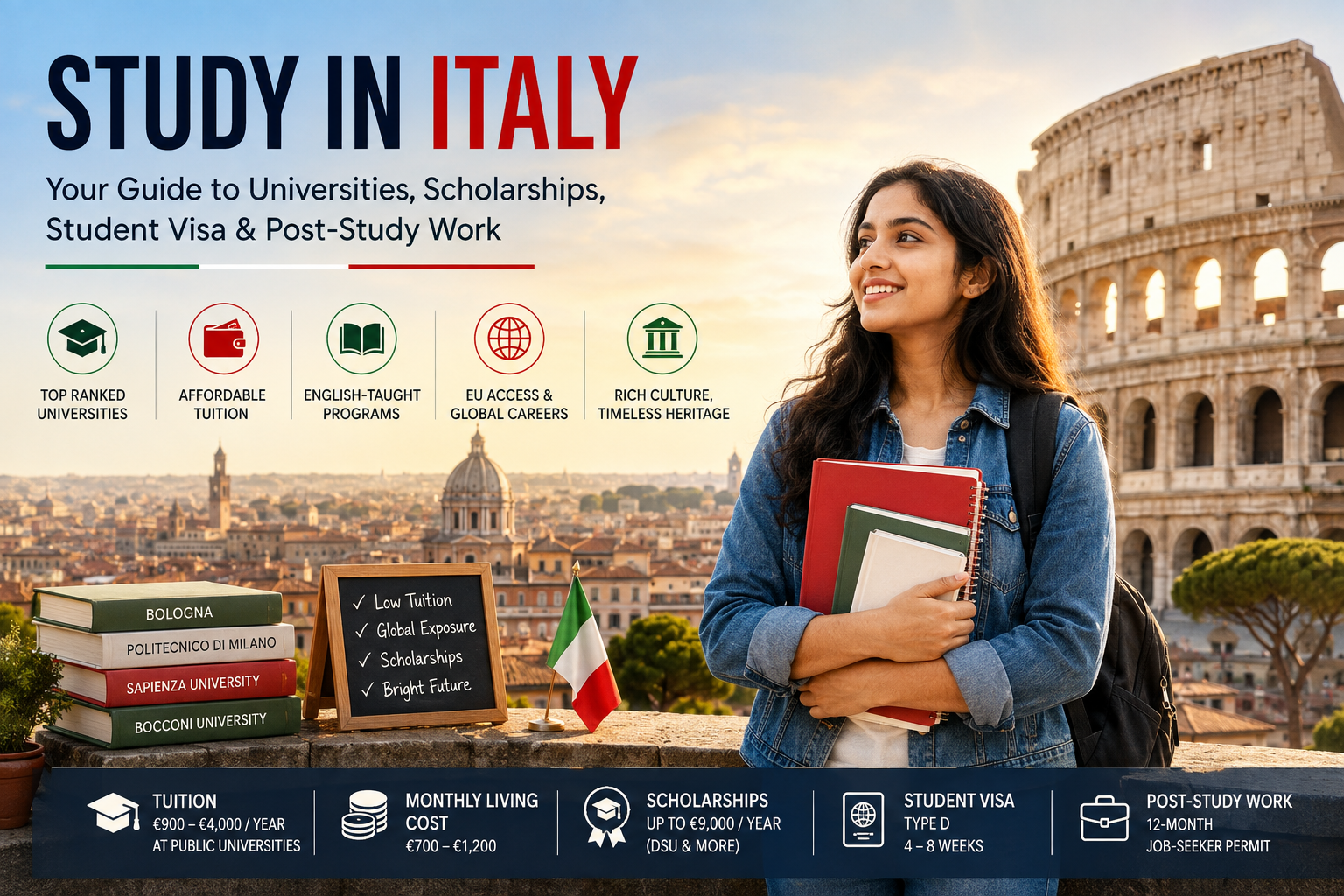
Italy doesn't just teach architecture — it hands you centuries of it to learn from. You can study the Colosseum's engineering one day and sketch a modern building in Milan the next. That mix of old and new is what makes Italy one of the best places in the world to study architecture, whether you're a international student starting with a bachelor's or specialising with a master's.
This guide breaks down the universities worth applying to, how the bachelor's and master's structure actually works, what it costs, and what comes after graduation — internships, jobs, and licensing.
Why Do Students Choose Italy for Architecture?
Three things repeat across almost every applicant's reasoning:
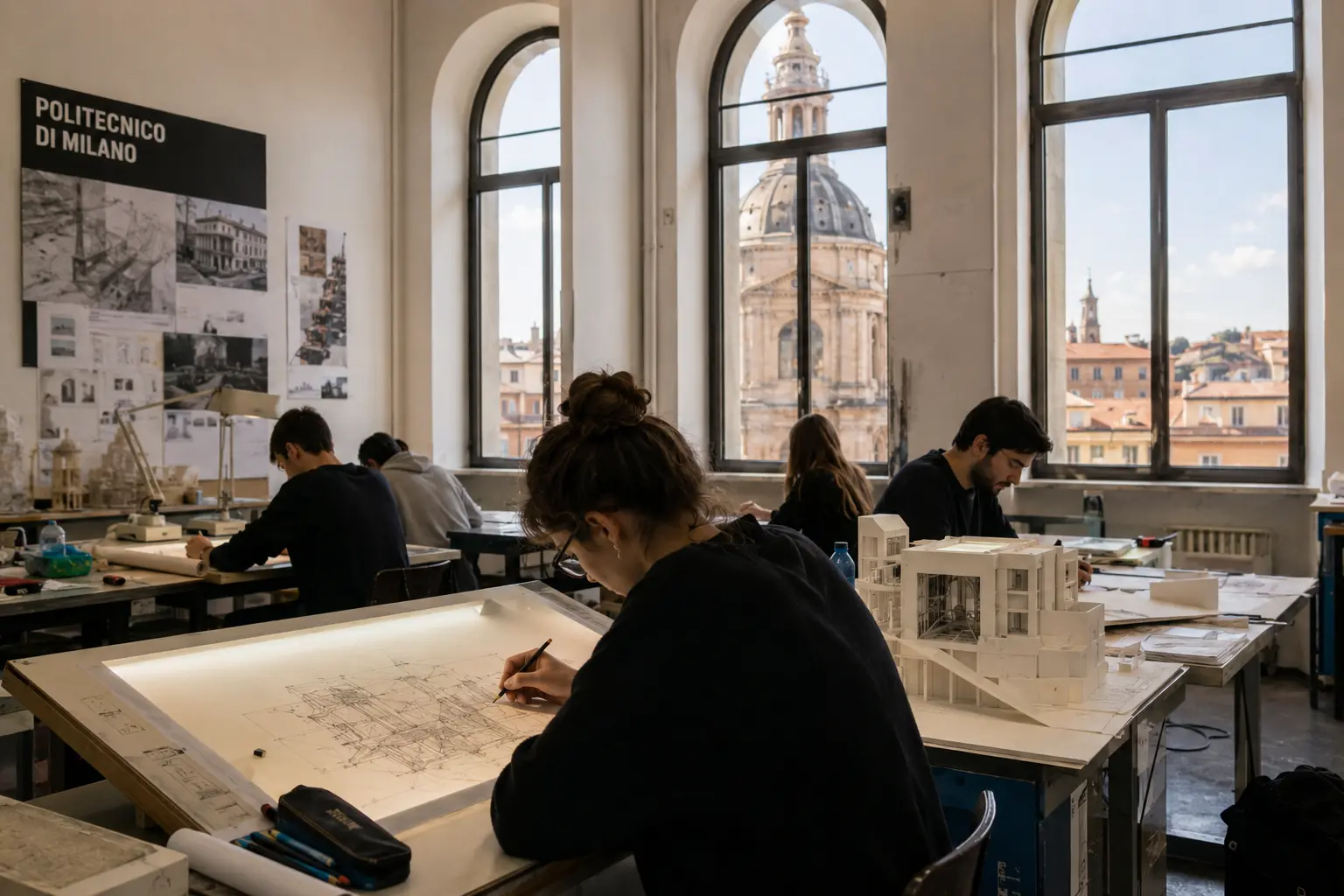
- Design pedigree — schools like Politecnico di Milano are consistently ranked among the world's top 10 for architecture (QS World University Rankings by subject).
- Low tuition at public universities — public institutions charge a fraction of UK/US tuition, with fee waivers available through regional scholarships.
- Growing number of English-taught programs, so a working knowledge of Italian is helpful but no longer a hard requirement at most top schools.
What Are the Best Architecture Universities in Italy?
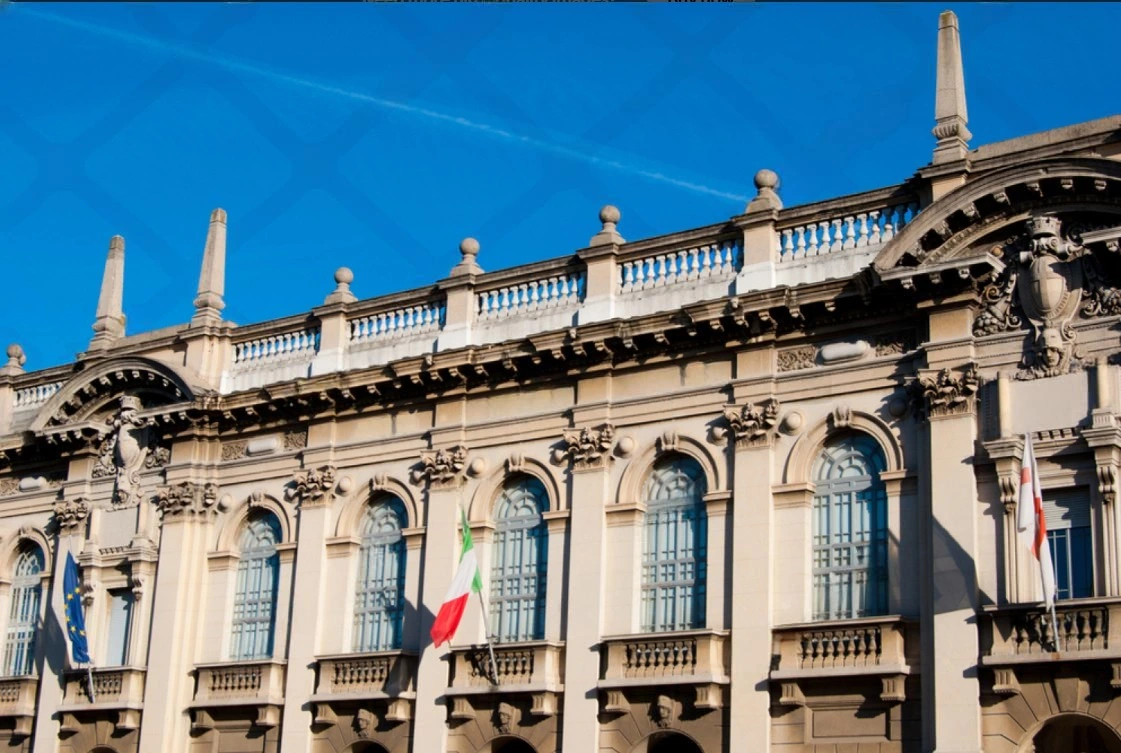
"Best architecture colleges in Italy" and "best architecture universities in Italy" usually point to the same shortlist — the difference is naming. Public institutions are called Università or Politecnico; private, design-focused schools (NABA, IED, Domus Academy, POLI.design) are the ones people informally call "colleges." Both routes lead to recognised qualifications, but public universities carry the professional accreditation needed for licensure in the EU.
Among these, Politecnico di Milano and Politecnico di Torino are the two most frequently cited as the top architecture universities in Italy, both ranking inside the global top 50 for the subject.
What Courses Does Italy Offer?
Italian architecture education follows three tracks:
- Bachelor of Architecture in Italy (Laurea Triennale) — 3 years. Covers design theory, technical drawing, history and urban studies. Entry usually requires clearing the national ARCHED entrance exam.
- Master in Architecture (Laurea Magistrale) — 2 years. Specialisation in urban planning, restoration, sustainable design or landscape architecture, built around studio-based thesis work.
- Single-Cycle Master's (Laurea Magistrale a Ciclo Unico) — 5 years combining both stages in one uninterrupted program, common at public universities and aligned with EU professional-recognition requirements.
Short, non-degree architecture courses (2 weeks–6 months) are also offered by Domus Academy, NABA, IED and Politecnico's summer schools for working professionals who want a specific skill rather than a full degree.
Can You Do a Master of Architecture in Italy in English?
Yes — and this is where most applicant confusion actually starts, because course listings often don't say clearly which stage is English-taught. Politecnico di Milano, Politecnico di Torino, Sapienza, IUAV Venice and University of Florence all run Master's-level architecture programs entirely in English, aimed at international cohorts. Bachelor's-level English options exist but are fewer — many undergraduate programs are still Italian-medium with select English tracks, so it's worth confirming the language of instruction per program, not per university.
What Do You Need to Apply?
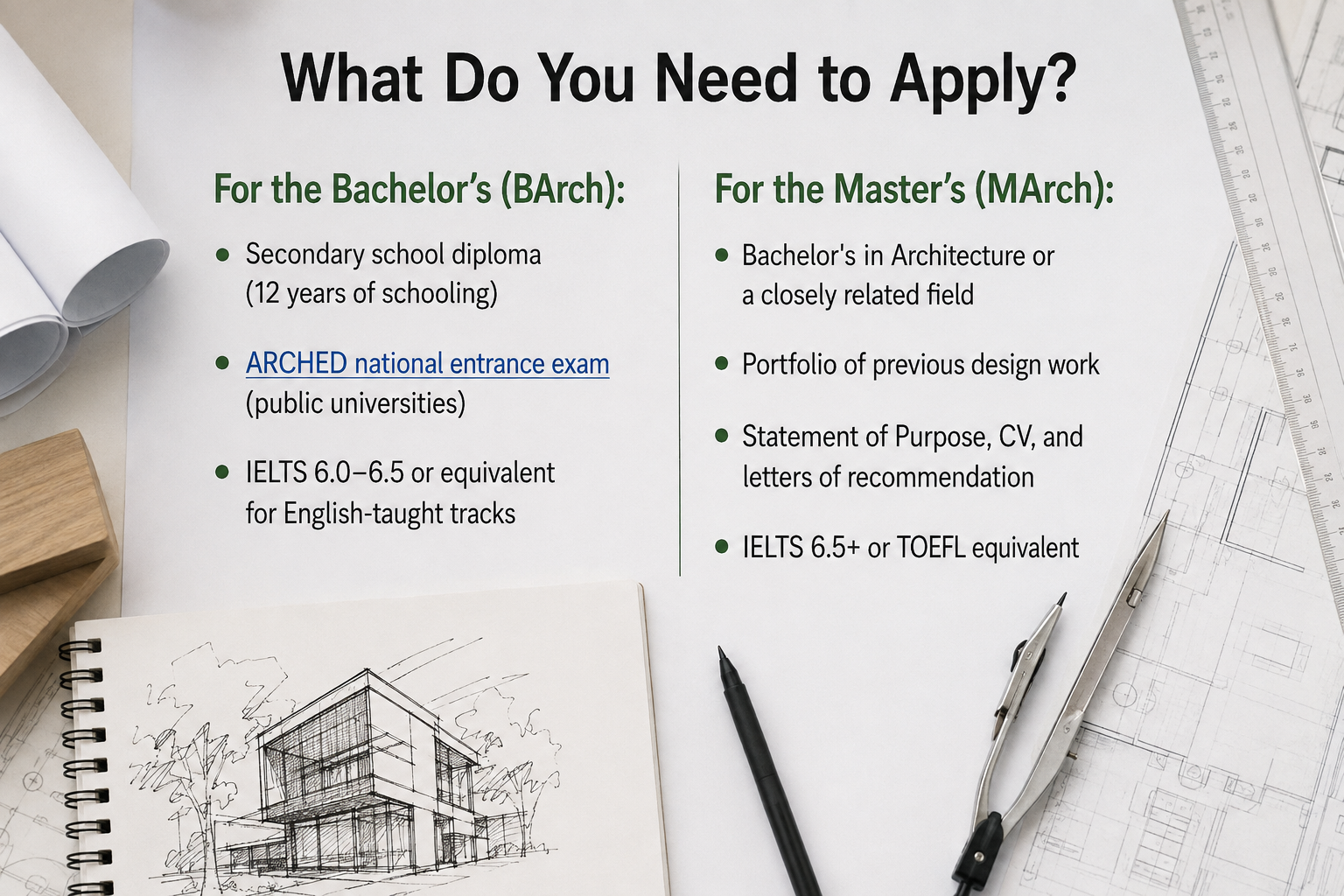
For the Bachelor's (BArch):
- Secondary school diploma (12 years of schooling)
- ARCHED national entrance exam (public universities)
- IELTS 6.0–6.5 or equivalent for English-taught tracks
For the Master's (MArch):
- Bachelor's in Architecture or a closely related field
- Portfolio of previous design work
- Statement of Purpose, CV, and letters of recommendation
- IELTS 6.5+ or TOEFL equivalent
Unlike the bachelor's stage, most master's programs don't require a national entrance exam — the portfolio and academic record carry the most weight.
When Should You Apply?
Italian universities run on a September intake, with most application portals opening in early spring and closing between May and July depending on the university and nationality quota. Non-EU applicants have one extra step most guides skip: pre-enrollment through Universitaly, the Ministry-run portal that verifies your documents before you can apply for a student visa — this typically needs to be done a few months ahead of the university's own deadline, so it's worth starting well before the program-specific cutoff rather than after.
How Much Does it Cost?
Public universities remain the more affordable route:
Scholarships worth checking before you commit: DSU regional scholarships (tuition waiver + living-cost support), Invest Your Talent in Italy (government-funded, partial-to-full tuition), and merit scholarships offered directly by Politecnico di Milano.
Are There Internships in Italy for Students?
Yes, and they're a bigger part of the Italian system than most guides mention. Most Master's programs build a supervised tirocinio (internship) directly into the final year, placing students with architecture firms, urban-planning offices, or heritage-restoration studios — often the same firms that later hire graduates. Milan and Turin have the highest concentration of firms taking on international interns, given their design-industry density. Outside the mandatory academic placement, students can also apply independently through firm websites, Erasmus+ traineeship listings, and university career offices.
What Architecture Jobs Are Available After Graduating in Italy?
A degree from an Italian architecture school opens roles both inside Italy and across the EU, since Italian qualifications align with EU Directive 2005/36/EC on professional recognition:
One step people often skip in planning: to practise as a licensed Architetto in Italy, graduates must pass the Esame di Stato and register with the local Ordine degli Architetti — the degree alone qualifies you academically but not professionally.
FAQs
Is Italy good for studying architecture?
Yes — it combines globally ranked schools (Politecnico di Milano and Torino both sit in the world top 50 for architecture), low public-university tuition, and direct access to centuries of architectural history as a live case study.
What is the difference between a bachelor's and master's in architecture in Italy?
The bachelor's (3 years) builds foundational design and technical skills; the master's (2 years) is where specialisation — sustainable design, restoration, urban planning — and professional-level studio work happen. Many public universities also offer a combined 5-year single-cycle master's.
Can I study a master's in architecture in Italy fully in English?
Yes, at Politecnico di Milano, Politecnico di Torino, Sapienza Rome, IUAV Venice, and University of Florence, among others — though it's worth confirming the language track for the specific program, not just the university.
How much does an architecture degree in Italy cost?
Public universities charge €1,000–€3,500 a year depending on level; private schools like NABA or Domus Academy range from €6,000–€25,000 a year.
Do Italian architecture programs include internships?
Most master's programs include a supervised internship in the final year, and students can also apply independently to firms or through Erasmus+ traineeships.
Final Takeaway
If you're serious about architecture, that's hard to beat. Italy isn't just a place with pretty buildings — it's a place that actually teaches you how buildings are made, using the real thing as your textbook.
Start with what matters for you: public or private school, English or Italian program, bachelor's or straight into a master's. Once that's clear, the rest — exams, portfolio, visa steps — is just paperwork you work through one at a time. Thousands of students do it every year, and you can too.
From choosing between Politecnico di Milano and Politecnico di Torino to sorting out portfolios, entrance exams, and visa timelines — get free, personalised guidance to plan your architecture degree in Italy the right way.


.jpg)