

University of Cassino (UNICAS): Fees, English Courses and the Entry Rules That Decide Your Application
Built from the university's own admission calls, not last year's fee tables.

Free check
Less than 2 minutes
Limited intake, 1:1 support
international students trusted us
tuition for qualifying students
English-taught programmes
Italian regions covered
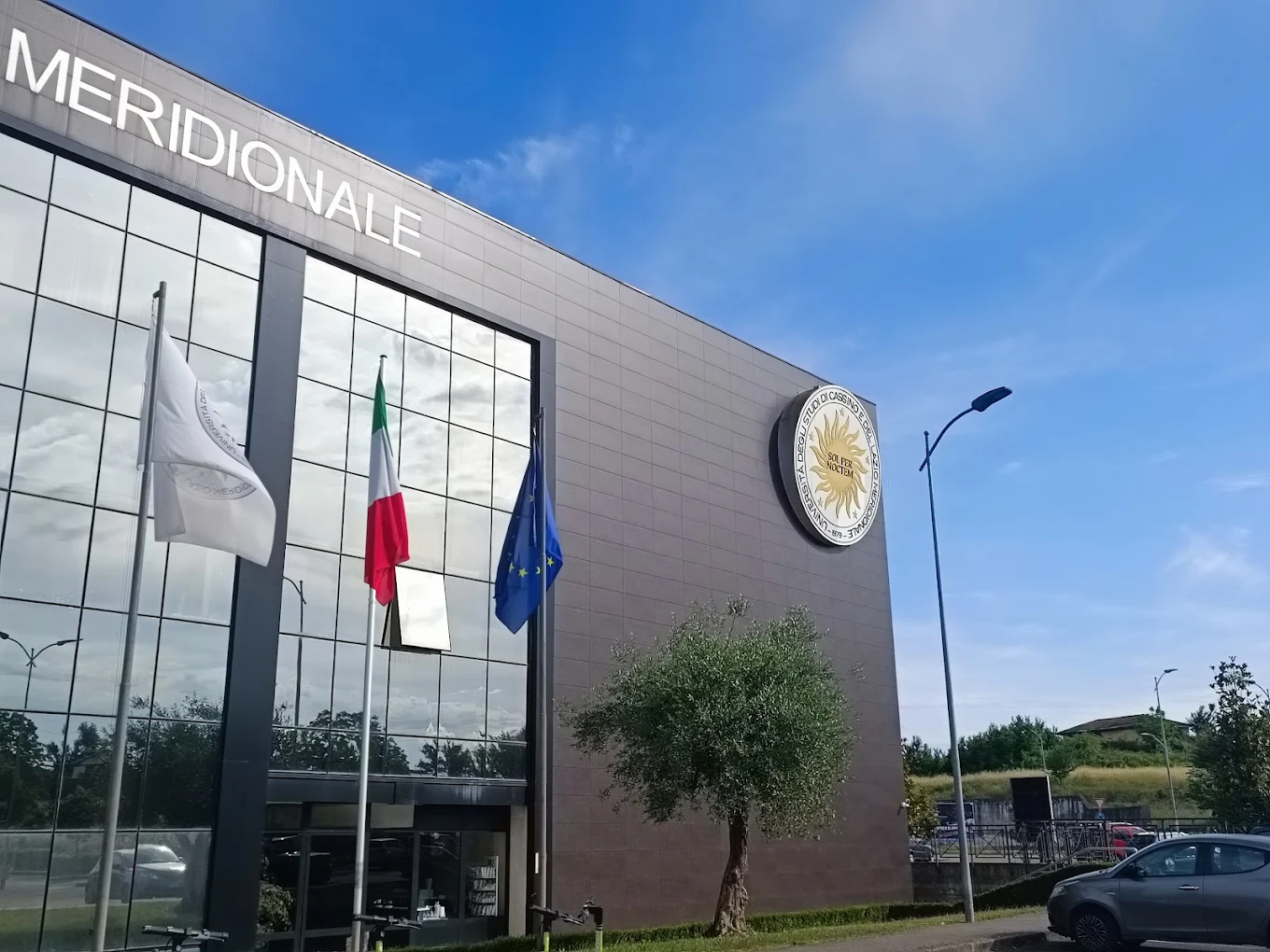
The University of Cassino and Southern Lazio is a public Italian university founded in 1979, sitting about 140 km south of Rome, with roughly 7,000 students and around 1,500 international students from 58 countries. It runs eleven bachelor's and master's entry points in English, and total annual costs land between about €900 and €1,750 including taxes. What follows is drawn from the university's own admission calls and the DiSCo Lazio scholarship rules, so you can judge your chances before you spend money on documents.
Is the University of Cassino any good, and what does its ranking mean for you?
UNICAS sits in the 1001–1200 band of the QS World University Rankings 2027 and around #1631 in US News Best Global Universities. Those are the honest numbers, and you should plan with them.
What they mean in practice: the ranking will not open a door on its own. What carries weight is that the degree is a state-recognised Italian laurea, valid across the EU and assessable through CIMEA for recognition elsewhere, and that UNICAS has been a full member of the European University of Technology (EUt+) since November 2023, which connects it to eight other European campuses for mobility and joint programmes. The university has five departments Civil and Mechanical Engineering, Electrical and Information Engineering, Economics and Law, Human, Social and Health Sciences, and Humanities and Philosophy.
So the fair positioning is this. UNICAS competes on price, on a working English-taught engineering and economics offer, and on European mobility. It does not compete on brand. If your target employer or your home country's credential authority screens on ranking bands, check their threshold before you apply. If they don't, the fee, the English-taught list and the visa timeline are the variables that should decide this.
Which courses at the University of Cassino are taught in English?
Out of about 39 degree programmes, only these are open to international applicants in English. Everything else is delivered in Italian and needs a certified B2 in Italian to enrol.
Read the word "curriculum" carefully. Economics and Business and Civil and Environmental Engineering at bachelor level are English-taught tracks inside a wider Italian degree, not standalone English degrees. Ask the programme office how many credits of your specific study plan are delivered in English across all three years before you accept an offer. This is the most common unpleasant surprise at UNICAS, and no ranking site or agency page mentions it.
Worth noting separately: MAIA is an Erasmus Mundus Joint Master, which means a different application route, a different deadline and its own funding — not the standard UNICAS process described below.
What does the University of Cassino actually cost per year?
Here is where most pages about this university are wrong. UNICAS applies a special fee policy for international students in which the total annual contribution is set by your country of origin, using published country bands. It is not calculated from ISEE the way Italian students' fees are, and it does not change by programme. The "no tax area" rules you may have read about for other Italian universities do not apply to you here.
[Insertion point: replace the tuition range above with the exact band figures for your priority markets from the UNICAS Fees and Fundings page.]
Two costs that sit outside that table: pre-admission costs €15, and enrolling after the deadline triggers a late fee that rises every week and forces part-time status on you, which stretches your degree and your visa.
For living costs, budget €550–850 a month in Cassino covering a shared room, food, transport and phone. That figure is the main reason applicants shortlist this university over Rome, Milan or Bologna.
Which scholarships cut that to almost nothing, and what do they demand?
DiSCo Lazio
DiSCo Lazio is the regional right-to-study authority, and its grant is worth far more than the tuition it waives. For 2026/27 the standard band paid €6,571.11 a year to a fuori sede student and €3,590.71 to a pendolare, plus two free meals a day worth around €600 a year, subsidised dormitory housing, and a full tuition waiver that leaves you paying only the €16 stamp duty.
Four conditions decide whether you get it:
- It has its own deadline. The 2026/27 call closed on 22 July 2026 at 12:00, separate from and usually earlier than your visa timeline. Miss it and you lose the year's grant, not the admission.
- You need an ISEEUP, not an ISEE. International students build an ISEE Parificato through a CAF that holds an agreement with DiSCo, using income, property and family-composition documents translated and legalised by the Italian Embassy in your home country. Start this before you leave.
- Declare your household correctly. If at least 50% of your family lives outside Italy you are assigned fuori sede status automatically, with no rental contract required. Fill that section in wrong and you drop to the pendolare amount — a gap of roughly €3,000 a year.
- You have to keep it. First-year winners must register at least 20 CFU by 10 August of the following year. Non-EU students also face permit upload deadlines, around 1 December for a housing place and 10 February for the grant instalment.
MAECI and Invest Your Talent in Italy
MAECI grants come from Italy's Ministry of Foreign Affairs through a separate annual call with its own portal and deadline, covering a stipend, tuition and health insurance. Invest Your Talent in Italy only applies to programmes on that year's participating list — confirm your UNICAS programme is on it before you build a plan around it.
What are the entry requirements, and why do applications get rejected?
The published requirements are moderate. The rejections come from rules applicants never read.
English is B2 — lower than most guides claim. The 2026/27 calls accepted IELTS 5.5, TOEFL iBT 72, Duolingo 100, PTE Academic 46, or Oxford Test of English 110. The certificate must be verifiable online.
A Medium of Instruction letter will not be accepted. UNICAS states this outright. If your plan was to submit an MOI from your current university instead of a test, book the test now.
Your qualification cannot be more than five years old. A high school diploma or bachelor's degree older than five years is not considered. This one rule ends more applications than any academic threshold.
There is an age window. For 2026/27 bachelor entry, applicants had to be born between 2001 and 2008, and had to turn 18 by 1 September.
Marks are checked by subject. The Economics and Business bachelor required a 70% overall average with mathematics not below 70%. A general pass is not enough if your maths is weak.
Master's criteria are set country by country. For applicants from Ghana, Kenya and Nigeria, a Second Class Lower with a 50% average was accepted from an economics or statistics background, while commerce, computer science, engineering or social science backgrounds needed Second Class Upper at 60%. Other countries have their own tables. Find yours instead of reading a generic list.
Twelve years of schooling is the minimum. An eleven-year system means a bridging year before Italy will admit you.
Documents at either level: passport, transcripts and marksheets, diploma or degree certificate, English certificate, CV, motivation letter.
How does the application actually work, step by step?
- Pre-admission on GOMP. Create an account on the UNICAS student portal, apply through the "Pre-admission International Students" section, upload your documents and pay the €15 fee. The window usually runs February to June, with each degree programme setting its own deadline — check the one for your programme, not a university-wide date. Evaluation takes up to two weeks in peak season. The committee contacts you inside the portal, so don't email them, and note that a closed application cannot be reopened.
- Admission letter, issued through the portal.
- Universitaly pre-enrolment. Register on the Universitaly platform, select your consulate and submit. This is the government step, separate from the university one.
- Type D student visa. Applications are typically processed from around March to November. Appointment slots, not admission decisions, are the real bottleneck.
- On arrival. Get your codice fiscale from the Agenzia delle Entrate office on Via Ausonia Vecchia in Cassino, apply for the permesso di soggiorno, complete enrolment on GOMP and pay tuition.
- Tick the enrolment box. Since 30 January 2026, a student whose Universitaly record lacks the "enrollment" checkmark can have their entry visa revoked by the Italian embassy, with simultaneous notification to the Immigration Office. Completing enrolment on time is a visa condition, not admin you can leave until later.
Where is Cassino, and can you find accommodation there?
Cassino is a town of about 35,000 people in southern Lazio, with direct regional trains reaching Rome Termini in roughly 1 hour 40 minutes. Rent is low, the mensa is cheap, the campus is walkable, and there is very little nightlife. Students who want a city go to Rome at weekends; students who want quiet study conditions get exactly that.
Two things to settle before you accept an offer:
- Which city your course runs in. The main Folcara campus and the engineering buildings are in Cassino, but UNICAS also operates in Frosinone and Gaeta. Confirm the teaching location on your programme page.
- Housing, early. Cassino is a university town with limited stock, and private rooms get hard to find once term begins. Shared rooms run about €200–350 a month. DiSCo residences are cheaper but allocated through the scholarship competition, not on request.
Campus address: Viale dell'Università, 03043 Cassino (FR), Italy. Applicant queries go through the International Welcome Service on unicas.it rather than individual departments.
Who should not apply here?
- Anyone who needs a recognisable brand on their CV.
- Anyone whose diploma or degree is more than five years old.
- Anyone relying on an MOI letter instead of an English test.
- Anyone who wants a programme outside the eleven English entry points without B2 Italian.
- Anyone who needs a large graduate job market on their doorstep — that market is in Rome and Milan.
Frequently asked questions
Is a UNICAS degree recognised internationally?
Yes. It is a state-recognised Italian degree, valid across the EU and assessable through CIMEA for recognition in other countries.
Are all UNICAS degrees available in English?
No. Eleven bachelor's and master's entry points run in English out of about 39 programmes, and two of those are English curricula within a wider Italian degree. Everything else requires B2 Italian.
Do I apply to UNICAS and DiSCo Lazio at the same time?
No. They are separate applications with separate deadlines, and the DiSCo call needs an ISEEUP you cannot produce at the last minute.
What to do this week
If you are targeting 2027/28, work in this order — the sequence matters more than the speed.
- Book your English test. B2 is the bar, and a booked date lets everything else start.
- Begin document legalisation. Transcripts, diploma and income documents take longer than any other step, and they gate both the visa and the ISEEUP.
- Confirm your programme is on the English list, check whether it is a full degree or a curriculum, and note its campus.
- Open your GOMP account when pre-admission opens and submit early — visa appointments run out before places do.
- Book a CAF appointment for the ISEEUP before the DiSCo call opens in summer.
Send us your transcripts and we will tell you which of the five entry rules above would have stopped your file, before you pay the pre-admission fee.
Where they're studying now
Students who started exactly where you are
English-taught programmes, €0 tuition for qualifying students, and the DSU grant landing in their account every year. The funding mechanics are identical at every Italian public university: the same ISEE Parificato, the same regional bando, the same ranking. Only the authority and the dates change.




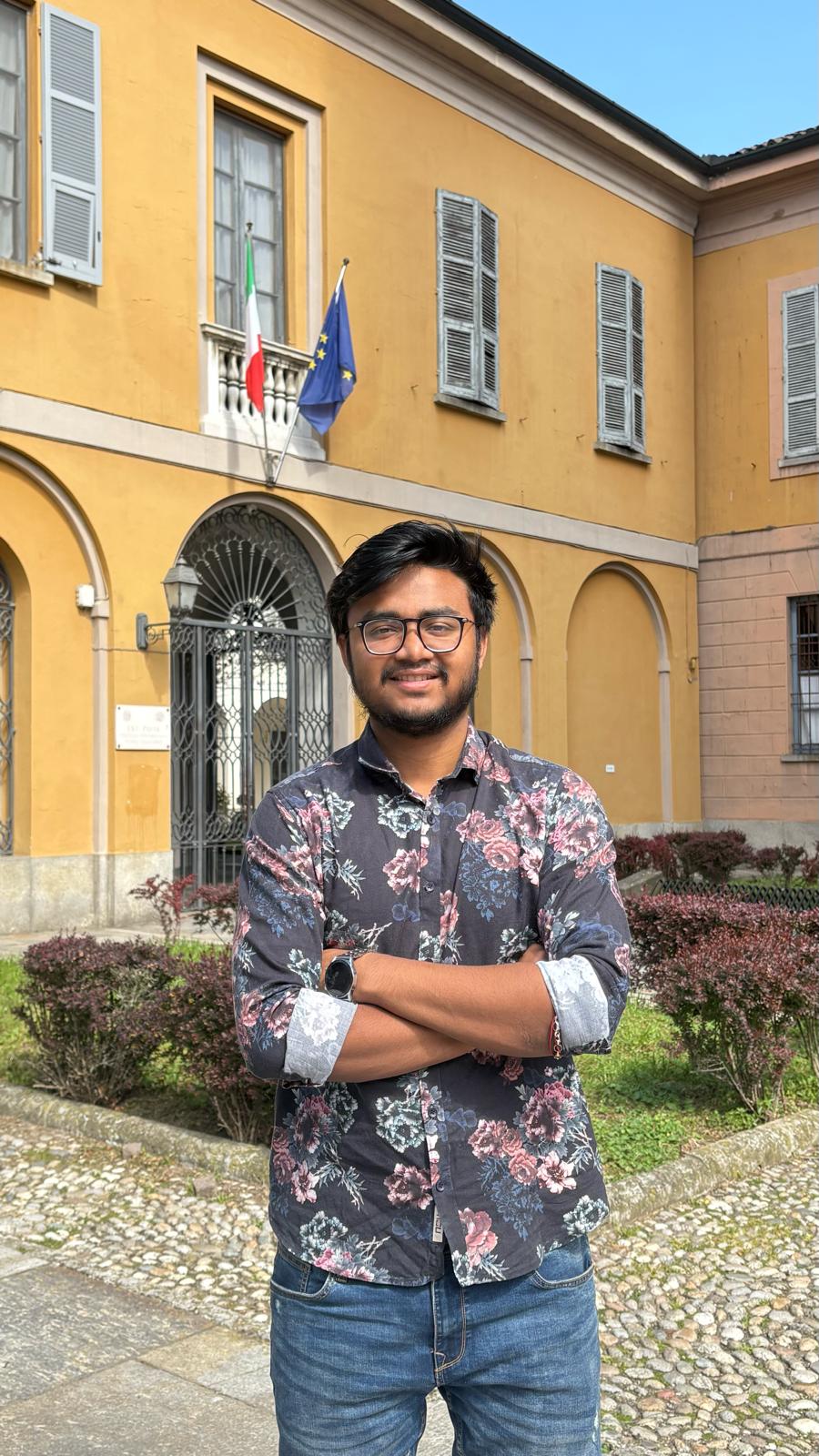

They began right where you are

