

Masters in Italy for Indian Students
Compare top universities, eligibility, tuition fees, scholarships and the application process for Indian students planning a master’s in Italy.

Free check
Less than 2 minutes
Limited intake, 1:1 support
international students trusted us
tuition for qualifying students
English-taught programmes
Italian regions covered
A Master's in Italy for Indian students can offer a recognised European degree at a lower tuition cost than many programmes in the UK, US or Australia. But choosing Italy based only on low-fee claims can lead to the wrong shortlist.
For Indian applicants, the questions that matter are: Will my bachelor's degree qualify? Does my academic background match the programme? What will I actually pay? Which scholarships can I apply for? And what happens after admission?
Here is the short version:
Italy's Laurea Magistrale is a second-cycle qualification corresponding to a Master's Degree. It normally requires a first-cycle degree or comparable foreign qualification and 120 CFU to complete.
Is a Master's in Italy Worth It for Indian Students?
For the right profile, yes.
Italy is especially worth considering if you are looking at engineering, computer science, artificial intelligence, data science, architecture, design, economics, finance, management, biotechnology or sustainability.
Public universities can have lower tuition than many English-speaking destinations, and students may also find university scholarships, regional financial aid and Italian government funding.
There is a trade-off: getting into an English-taught programme does not mean Italian is irrelevant. You can study in English, but learning Italian can give you access to a wider range of internships, part-time roles and graduate jobs.
So do not choose Italy simply because somebody says it is “cheap.”
Choose it if your academic profile matches the programme, the total cost fits your budget and the course supports the career you want.
What Does “Master's Degree” Mean in Italy?
For most Indian graduates looking for an MSc or MA, the main qualification to search for is the Laurea Magistrale.
It is Italy's second-cycle university degree and normally takes two years and 120 CFU. Access requires a first-cycle degree or a comparable foreign qualification.
This distinction matters because you may also see Italian programmes using the word “Master” for different postgraduate qualifications.
A one-year professional or specialised programme should not automatically be compared with a two-year Laurea Magistrale just because both pages use the term “master”.
For a BTech, BE, BSc, BCom, BBA, BA or similar graduate looking for a standard academic master's, start by checking whether the course is a Laurea Magistrale.
Which Universities Should Indian Students Consider?
Do not build your shortlist from rankings alone. Start with universities that are strong in your subject, then compare admission requirements, tuition, scholarships and city costs.
Some major options include:
Politecnico di Milano is ranked =87, Sapienza =111 and the University of Bologna =123 in the QS World University Rankings 2027.
Bocconi University is another major option for economics, management and finance, but it is private and has a different fee structure from Italy's public universities.
The best university for you may not be the university with the highest overall ranking.
A lower-ranked university can make more sense if it has:
- a stronger programme in your field;
- better alignment with your bachelor's subjects;
- lower tuition;
- a suitable scholarship;
- or better career opportunities in your target industry.
Which Master's Courses Are Popular in Italy?
Indian students can find English-taught master's programmes across areas such as:
- Computer Science
- Artificial Intelligence
- Data Science
- Cybersecurity
- Mechanical Engineering
- Automotive Engineering
- Electrical and Electronics Engineering
- Civil Engineering
- Architecture
- Urban Design
- Product and Industrial Design
- Economics
- Finance
- International Business
- Management
- Biotechnology
- Renewable Energy
- Sustainability
Course availability and teaching language can change by intake.
Check the current course page before shortlisting a programme rather than assuming that every master's offered by an Italian university is available in English.
What Are the Eligibility Requirements?
There is no single Italy-wide rule such as “60% + IELTS 6.5 = admission.”
For a Laurea Magistrale, you need a first-cycle degree or comparable foreign qualification. The university then assesses your degree and whether your previous studies meet the academic requirements for that specific programme.
Depending on the course, you may need:
- bachelor's degree certificate;
- academic transcripts;
- relevant undergraduate subjects or credits;
- English-language proof;
- CV;
- motivation letter or statement of purpose;
- recommendation letters;
- portfolio for architecture or design programmes;
- GRE or GMAT where specifically requested;
- interview or admission assessment for selected programmes.
The key point for Indian students is this:
Your percentage is only one part of the assessment. Your bachelor's subjects and academic credits can be just as important.
Will a 3-Year Indian Bachelor's Degree Be Accepted?
It can be.
A three-year BA, BSc, BCom, BBA or another recognised bachelor's qualification is not automatically rejected across Italy.
But acceptance is not universal either.
Italian universities evaluate foreign qualifications and can set programme-specific academic requirements. That means the same Indian degree might satisfy one university's master's requirements but not another's.
Italy's official system allows access to Laurea Magistrale programmes with a first-cycle degree or comparable foreign qualification.
For Indian students, the practical check should therefore be:
- Is my bachelor's qualification acceptable to this university?
- Does my bachelor's contain the subjects or credits required by this course?
- Does the programme have a minimum academic-performance requirement?
Check these before paying application or qualification-document fees.
Is IELTS Mandatory for a Master's in Italy?
Not for every programme.
English-taught master's degrees normally require proof that you meet the programme's English standard, but universities decide which evidence they accept.
Depending on the programme, accepted evidence may include:
- IELTS;
- TOEFL;
- another recognised English test;
- or, in some cases, proof that your previous education was taught in English.
This is why “masters in Italy without IELTS” is not an Italy-wide admission rule.
An IELTS waiver accepted by one programme does not mean another university will accept the same evidence.
Check the English-language requirement on the exact course page.
How Much Does a Master's in Italy Cost?
There is no single tuition fee for international students in Italy.
Different public universities use different fee systems.
For easy INR planning below, €1 ≈ ₹110 is used as a rough conversion. Exchange rates change, so treat the INR figures only as estimates.
Examples from 2026/27 university fees
For 2026/27, Politecnico di Milano lists a maximum standard contribution of €3,943.04. Non-EU master's students admitted with a first-level qualification obtained abroad who do not receive qualifying scholarships are generally required to pay the maximum amount applicable to their study plan.
The University of Padua lists all-inclusive fees of €2,790 for its humanities group and €2,990 for its scientific group for non-EU students living outside Italy, subject to the university's stated categories and concessions.
The University of Bologna uses a different model. Its 2026/27 tuition consists of a €157.04 fixed component plus a variable contribution that depends on the programme and financial circumstances, with exemptions and reduced-fee rules available in qualifying cases.
This is why claims such as “all public universities in Italy cost €1,000–€4,000” should only be used for rough initial planning.
Always check what your exact fee category would be.
How Much Should You Budget for Living Costs?
Your city and accommodation type will make the biggest difference.
For example, the University of Padua currently gives an indicative price of €300–€600 per month plus expenses for a single room — roughly ₹33,000–₹66,000 using the planning exchange rate above.
The University of Bologna gives an indicative average of around €400 per month plus utilities for a single room in a shared apartment.
Milan can be more expensive, particularly for housing.
When comparing the cost of a master's in Italy, calculate:
tuition + accommodation + food + transport + insurance/residence costs − confirmed scholarships
That gives you a much more realistic budget than tuition alone.
Which Scholarships Can Indian Students Apply For?
There are three main types worth checking.
1. Regional Scholarships
Italy's regional right-to-study system can provide financial support based on the rules of the relevant region.
Depending on the scholarship and your situation, support may include combinations of:
- financial grants;
- accommodation;
- meals;
- tuition reductions or exemptions.
The responsible organisation changes by region, so students may encounter bodies such as ER.GO, EDISU or other regional right-to-study authorities.
Admission to a university does not automatically mean you have received the regional scholarship.
Scholarship applications, documents and deadlines are usually separate.
2. University Scholarships and Fee Waivers
Universities may offer merit-based scholarships, reduced tuition or other concessions to international students.
Check each university individually because eligibility, award values and application procedures differ.
Do not shortlist a university based on the maximum advertised scholarship amount unless you know you meet the conditions.
3. MAECI Scholarships
The Italian government's MAECI scholarship programme can include Laurea Magistrale students.
Under the 2026/27 official call, Master's Degree scholarships were awarded for nine months and could potentially be renewed.
The call changes by academic year.
If you are applying for 2027/28, use the new official Study in Italy call when it is published rather than relying on a previous intake's dates or scholarship amounts.
When Should You Apply for a Master's in Italy?
There is no single master's application deadline for every Italian university.
A practical timeline is:
StageWhen to startResearch programmesAround 9–12 months before intakeCheck eligibilityBefore submitting applicationsUniversity applicationsFollow each programme's admission roundsScholarship applicationsCheck separately from admissionUniversitaly pre-enrolmentFollow the university's instructions after/alongside admissionStudy visaAfter the required university/Universitaly validation
For 2027/28 regular degree programmes, Italy's official international-student procedures set 31 October 2027 as the final national deadline for submitting the study-visa application. Universities can set earlier deadlines based on their programmes and academic calendar.
Do not plan to apply close to that final date.
Your university's admission deadline, scholarship deadline and visa-preparation timeline can all be much earlier.
How Do You Apply for a Master's in Italy from India?
The process is easier to understand when separated into the correct stages.
Step 1: Shortlist the Right Master's Programmes
Compare:
- degree type
- bachelor's-subject requirements
- English requirements
- tuition
- application deadline
- scholarship options
- location
- curriculum.
Shortlist at the programme level, not only by university name.
Step 2: Apply to the University
Italian universities control their own master's admissions.
Submit the documents requested by the specific programme and wait for the university's admission assessment.
Step 3: Check How Your Indian Qualification Must Be Documented
Indian academic qualifications are not automatically recognised in Italy.
The Italian Embassy in New Delhi states that holders of Indian qualifications who need recognition may use a Declaration of Value issued by the competent Italian Embassy/Consulate or, as an alternative in the relevant recognition context, a comparability statement issued by an ENIC-NARIC centre in Italy.
For admission and pre-enrolment, follow the requirements given by your university rather than assuming that every student must obtain both a DoV and CIMEA statement.
The Embassy's current DoV requirements for Indian applicants include documents such as the academic qualification, transcripts and applicable authentication/apostille requirements.
Step 4: Complete Universitaly Pre-Enrolment
For non-EU students living abroad who need a study visa for a regular Italian higher-education course, pre-enrolment is handled through Universitaly.
Italy's official 2026/27–2027/28 procedures describe Universitaly as the Ministry's official and free portal for this process.
Step 5: Wait for University Validation
The university evaluates the Universitaly pre-enrolment request and validates it where the requirements are satisfied.
That validation supports the next stage of the visa process, but it does not guarantee that a visa will be issued. The final visa decision remains with the competent Italian diplomatic-consular authority.
Step 6: Apply for the Type D Study Visa
Indian students then complete the study-visa procedure through the competent Italian Embassy or Consulate and its authorised application channel.
The Italian Embassy in New Delhi currently states that applications for study visas and Declarations of Value are submitted through VFS Global, with Uni-Italia also available for student DoV submissions.
Use the checklist for the Italian mission responsible for your jurisdiction rather than copying a generic document list from another country or an old intake.
Step 7: Complete the Residence-Permit Process in Italy
After arriving for long-term study, non-EU students must complete the applicable Permesso di Soggiorno residence-permit procedure.
Do not treat the visa as the final immigration step.
Can You Work While Doing a Master's in Italy?
Yes.
An Italian study residence permit allows students to work part-time for up to:
20 hours per week
and
1,040 hours per year.
This limit is confirmed by Italy's Ministry of Foreign Affairs.
Do not assume that holidays automatically create an unlimited-work entitlement. The annual 1,040-hour limit still matters.
Part-time work can help with some expenses, but it should not be the basis of your entire study budget.
What Can You Do After Completing Your Master's?
If you graduate in Italy with an eligible Italian qualification, you may be able to remain in Italy to look for work.
Official Italian immigration guidance states that qualifying graduates can request a residence permit for job searching or starting a business, with a duration of at least nine months and no more than twelve months.
Students who already receive a suitable job offer may also be able to convert a valid study residence permit into a work residence permit when the legal requirements are met. Italy's Ministry of Foreign Affairs confirms that conversion is possible while the study permit remains valid.
So it is more accurate to describe Italy as offering a 9–12 month post-study job-search route for eligible graduates rather than simply promising everyone a guaranteed “one-year stay-back visa”.
What Should You Check Before Choosing a University?
Before paying an application fee, answer these five questions:
- Does my bachelor's degree qualify for this exact programme?
- Do I have the required subjects or academic credits?
- What tuition will I actually pay as a non-EU student?
- Which scholarship deadlines are separate from the admission deadline?
- Does this course and city support the job market I want to enter?
These checks matter more than building a list based only on rankings or the lowest advertised tuition.
FAQs
Can I do a Master's in Italy after a 3-year degree from India?
Possibly. Italian master's programmes can accept a comparable foreign first-cycle qualification, but the university decides whether your degree and previous coursework meet its admission requirements.
Can Indian students do a Master's in Italy without IELTS?
Some programmes may accept another form of English-language proof, but there is no Italy-wide IELTS waiver. Check the language requirement for the exact programme.
Is a Master's in Italy usually one year or two years?
The standard Laurea Magistrale normally requires 120 CFU, equivalent to two academic years of full-time study. Other postgraduate programmes using the word “Master” can have a different structure.
How many hours can Indian students work in Italy?
Students with a study residence permit can work up to 20 hours per week and 1,040 hours per year.
What is the post-study work period after a Master's in Italy?
Eligible graduates can apply for a job-search residence permit lasting 9–12 months. A study permit may also be converted to a work permit when the applicable requirements are met.
What Should You Do First?
Start with your bachelor's transcript.
Choose the master's field you want, open the admission requirements for three to five suitable programmes, and compare your completed subjects against what each university asks for.
Only after confirming that academic fit should you compare tuition, scholarships and cities.
That prevents you from spending time and money on universities that were never a good match for your profile.
Where they're studying now
Students who started exactly where you are
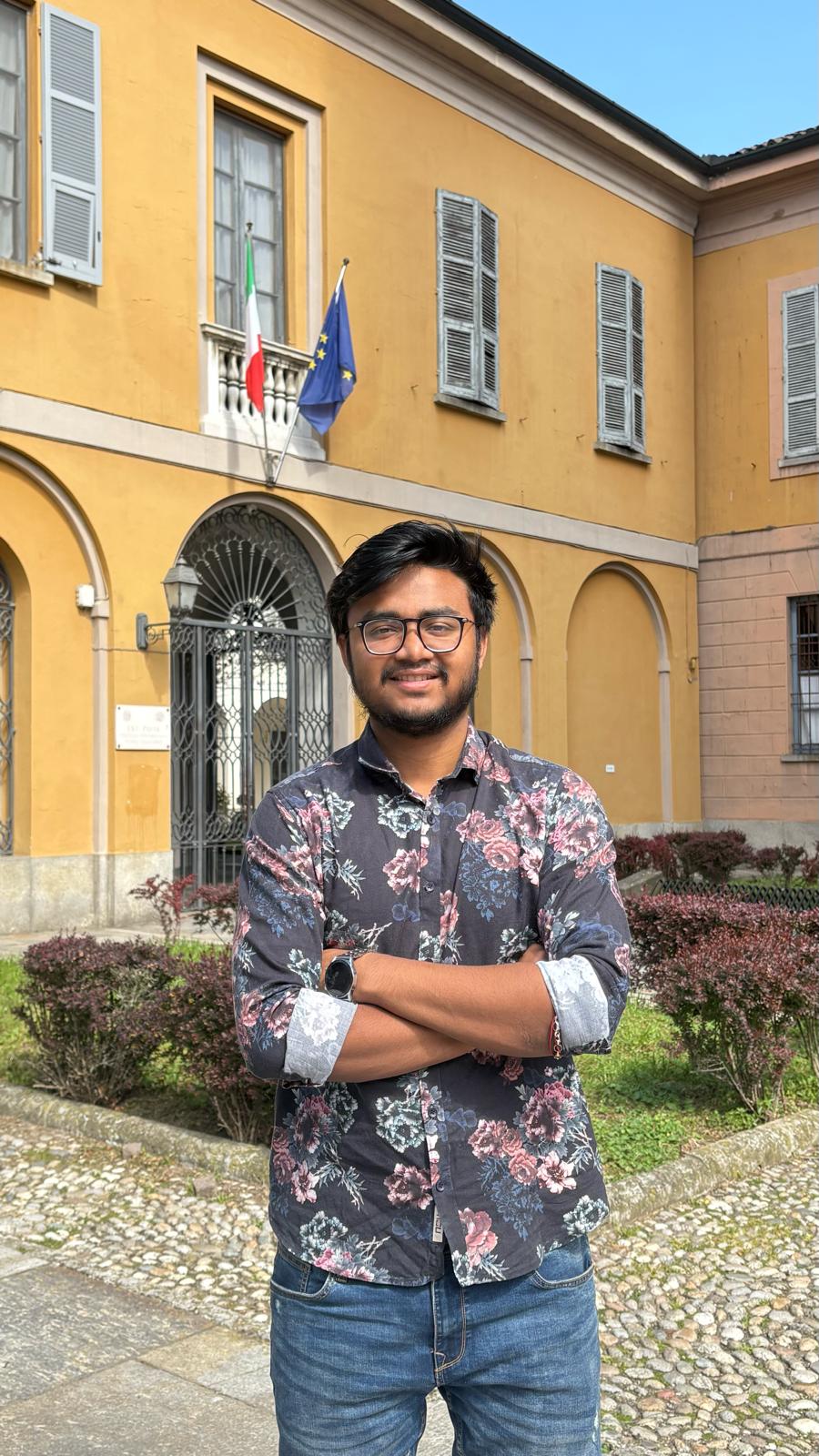
English-taught programmes, €0 tuition for qualifying students, and the DSU grant landing in their account every year. The funding mechanics are identical at every Italian public university: the same ISEE Parificato, the same regional bando, the same ranking. Only the authority and the dates change.





They began right where you are

