

Master in Advanced Materials and Processes
Master in Advanced Materials and Processes is offered at FAU Erlangen-Nürnberg in Erlangen, Germany. ApplyAZ manages the admissions paperwork, scholarship search, and visa process for students applying here.
Master
4 semesters
Erlangen
English
FAU Erlangen-Nürnberg


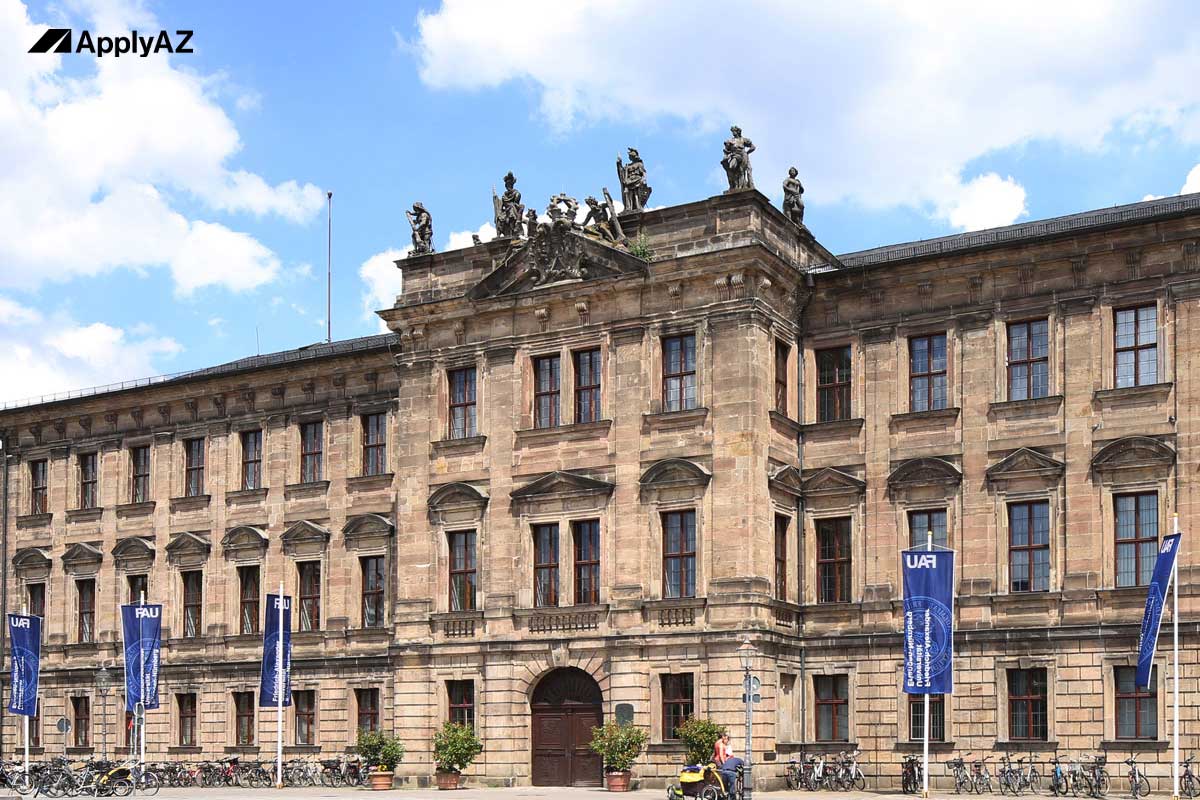
Snapshot of FAU Erlangen-Nürnberg for international students
FAU Erlangen-Nürnberg is a large research university in Bavaria with strong links to industry and applied research. If you want a serious academic environment and a clear pathway into German innovation hubs, it is a strong option. ApplyAZ helps you shortlist the right course, check documents early, and avoid common mistakes before you apply.
What you can study in English at FAU Erlangen-Nürnberg
FAU Erlangen-Nürnberg offers a mix of full English degrees and programmes with significant English content, especially at Master’s level. You will find options in areas like engineering, computer science, materials, optics, and related fields, plus selected programmes in the humanities and social sciences.
Before you decide, ApplyAZ checks three things with you: entry fit (your previous subjects), intake timing, and language rules. This matters because some “English” degrees still expect basic German skills during the first year for daily life and admin.
Tuition and real costs (what students usually miss)
FAU Erlangen-Nürnberg is among the public German universities, so standard degrees usually do not charge tuition fees. You should still plan for a semester contribution (often around €72, and it can change by semester). This is separate from your personal budget and is required to stay enrolled.
What students often miss is the full monthly budget. Keep these in mind:
- Rent and deposit (often the biggest cost)
- Health insurance
- Food and local transport
- Study setup (laptop, software, books)
- Residence permit and admin fees
Your living costs in Germany will vary by housing type and city area, so budget with a buffer.
Admissions step-by-step (clear checklist)
FAU Erlangen-Nürnberg uses a structured process and deadlines can be strict. ApplyAZ keeps it simple and helps you build a clean file that matches the programme rules, including whether you apply via uni-assist or directly through the university system.
Use this checklist:
- Pick 1–3 target programmes that match your background
- Confirm intake, deadline, and language requirements
- Prepare transcripts, grading scale, and degree certificate
- Draft your CV and motivation letter (programme-specific)
- Arrange references if the programme asks for them
- Submit and track your application until a decision arrives
Scholarships and funding (how to think about it)
Funding in Germany is usually a mix, not one magic source. Start with a realistic monthly budget, then add funding options that fit your profile. ApplyAZ helps you separate what is competitive from what is common, so you do not waste time on options you cannot use.
Common directions to explore:
- Merit scholarships (such as Deutschlandstipendium-type support where available)
- External funding like DAAD routes for specific profiles
- Part-time student work where legally allowed
- Personal savings and family support planning
If your plan involves a German student visa, funding clarity is not optional. We help you prepare a clean, explainable funding story.
After graduation: work options and career direction
Germany can be a strong place to start a career after graduation, especially if your degree is in a high-demand area. What matters most is your job direction and how early you start building it. ApplyAZ guides you to pick programmes that match real outcomes, not just nice titles.
Focus on:
- Internship-ready course choices
- Skills that translate to jobs (projects, tools, research methods)
- Location strategy (where hiring is active in your field)
- A CV and LinkedIn profile shaped for German hiring norms
How ApplyAZ supports your application (what happens when)
ApplyAZ supports you end-to-end, without making the process feel heavy. We start with a fit check, then build your shortlist, then move into document review and application submission planning. After you receive an offer, we guide your next steps, including scholarship support and German student visa preparation.
Here is what you get with us:
- Shortlist based on your background and goals
- Document check with clear fixes (before you submit)
- Application plan with deadlines and priorities
- Scholarship approach that matches your profile
- Visa guidance and pre-arrival checklist support
Quick fit check: who Master in Advanced Materials and Processes is for
Master in Advanced Materials and Processes at FAU Erlangen-Nürnberg is for students who want to work on how materials are designed, processed, and tested for real applications. It fits people who enjoy chemistry, physics, and engineering thinking, and who want lab or industry-facing outcomes. ApplyAZ helps you check fit early by matching your Bachelor’s subjects to the programme’s core expectations.
Good fit signals:
- Materials, chemical, mechanical, physics, or related background
- Interest in structure-property relationships and processing
- Comfort with lab work, data, and technical reporting
- Motivation for R&D, manufacturing, or advanced engineering roles
What you will learn (simple, real outcomes)
You will learn how advanced materials behave, how they are produced, and how processing changes performance. You will also gain research skills and the ability to connect lab results to real design choices. Many students explore this path when looking for English-taught programs in Germany with a strong link to high-tech industry and research.
By the end, you should be able to:
- Select materials based on performance needs and constraints
- Understand processing routes and quality considerations
- Use lab methods to test and interpret material behaviour
- Communicate results clearly in reports and presentations
Why FAU Erlangen-Nürnberg for Master in Advanced Materials and Processes (what to look for)
FAU Erlangen-Nürnberg can be a strong option if you want research-led teaching and access to real lab infrastructure. When comparing programmes across public German universities, look at facilities, project intensity, and thesis supervision quality. ApplyAZ helps you review these details and shortlist the programme that fits your interests, whether you lean towards polymers, metals, ceramics, or composites.
Check these before you decide:
- Research groups and lab facilities aligned with your interests
- Access to characterisation tools and practical training
- Project options and how supervision works
- Local ecosystem for internships and thesis collaboration
Modules, projects, and thesis (what your year may look like)
Your year may start with core materials science and process fundamentals, then move into advanced electives and applied projects. Projects often involve lab work, analysis, and structured reporting. The thesis is usually the main proof of ability, so topic planning early matters. ApplyAZ helps you build a timeline so your modules and projects support your thesis and job goals.
A realistic structure can include:
- Core modules in materials behaviour and processing
- Electives linked to your target sector or material class
- A project with lab work and measurable outcomes
- Thesis planning, research work, and final writing
Entry requirements and eligibility (easy checklist)
Materials programmes often have strict expectations around maths, physics, and core engineering or chemistry content. Applicants lose time when transcripts do not clearly show prerequisites, or when they choose the wrong application route. ApplyAZ checks your profile against entry requirements Germany and confirms whether you apply via uni-assist or directly.
Use this checklist:
- Relevant Bachelor’s degree with strong materials-related content
- Evidence of core subjects (chemistry/physics, thermodynamics, mechanics)
- Lab or practical coursework evidence, if expected
- English proof if required
- Correct deadline and application route
Documents you should prepare early (avoid delays)
If your transcript course titles are unclear, reviewers may not see your fit. Preparing early helps you avoid delays and last-minute fixes. ApplyAZ reviews your file for clarity and completeness and helps you highlight key evidence. This also supports later planning for the German student visa process and your funding story.
Prepare early:
- Passport and ID documents
- Degree certificate and full transcripts
- Course descriptions for key modules, if needed
- CV focused on lab methods, projects, and outcomes
- Motivation letter linked to materials and process interests
- Proof of English, if required
Tuition, fees, and living costs (real planning)
Many programmes in COUNTRY at public institutions have low or no standard tuition, but you still pay semester fees and must budget for real monthly costs. Lab work can add small extra expenses, so plan a buffer. ApplyAZ helps you plan costs and timing so you can study in Germany in English with a stable budget and clean visa preparation.
Plan for:
- Semester contribution and admin fees
- Rent deposit and initial setup costs
- Health insurance and monthly living costs
- Lab materials, transport, and an emergency buffer
Scholarships and funding options (how students usually approach it)
Funding is usually a mix of savings, family support, selective awards, and legal work after arrival. Scholarships in Germany can be competitive, so strong fit and early planning matter. ApplyAZ helps you identify realistic options and build a funding plan that supports admissions and visa needs.
Common routes:
- Merit-based awards where eligible
- Part-time work within legal limits after arrival
- Research assistant roles once you settle in
- Savings and family support with a structured plan
How ApplyAZ helps you apply step-by-step
ApplyAZ supports you end-to-end. We start with a fit check, then help you shortlist programmes, review documents, and shape a motivation letter that sounds clear and credible. We also support next steps after admission, including German student visa planning, and keep outcomes in view, including jobs after graduation in Germany in materials R&D, quality, manufacturing, and process engineering roles.
Tuition and scholarships
Public universities in Germany charge no tuition fees for international students. A semester contribution typically applies, covering administrative costs and often a public transport pass.
DAAD (German Academic Exchange Service) offers scholarships for international master's students, covering living costs and a travel allowance. Apply through the DAAD portal separately from your university application.
The Deutschlandstipendium provides €300 per month, co-funded by the federal government and private sponsors. Applications go through the university's scholarship office after enrolment.
For Indian applicants
Indian graduates with a degree recognised by AIU (Association of Indian Universities) can apply to German public universities through uni-assist. The uni-assist portal handles degree equivalency verification and is the standard route for most non-EU applicants.
How ApplyAZ supports you
Not sure if your qualifications meet the entry requirements? Check your eligibility before you start your application — it takes a few minutes and confirms whether your background is a fit.
Similar programmes
More free programmes in this city

They Began right where you are

