

University of Trento - Universita degli Studi di TRENTO
Public university

Average Gross Tution
€0 for eligible Students

Programs Available
940+

Jobs
4 Lakh+ Italian Jobs
Most guides will tell you the University of Trento Italy charges €4,500–€6,500 a year. That figure is wrong for almost everyone who reads it.
Trento doesn't set one price. What you pay depends on your citizenship, your household income, and — if you're a non-EU applicant to an English-taught master's — the score you get in the admission ranking. Score high enough and your first year costs nothing. That single fact changes how you should approach the application, and it's missing from nearly every page that ranks for this university.
Here's what actually applies to you.
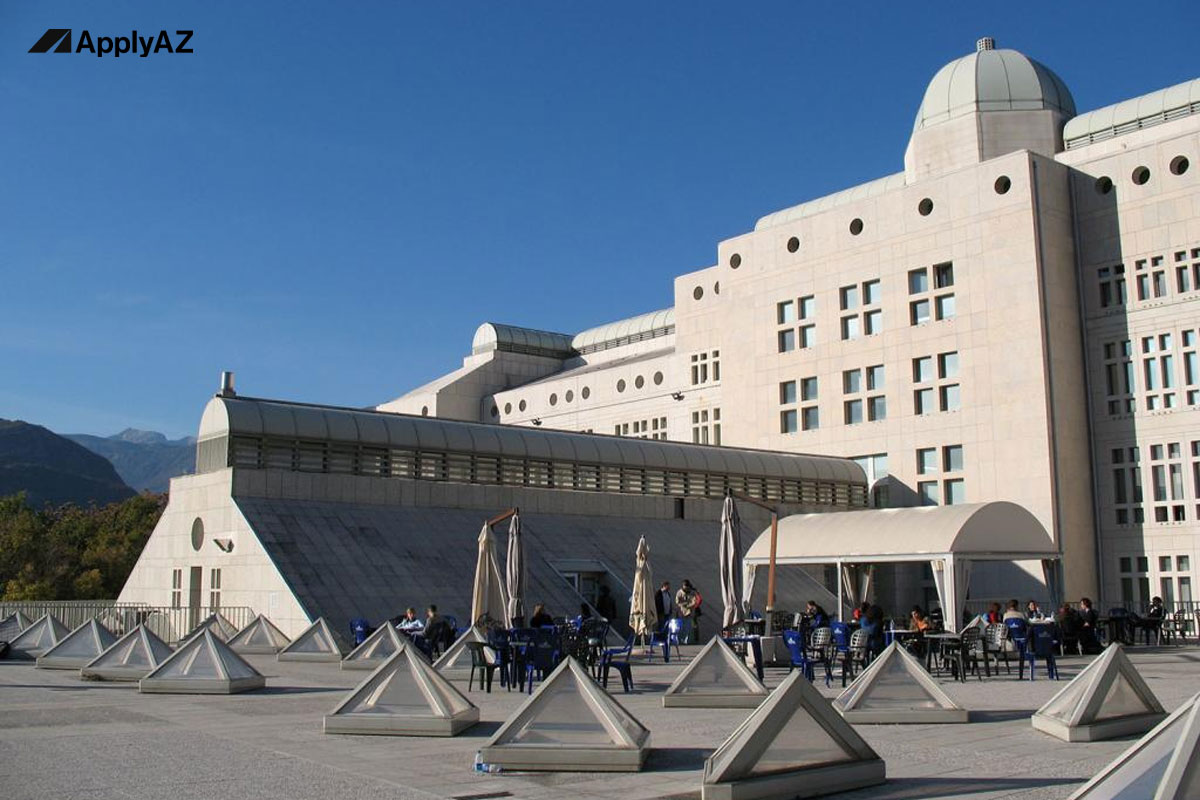
Founded in 1962 as Italy's first Faculty of Sociology, UniTrento is a public research university with roughly 16,000 students spread across Trento, nearby Rovereto and San Michele all'Adige, in the Alpine region of Trentino.
It is deliberately mid-sized. Eleven departments, small seminar groups, and a student-to-staff ratio that means you're unlikely to sit in a 400-person lecture hall. Strengths cluster in cognitive science, computer science, physics, economics and environmental engineering — the School of International Studies is the only graduate school in Italy offering advanced programmes in international studies.
The trade-off is scale. If you want the alumni network and corporate density of Milan or Bologna, Trento is smaller. If you want access to your professors and a research-heavy environment, it's an advantage.
Rankings for this university go stale fast, and most guides are quoting last year's numbers.
Current position: #438 in the QS World University Rankings 2027, up nearly 50 places year-on-year, and 14th out of the 47 Italian universities included. The gain came from academic reputation, employer perception and faculty-student ratio.
Domestically, the CENSIS 2026–27 ranking places Trento third among medium-sized public universities (10,000–20,000 students) with 92.7 out of 110 overall. More telling: it scores a perfect 110/110 for internationalisation, the highest in Italy.
In the last national research assessment (VQR), Trento ranked first for quality of scientific output in its class among state universities. For a university this young, that's the number worth paying attention to.
Around 27 master's degrees run entirely in English, plus a growing set of bachelor's programmes — Economics and Management, Comparative European and International Legal Studies (CEILS), Computer Science, and Computer, Communications and Electronic Engineering.
The English-taught master's list covers Data Science, Artificial Intelligence Systems, Computer Science, Human Computer Interaction, Materials Engineering, Mechatronics, Energy Engineering, Environmental Engineering, Physics, Mathematics, Cognitive Science, Quantitative and Computational Biology, Cellular and Molecular Biotechnology, International Management (MIM), Innovation Management (MAIN), Behavioural and Applied Economics, Sociology and Social Research, Agrifood Innovation Management, Global Law Making and International Security Studies.
Most bachelor's degrees are still taught in Italian and require B2 Italian. If you don't have that, your realistic entry point is a master's.
There are two completely separate fee systems. Find yours before you budget anything.
If you're applying to an English-taught master's from outside the EU, your first-year fee is set by your admission score, not a fixed price list. Programmes are split into two groups.
Group A (Data Science, Physics, Mathematics, Cognitive Science, Materials Engineering, Mechatronics, Energy Engineering, Environmental Engineering, Sociology, Behavioural and Applied Economics, Agrifood Innovation Management, and others):
Admission scoreFirst-year fee90 or above€0 — full exemption70–89€1,00060–69€2,00050–59€4,500
Group B (International Management, Innovation Management, Computer Science, Artificial Intelligence Systems, Human Computer Interaction, Information and Communication Engineering, Cellular and Molecular Biotechnology, Global Law Making, and others):
This is the single most important thing to understand about applying here. The difference between a score of 89 and a score of 90 is €1,000. The difference between 70 and 69 is €2,000 or more. Every point you can add to your application — a stronger statement, a relevant certificate, better-documented experience — has a direct cash value.
Your fees are calculated from the ISEE, an Italian means test based on household income. Students resident abroad request an equivalent version, the ISEE parificato.
For master's degrees in 2025–26:
Undergraduate fees follow the same brackets but cap at €2,384.
Note the third line carefully. If you don't submit an ISEE, you are automatically charged the maximum, regardless of your actual income. It's the most common and most expensive mistake EU applicants make. UniTrento publishes a fee calculator once your ISEE is computed — use it before you accept a place.
Your second year is recalculated from credits earned by 10 August of your first year. Your first-year fee has no bearing on it.
For non-EU students, 42 or more credits means full exemption in year two. Fall to 36–41 and you pay €1,000. Below 24 credits, you're back into the higher brackets — and under 6 credits, Group B students pay €10,000.
This works in both directions. Pay nothing in year one and coast, and you'll get a bill. Pay in year one and perform, and year two can be free.
This is where most guides will mislead you.
Opera Universitaria is the regional right-to-study body that provides scholarships, subsidised housing and fee waivers. Applications open around June each year and require an ISEE declaration. It is the main funding route for students in Italy — and non-EU students living outside Italy are not eligible for it. If a page told you to apply for Opera Universitaria from your home country, it was wrong.
What non-EU applicants abroad can actually access:
Once you're enrolled and resident in Italy with an ISEE, Opera Universitaria opens up from your second year.
One thing worth being clear about: sitting in a fee-waiver bracket does not automatically mean you receive a scholarship. They are separate awards.
The calendar splits by citizenship, and missing your window costs you a full year.
Non-EU applicants resident abroad apply roughly December to March. For 2026/27, several English-taught master's calls closed on 4 March 2026. You must then complete pre-enrolment on Universitaly and apply for a study visa at your local Italian mission — a process that takes weeks, sometimes months.
EU citizens and non-EU students already resident in Italy get a later window, typically April to June, sometimes with additional calls running into September for programmes with places left.
What you'll need for a master's application:
UniTrento doesn't publish an official acceptance rate, and figures floating around at "50–60%" aren't from the university. Admission is ranking-based per call: candidates are scored, ordered, and places are filled down the list. Your competition is whoever else applied to your programme that round — which is why applying in the first call, rather than a later one, generally improves your odds.
The university advises budgeting around €700–€800 per month. That's realistic, and it's meaningfully below Milan or Rome.
Budget separately for the residence permit, health insurance and the proof-of-funds your visa application will require.
Trento suits you if you're academically strong, applying to an English-taught master's, and can push your application score toward 90. At that point you're getting a top-450 European research university, in a safe Alpine city, for essentially the cost of living. Few institutions in Europe offer that.
It suits you less if your grades are borderline. A score in the 50s in a Group B programme means €6,500 in year one — at which point you should be comparing Trento against options in Germany, the Netherlands or elsewhere in Italy on total cost, not brand.
It's also a small city of about 120,000 people. The mountains are twenty minutes away; the nightlife and the graduate job market of Milan are not. Some students find that focusing. Others find it isolating. Be honest with yourself about which you are.
The application itself is free to attempt beyond a €30 fee. The score you submit it with is what decides everything after.


