

Master in Process Engineering
Master of Science in Process Engineering at Hamburg University of Applied Sciences in Germany suits students who want to design and optimise industrial processes, not only understand them in theory. After graduation, graduates often move into process design, operations, production engineering, quality and safety-adjacent roles, energy and utilities, or applied industrial R&D. ApplyAZ maps out the entry requirements, funding routes, and visa timeline for this program specifically.
Master
3 semesters
Hamburg
English
Hamburg University of Applied Sciences



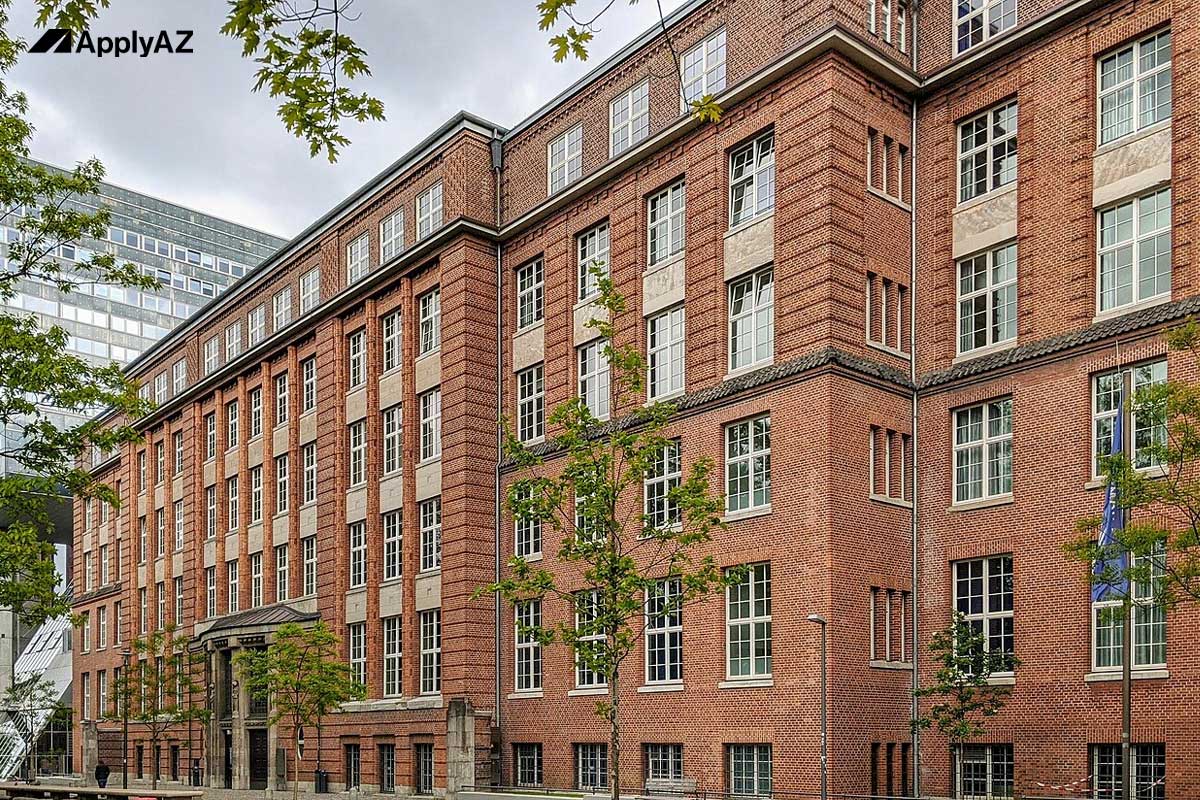
Hamburg University of Applied Sciences in Germany
First look at Hamburg University of Applied Sciences
Hamburg University of Applied Sciences is a public university of applied sciences in Hamburg. That “applied sciences” part matters. Many programmes are built around practice, labs, projects, and real industry problems, not only lectures and theory. For a typical student, the day-to-day experience can feel closer to a professional environment than a classic research university.
ApplyAZ acts as your guide from the start by helping you read the university the right way. We look at how departments are organised, how the programme is taught, what the workload really looks like, and what the timeline means for international students. This avoids the most common mistake: choosing based on the city name alone.
Hamburg is a strong place to study if you want access to companies, internships, and a busy international setting. But it also means high demand for housing and more planning pressure. Your decision should be based on fit and feasibility, not only ambition.
What studying feels like there (teaching, exams, pace)
Most programmes at Hamburg University of Applied Sciences combine structured teaching with hands-on work. You should expect modules that lead to practical outputs, like reports, prototypes, presentations, or group projects. A common scenario is that the semester feels calm in the first weeks, then becomes intense as deadlines cluster. If you are used to last-minute studying, you will need to change habits early.
Exams are not always the only measure. Assessment often includes coursework, project deliverables, and sometimes oral components. Group work can be frequent, so communication and reliability matter. For international students, this can be a plus because your strengths are visible across many tasks, not only one final exam.
ApplyAZ supports you by setting realistic expectations before you arrive. We help you understand pace, typical assessment formats, and how to build a weekly plan that fits your learning style and your visa and housing timelines.
English-taught options and how to check the right track
Hamburg University of Applied Sciences has English-taught options, but the wording can be confusing. Some degree courses are fully English, some have an English track, and some offer English modules while the main programme remains German. A typical student sees “modules in English” and assumes full English delivery, then discovers later that key courses or exams require German.
The safest approach is to check three things for each programme: the language of instruction, the language of assessment, and the language requirements for admission. You also want to confirm whether the thesis can be written in English and whether internships are realistic without German.
ApplyAZ helps by verifying these details before you commit. We compare programme structures, module catalogues, and official language rules, then explain what it means in real life. This is especially important when you are applying to multiple programmes and need to keep your choices consistent.
Admissions reality: what matters most (and what doesn’t)
Admissions at Hamburg University of Applied Sciences can be straightforward, but not always forgiving. What matters most is usually fit with the academic prerequisites and a clean, consistent application file. Many programmes want proof that you already studied relevant topics, not just that you “like” the field. If a programme expects certain foundations, missing them can block admission even with strong grades.
What often matters less than students think is fancy formatting or overly long personal stories. A motivation letter is important, but it works best when it is specific, structured, and aligned with the programme’s focus. Another common misunderstanding is assuming that a high GPA alone guarantees admission. It helps, but alignment and document quality often decide the outcome.
ApplyAZ supports you by matching your background to real programme expectations, then shaping your CV and motivation letter around what the department is actually trying to select for.
Documents students underestimate (prepare early)
Many delays come from documents that students do not expect to be “hard”. The academic content can be strong, but the file still fails because the paperwork is late, inconsistent, or not translated and certified correctly. A typical example is a transcript that looks fine at first, but misses grading scale details or semester breakdowns.
Here is what students commonly underestimate:
- Course descriptions or syllabi that prove what you studied, not just the course title
- Clear grading scale information and how your grades should be understood
- Correct translations and certified copies where required
- Passport details that match your documents exactly, including spelling
ApplyAZ helps you build a document plan early. We flag risk items, set a timeline for each document, and make sure your final set reads as one coherent file. This reduces last-minute stress and protects your deadlines.
Tuition and real costs in daily life
For most students, the headline is simple: you usually pay a semester contribution rather than high tuition fees. But daily life costs are where your real planning happens. Rent, deposits, transport, health insurance, and study materials can shape your budget more than you expect. In Hamburg, housing demand can make cost planning harder because prices vary widely by location and availability.
A common scenario is that a student budgets only for monthly rent, then gets surprised by upfront costs. Deposits, initial furniture needs, and setting up a phone plan and bank account can add pressure in the first weeks. You also need to plan for delays, like waiting for housing or registration steps to complete.
ApplyAZ supports you by turning costs into a realistic timeline. We help you plan what to pay before arrival, what you will pay after registration, and what choices reduce risk, especially around housing and first-month expenses.
Scholarships and funding: how to think, not guess
Scholarships and funding are not only about finding a list and applying everywhere. A better approach is to build a strategy: match funding types to your profile, your timeline, and the programme structure. Some funding is merit-based, some is need-based, and some depends on your legal and residency situation. The key is to avoid guessing, because guessing leads to missed deadlines and wasted effort.
A typical student focuses only on “big scholarships” and ignores smaller, more realistic options, or forgets that funding can depend on documents that take time to prepare. Planning early gives you more choices and less panic.
ApplyAZ supports you by mapping funding routes to your actual case and aligning it with admissions steps and visa planning. Finance it with loan options via ApplyAZ. The point is clarity: what is possible, what is unlikely, and what actions you should take now.
Housing and arrival planning (what to decide before you land)
Housing in Hamburg can be the hardest practical part. Demand is high, scams exist, and timing matters. Many students lose time because they do not decide their priorities early. If you wait until you land, you may accept poor options out of pressure.
Decide these points before you arrive:
- Your maximum rent and the deposit you can pay upfront
- Whether you prefer student housing, shared flats, or temporary housing first
- How long you can stay in a short-term place while searching
- Which campus area you need to reach regularly
ApplyAZ supports you by helping you plan arrival steps in the right order: housing approach, registration readiness, and realistic timelines. We also help you prepare the documents and communication style landlords and housing providers usually expect, so you are not learning under stress.
After graduation: work options and direction
After graduation, your outcomes depend on direction as much as the degree title. A practical university can help you build a portfolio of projects, internships, and references, which often matters in hiring. The strongest students usually start career planning early, not in the final semester. They choose electives with a purpose, join applied projects, and build evidence of skills.
A common scenario is that a student finishes with good grades but weak proof of ability. Employers often want to see what you built, analysed, improved, or delivered. If you are aiming for roles in Germany, language learning and local experience can also shape your options. Even if your programme is in English, daily work life may not be.
ApplyAZ helps you keep the study plan connected to career direction. We guide choices that support internships, practical experience, and a coherent profile that employers can understand quickly.
How ApplyAZ supports you step-by-step
ApplyAZ supports students end-to-end: shortlisting, document readiness, applications, scholarship strategy, and visa guidance. With Hamburg University of Applied Sciences, this means we start by narrowing options based on your background and goals, not assumptions. Then we build your application plan around deadlines, required documents, and realistic timelines for translations and certifications.
During applications, we help you present your profile clearly: what you studied, what skills you have, and why the programme fits. We also keep the process organised across multiple programmes so nothing gets missed. After admissions steps, we support scholarship planning and visa preparation so the administrative side does not derail the result.
The goal is not to make the process “look good”. The goal is to make it correct, complete, and on time, with fewer surprises and better decisions at every step.
How ApplyAZ Gets You In
Most students find one program they like and hope for the best. That is not how we work.
It starts with a quick eligibility check, about 2 minutes, so you instantly know if this opportunity is a real option for your profile. If you are eligible, you book a private one-to-one consultation with one of our experts, where you get a clear and personalised plan built around your exact situation: your best-fit programs, your real deadlines, your scholarship path, and your exact next steps.
If you decide to move forward with us after that call, you enroll, upload your documents, and we take it from there. Our admissions team goes through your transcripts course by course, maps your background against real university requirements, and builds you a shortlist of 20 or more programs that you genuinely qualify for, across prestigious public universities, career-forward degrees taught in English, with strong graduate placement records. You review them, approve the ones you like, and then you lay back.
We write your CV and motivation letter for each program, submit every application, and track every deadline. Alongside admissions, we actively work on securing scholarships that fit your program, university, and country, whether that is DSU, DAAD, or other funding available to your profile, so you have the strongest possible shot at studying public (€0 for eligible students) with your living costs covered. Then we stay with you through visa preparation, arrival, and every practical step that follows.
Depending on your profile, you may qualify for far more programs, universities, and funding opportunities than you would ever find on your own. The only way to know is to start.
Check your eligibility now. It takes about 2 minutes. Because everything begins there.
Process Engineering
A quick sense-check: who Master of Science in Process Engineering suits
Master of Science in Process Engineering at Hamburg University of Applied Sciences in Germany suits students who want to design and optimise industrial processes, not only understand them in theory. A typical fit is a bachelor’s graduate in chemical engineering, process engineering, mechanical engineering with process focus, industrial engineering, or closely related fields with strong maths and physics.
If your background is pure chemistry without engineering design exposure, you may need bridging evidence through projects or applied modules. If you dislike modelling, safety thinking, and optimisation, this field can feel heavy. ApplyAZ helps you judge fit by mapping your transcript and project work to the core foundations reviewers usually look for in process engineering.
What you will gain by the end (real outcomes)
By the end, you should be able to analyse a process, define constraints, propose improvements, and evaluate performance with a structured method. You will likely gain skills in process design logic, modelling, simulation thinking, and safety and quality considerations. The practical outcome is decision-making: choosing the right process route and defending it with evidence.
Most strong graduates also build a portfolio of technical work: process calculations, design reports, lab or pilot experience, and a thesis that shows depth. A common mistake is graduating with knowledge but no proof. ApplyAZ helps you plan projects and thesis direction so your outcomes match the roles you want in industry, operations, or applied R&D.
The learning style you should expect
Expect a technical, applied learning style with regular problem sets, lab work, and project deadlines. You will likely work with equations, models, and structured reporting. The pace often rewards consistency. If you leave work until the end, multiple modules can overwhelm you at once.
Assessment can include exams, reports, and project deliverables. A typical student finds that the “small” assignments are what build real competence. ApplyAZ supports you by helping you prepare for how applied engineering programmes evaluate students, and by guiding how to present your technical work clearly in your documents, so your application and later academic work are aligned.
Modules, projects, and thesis (how the year often flows)
The year often starts with core modules that strengthen shared foundations. Then it moves into electives and project work that shapes your specialisation. The best flow is when your modules feed your projects, and your projects feed your thesis. That creates a clear technical story and reduces stress later.
The thesis usually works best when it focuses on a defined process, a defined performance goal, and a measurable method. A common mistake is choosing an impressive topic with unclear scope, then losing time. ApplyAZ helps you plan a thesis that is feasible and relevant, with a clear method and a direction that supports your career goals in process industries, energy, materials, or manufacturing.
Entry requirements (clear checklist)
Entry requirements usually focus on having the right engineering base and evidence that you can handle advanced technical work. If your transcript shows the fundamentals clearly, selection is easier. If course titles are vague, you may need course descriptions.
Use this checklist as a starting point:
- Bachelor’s in process, chemical, mechanical, or related engineering field
- Evidence of maths, physics, and core engineering modules
- Applied labs, projects, or industrial exposure where possible
- Language certificate as required by the programme
ApplyAZ reviews your profile using this logic and tells you what is essential, what may be flexible, and what needs clarification.
How to read your transcript against the requirements
Read requirements as competencies, not labels. A course called “Transport Phenomena” might cover core process foundations. A course called “Industrial Chemistry” might not, unless it includes design and modelling. Reviewers often look for proof of engineering thinking: calculations, modelling, safety, control concepts, and structured lab work.
A practical approach is to cluster your transcript into buckets: maths, thermodynamics, fluid/heat transfer, reaction engineering, process design, and controls. If one bucket is missing, that is a risk. ApplyAZ maps your modules into these buckets and builds a clean explanation for your application, so the reviewer sees your match without guessing.
Documents to prepare early (avoid delays)
Engineering applications often stall because students cannot prove what they studied. Course descriptions can take time to obtain and format. Another common issue is a CV that lists responsibilities but not technical outcomes. Start early so you do not lose deadlines.
Prepare these early:
- Official transcript and degree certificate with consistent details
- Course descriptions for core engineering modules
- Grading scale note and any official explanations
- CV with projects explained by methods, tools, and results
ApplyAZ checks your documents for completeness and consistency and helps you avoid administrative rejections caused by missing or unclear evidence.
Tuition, fees, and living costs (real planning)
Your main planning risks are upfront costs and housing pressure, not only academic costs. The first month can include deposits, temporary accommodation, insurance setup, and local registration-related expenses. Students often underestimate this and arrive with a monthly budget that does not cover the start.
Plan your finances in phases: pre-arrival costs, first two weeks, then stable monthly costs. This matters because process engineering can be workload-heavy, and financial stress quickly reduces study performance. ApplyAZ supports you by building a realistic cost plan and helping you avoid rushed choices, especially around housing and initial setup.
Scholarships and funding (smart approach)
A smart funding approach starts with eligibility logic. Identify what you can realistically qualify for, then prepare documents early and align deadlines with your admissions timeline. Many students lose opportunities because they treat funding as an afterthought or apply without strong evidence.
You should also plan a backup route that still lets you start on time. Finance it with loan options via ApplyAZ. ApplyAZ supports you by building a funding plan that fits your profile and by keeping scholarship tasks coordinated with admissions steps, so you do not create delays while chasing options that do not match you.
Career direction after Master of Science in Process Engineering
Graduates often move into process design, operations, production engineering, quality and safety-adjacent roles, energy and utilities, or applied industrial R&D. Your direction depends on the technical story you build through projects and the thesis. Employers usually want proof you can solve problems under constraints and document decisions.
A common mistake is graduating without a clear specialisation signal. Choose a theme early, like process optimisation, sustainability, energy integration, or safety and reliability. ApplyAZ helps you shape your programme choices so your CV becomes a coherent narrative that matches the roles you target, not a general list of modules.
How ApplyAZ supports you step-by-step
ApplyAZ guides students end-to-end: programme fit, document check, application plan, scholarship strategy, and visa guidance. For Master of Science in Process Engineering, we begin by mapping your transcript to the core foundations the programme is likely to expect, then we identify gaps and the best way to present your evidence.
We organise your documents, strengthen your CV and motivation letter with concrete technical proof, and keep your timeline structured so you avoid avoidable delays. We also support scholarship planning without distracting from admissions execution. You stay focused on preparation and decisions, while we manage the structure and details that most applicants underestimate.
We Handle Everything. You Just Need to Qualify.
You upload your transcripts. We go through them carefully, match you to 20 or more English-taught programs at prestigious public universities with strong placement records, write your applications, and actively pursue every scholarship available for your profile, whether that is DSU, DAAD, or others depending on the university and country.
You review your shortlist, approve what fits, and we take care of the rest.
The only thing left for you to do right now is find out if you qualify.
Check your eligibility. It takes about 2 minutes.
Tuition and scholarships
Public universities in Germany charge no tuition fees for international students. A semester contribution typically applies, covering administrative costs and often a public transport pass.
DAAD (German Academic Exchange Service) offers scholarships for international master's students, covering living costs and a travel allowance. Apply through the DAAD portal separately from your university application.
The Deutschlandstipendium provides €300 per month, co-funded by the federal government and private sponsors. Applications go through the university's scholarship office after enrolment.
For Indian applicants
Indian graduates with a degree recognised by AIU (Association of Indian Universities) can apply to German public universities through uni-assist. The uni-assist portal handles degree equivalency verification and is the standard route for most non-EU applicants. Check your eligibility with us first.
Similar programmes
More free programmes in this city

They Began right where you are

