

Master in Mechanical Engineering at University of Cassino and Southern Lazio
Two-year English-taught LM-33 master's at the University of Cassino and Southern Lazio in mechanical design, energy systems and smart production, ending with a traineeship and thesis. Entry needs a mechanical or equivalent bachelor's and English at B2.
Master
2 years
Cassino
English
University of Cassino and Southern Lazio


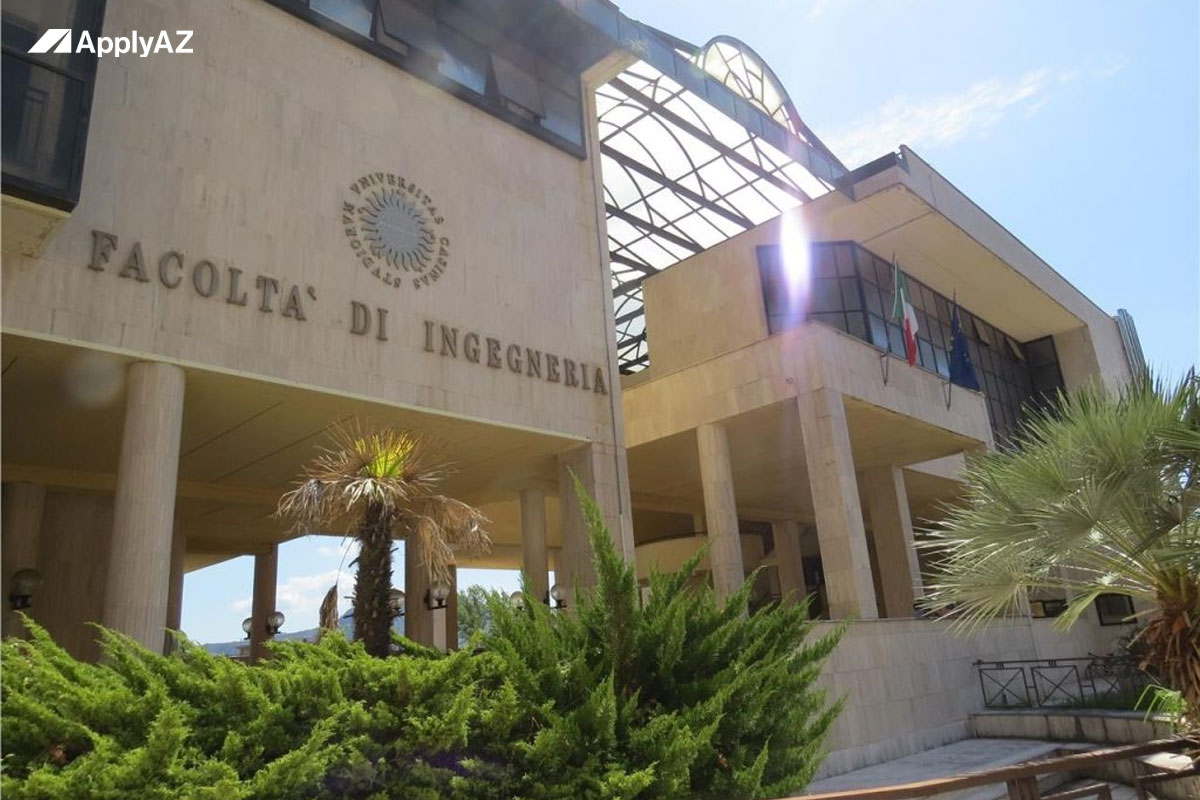
Mechanical Engineering is a two-year, 120 ECTS master's degree (class LM-33) taught in English at the University of Cassino and Southern Lazio in Cassino. Entry needs a bachelor's in mechanical engineering or an equivalent degree with a CGPA of at least 7.0/10, a transcript covering chemistry, physics, thermodynamics and mechanics, and English at B2.
Entry requirements
Detailed entry requirements
Cassino's Mechanical Engineering master asks for a bachelor's in mechanical engineering or an equivalent degree with a CGPA of at least 7.0/10, a transcript covering chemistry, physics, thermodynamics and mechanics, English at B2 and a positive review by the Admission Committee. Reviewed 8 October 2026. [1]
Degree and grade rule
The programme asks for a bachelor's in Mechanical Engineering or an equivalent degree, obtained with a First Class result: a CGPA of at least 7.0/10, 2.8/4 or 14/20. Your transcripts must show a knowledge base in chemistry, physics, thermodynamics and mechanics. Degrees obtained no more than five years before the year of application are preferred, and degrees other than Mechanical Engineering are assessed individually by the Admission Committee. [2]
The 2025/26 teaching regulations treat the subject requirements as met by an Italian industrial engineering bachelor's (class L-9) or by holding, before enrolment: [1]
- At least 36 CFU in basic sciences: computer science, mathematics (algebra, geometry, analysis, probability, mathematical physics, numerical analysis, operations research), statistics, chemistry and physics.
- At least 45 CFU in mechanical engineering subjects: fluid machines, energy systems, applied thermodynamics, mechanical and thermal measurements, applied mechanics, machine design, industrial drawing and industrial plants.
Meeting these criteria does not by itself secure a place: the committee reviews every file. [2]
Automatic admission
You are admitted automatically if you hold a bachelor's in Mechanical Engineering or an equivalent degree with a CGPA of at least 8.0/10, 3.2/4 or 16/20, a B2 English certificate from TOEFL or IELTS, a degree obtained no more than three years before the year of application, and the same knowledge base in chemistry, physics, thermodynamics and mechanics. [2]
What this means for your transcript
Italian CFU and the credits on a foreign transcript are not the same unit, and the committee looks at your subjects, not just your total. As a guide, based on the rule above:
- Usually a fit: a B.Tech or B.E. in Mechanical Engineering with a CGPA of 7.0/10 or above and courses in machine design, thermodynamics, fluid machines and manufacturing.
- Check carefully: a B.Tech or B.E. in Production, Industrial, Automobile, Aerospace or Mechatronics Engineering. These are assessed individually, and the question is whether your transcript reaches the 45 credits in mechanical subjects.
- Often short: a B.Tech or B.E. in Electrical, Electronics, Civil or Computer Science Engineering, or a B.Sc. in Physics or Mathematics, usually covers the basic sciences but lacks the mechanical engineering block. A BCA, B.Com, BBA or BA does not cover the required subjects.
English
English at CEFR B2 or higher, written and spoken. The regulations accept a certificate, a university English test or the admission interview as proof. For general admission the programme accepts a B2 certificate of any kind, while automatic admission needs TOEFL or IELTS. No minimum scores are listed. [1][2]
The university also accepts a declaration that your previous degree was taught in English, but the programme notes that Italian consulates usually expect a valid B2 certificate, such as IELTS, TOEFL or Duolingo, for the visa. We plan your file with that in mind. [2]
Admission review and interview
Applicants with a foreign degree are always assessed by the Admission Committee, made up of three teachers on the programme. It decides from your documents or through an admission interview on basic and mechanical engineering subjects and your motivation. There is no written entrance test. The programme says applicants usually hear the outcome within a week. [1][2]
Deadlines
These rules come from the 2025/26 teaching regulations and the programme website. For 2026/27, the programme website gave an application deadline of 30 June 2026, and Universitaly pre-enrolment for a new academic year opens only from the end of March. The next round sets the 2027/28 dates. [1][2]
You can apply before you graduate if your graduation day falls before the enrolment deadline. [2]
Documents and non-EU steps
Applicants without an Italian bachelor's apply in the pre-admission section for international students on the university's GOMP portal, with: [2]
- University transcript, or an EU Diploma Supplement
- CV
- Motivation letter
- English certificate
- Valid passport or identity card
If you are pre-admitted and need a visa, you complete Universitaly pre-enrolment, apply for a type D study visa and enrol in Cassino once the visa is granted. [2]
Sources and verification
Checked by the ApplyAZ admissions team against the university's official documents listed below. Entry rules can change with each new call, and we re-check them before every application.
- University of Cassino and Southern Lazio, Department of Civil and Mechanical Engineering (DICEM). Teaching regulations of the Master's degree programme in Mechanical Engineering (LM-33), academic year 2025/26. Reviewed 8 October 2026.
- University of Cassino and Southern Lazio, Master of Science in Mechanical Engineering programme website: overview, admission criteria and how to apply pages, 2026/27 application round. Reviewed 8 October 2026.
- University of Cassino and Southern Lazio, International UNICAS. Fees and funding page, undated. Reviewed 8 October 2026.
About the programme
Mechanical Engineering is a two-year master's degree (laurea magistrale, class LM-33) taught entirely in English at the University of Cassino and Southern Lazio. It is run by the Department of Civil and Mechanical Engineering (DICEM), together with the Department of Electrical and Information Engineering, and teaching is in person in Cassino. [1][2]
The degree trains mechanical engineers with strong design skills: advanced design methods, choice of materials, new technologies, modern production plants, automation and process optimisation, energy management and environmental protection. Graduates are prepared for roles in production and in research and development. It is aimed at holders of a bachelor's in mechanical or industrial engineering. [1][2]
What you will study
The programme has a single curriculum with two focus areas, Smart Energy and Automotive and Sustainability, and totals 120 ECTS. Units in the 2025/26 study plan include: [1][2]
- Mechanical Engineering Design (12 CFU)
- Kinematics and Dynamics of Mechanisms (12 CFU)
- Advanced Numerical Heat and Mass Transfer (6 CFU)
- Advanced Power System (6 CFU)
- Measurement for Industrial Automation
- Second-year units in Advanced Manufacturing Processes, System and Human Reliability, Material Science and Engineering II, Design of Electronic Systems and Applied Metallurgy (6 CFU each)
Students also choose two 6 CFU electives from Electric Power System Engineering, Hybrid and Electric Vehicles, Electromagnetic Compatibility for Industry and Introduction to Robotic Systems. [1]
How the programme is taught
Teaching runs over four semesters. The first three combine core and elective units, and the last semester is for a 15 CFU traineeship and a 15 CFU thesis. The traineeship takes place in a company, an external body or a university lab, and you can request it once you have 50 CFU. The thesis is written in English and defended in public. [1][2]
Attendance is not compulsory unless the programme council sets it for a specific activity. You can enrol full-time over two years or part-time over three or four years. [1][2]
Fees and scholarships
For international students, Cassino sets the overall tuition fee by country of origin, using World Bank income groups, plus a regional tax and a stamp duty. The regional scholarship body, DiSCo Lazio, offers eligible students from low-income families a full tuition waiver, housing and study grants, so this programme can be tuition-free for eligible students. The region decides scholarship awards, and renewal depends on exams passed and average mark. [3]
How to apply from outside the EU
Applicants without an Italian bachelor's first submit a pre-admission application on the university's GOMP portal with a transcript, CV, motivation letter, English certificate and passport. The Admission Committee usually replies within a week. For 2026/27, the programme website gave an application deadline of 30 June 2026. [2]
Pre-admitted students who need a visa then complete Universitaly pre-enrolment, which opens for the next academic year from the end of March, apply for a type D study visa and enrol in Cassino once the visa is granted. The 2027/28 deadline is not yet published. [2]
How ApplyAZ helps
ApplyAZ is an Italy-based consultancy that works only with public universities. We can include this programme in a shortlist of 20 to 30 English-taught programmes that fit your profile, so your plan never rests on a single application.
For eligible students who start with us, a named person owns each stage, from A to Z:
- We check your transcript against Cassino's entry rules for this programme.
- We write your CV and a tailored statement of purpose.
- We prepare and submit your pre-admission application and Universitaly pre-enrolment.
- We help you declare your family income for reduced fees and file your DiSCo Lazio scholarship application at the right time and in the right format.
- We prepare your visa file.
With operations in all 20 Italian regions, we follow each region's scholarship rules and deadlines as they change. The university decides admission, the region decides the scholarship and the consulate decides the visa, so no one can promise an outcome. You pay in milestones, and every service you pay for is either delivered or its fee is refunded (terms apply).
Programmes at Italian public universities can be tuition-free for eligible students. Check if you are eligible and book a one-to-one consultation session with one of our Italy experts, or see how ApplyAZ works.
Questions and answers
What bachelor's degree do I need for Cassino's Mechanical Engineering master?
A bachelor's in Mechanical Engineering or an equivalent degree with a CGPA of at least 7.0/10, 2.8/4 or 14/20, and transcripts showing chemistry, physics, thermodynamics and mechanics. The regulations also count 36 credits in basic sciences plus 45 in mechanical engineering subjects as meeting the subject rule. [1][2]
Is there an entrance exam?
No written test. The Admission Committee reviews foreign degrees from your documents and can hold an admission interview on basic and mechanical engineering subjects and your motivation. The programme says applicants usually hear the outcome within a week. [1][2]
What English level is required? Do I need IELTS?
English at CEFR B2. Any B2 certificate meets the general criteria, but automatic admission accepts only TOEFL or IELTS. The university also accepts proof of an English-taught degree, yet consulates usually expect a B2 certificate for the visa, so we plan for one. [1][2]
When is the deadline for non-EU students?
For 2026/27, the programme website gave an application deadline of 30 June 2026, and Universitaly pre-enrolment opens from the end of March. The 2027/28 deadline is not yet published, and we track it for eligible students. [2]
Can I apply before I graduate?
Yes, if your graduation day falls before the enrolment deadline. The programme prefers degrees obtained no more than five years before the year of application, or three years for automatic admission. [2]
I have a B.Tech in Production or Automobile Engineering. Can I apply?
Possibly. Degrees other than Mechanical Engineering are assessed individually by the Admission Committee. What counts is whether your transcript shows enough mechanical subjects, such as machine design, thermodynamics, fluid machines and measurements, alongside maths, physics and chemistry. [1][2]
What does the programme cover?
Mechanical design, energy systems, smart production and industrial automation, with two focus areas: Smart Energy, and Automotive and Sustainability. The final semester is a 15-credit traineeship and a 15-credit thesis written in English. [1][2]
Can someone handle my whole application to Mechanical Engineering at Cassino?
Yes. ApplyAZ, an Italy-based consultancy that works only with public universities, checks your transcript against Cassino's rules for this programme, handles the application and Universitaly pre-enrolment, helps you file the DiSCo Lazio scholarship application at the right time and in the right format, and prepares your visa file, for eligible students. Start by checking your eligibility.
I'm applying from India. What is the route into Mechanical Engineering?
A recognised Indian B.Tech or B.E. in Mechanical Engineering, or an equivalent degree, can meet the rule if you graduated with a CGPA of at least 7.0 out of 10 and your transcript covers chemistry, physics, thermodynamics and mechanics. You also need English at B2. The steps are pre-admission on the university portal, Universitaly pre-enrolment and the study visa. [2] Indian students apply for the type D study visa at the Italian embassy or consulate that covers their state, such as New Delhi, Mumbai or Bengaluru.
Is the route different from Pakistan, Bangladesh or Sri Lanka?
No. The academic rules for Mechanical Engineering are the same whatever your nationality. Applicants from Pakistan, Bangladesh and Sri Lanka follow the same steps as India: pre-admission application, pre-admission offer and Universitaly pre-enrolment, then a type D study visa from the Italian mission for their country of residence. Read our guide for students in Dhaka.
I live in the UAE, Saudi Arabia, Qatar, Kuwait, Oman or Bahrain. Where do I apply for the visa?
At the Italian embassy or consulate responsible for the country where you legally live, after Universitaly pre-enrolment. The academic rules for Mechanical Engineering are the same whatever your nationality, and Gulf residents follow the same steps: pre-admission application, pre-admission offer and Universitaly pre-enrolment. Read our guides for Dubai, Riyadh and Doha.
I studied or live in London, New York, Toronto, Vancouver, Singapore or Kuala Lumpur. What is the route?
The academic rules for Mechanical Engineering are the same whatever your nationality, and your degree is assessed like any other foreign qualification. Non-EU applicants who live abroad follow the same route: pre-admission application, pre-admission offer and Universitaly pre-enrolment, then a type D study visa from the Italian mission for where they live. Read our guides for students in London, New York, Toronto, Vancouver, Singapore and Kuala Lumpur.
More English-taught programmes at this university
Other public universities in this city

They began right where you are

