

Master in Civil and Environmental Engineering at University of Cassino and Southern Lazio
Two-year English-taught LM-23 master's at the University of Cassino and Southern Lazio in structural, hydraulic, geotechnical and environmental engineering. Entry needs a related first degree and English at B2.
Master
2 years
Cassino
English
University of Cassino and Southern Lazio


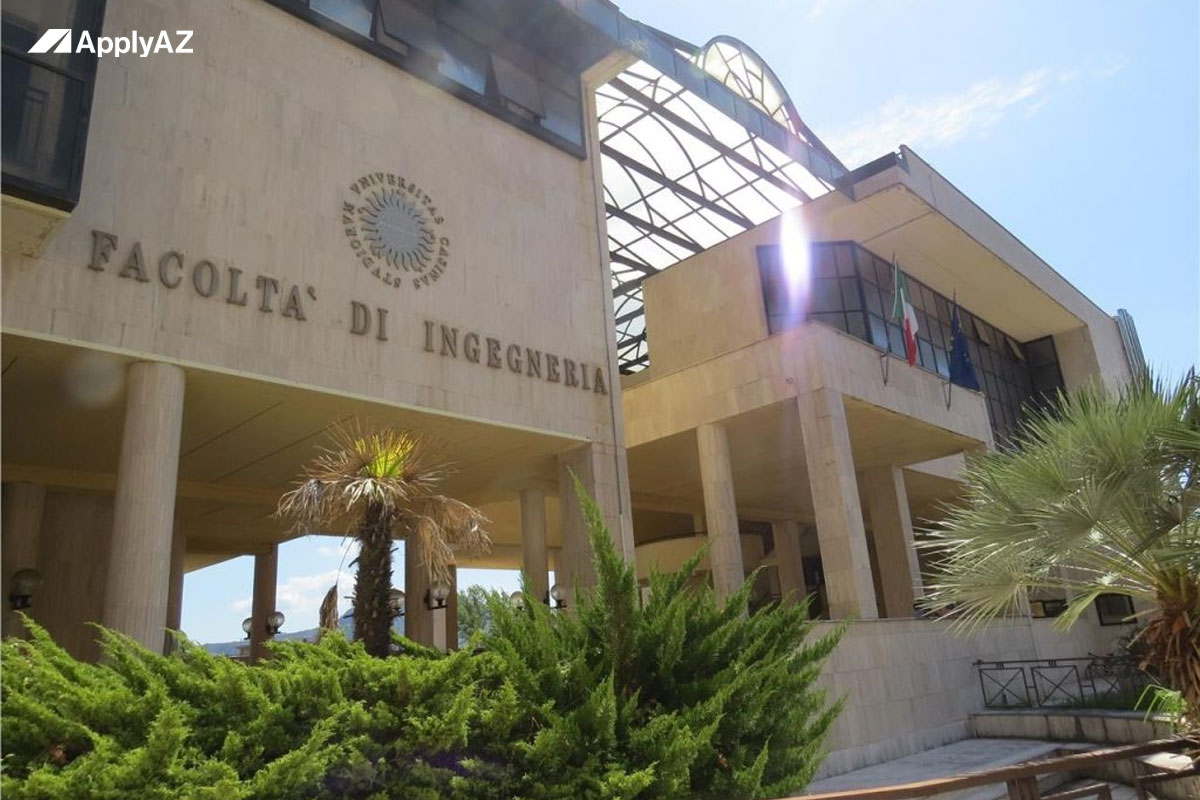
Civil and Environmental Engineering is a two-year, 120 ECTS master's degree (class LM-23) taught in English at the University of Cassino and Southern Lazio in Cassino. Entry needs a first-cycle degree in civil and environmental engineering or a closely related field, with a solid core civil-engineering background, plus English at B2. Fees follow family income, so it can be tuition-free for eligible students.
Entry requirements
Detailed entry requirements
Cassino’s English-taught Civil and Environmental Engineering master admits applicants with a suitable first-cycle civil/environmental or closely related qualification, a strong core civil-engineering background and B2 English. The current programme enrolment instructions provide the clearest requirements and document checklist. Reviewed 6 October 2026. [1][2][3]
First-cycle qualification and civil-engineering background
A bachelor’s degree or qualification equivalent to the Italian first-cycle Laurea is required in Civil and Environmental Engineering or a closely related discipline. Applicants must demonstrate a solid background in core civil-engineering subjects, which is assessed through the academic record. A related title is subject to academic evaluation rather than an automatic admission promise. [1]
All applicants undergo preliminary assessment of academic background and preparation. The reviewed master’s enrolment instructions do not publish a universal minimum GPA, a fixed number of prerequisite CFU, or an automatic eligibility rule based solely on 180 ECTS. The committee’s review determines whether the qualification and prior subject preparation are adequate. [1]
English B2 and prior English-medium study
The minimum English level is CEFR B2. The programme asks for English-proficiency evidence in the international pre-admission file. Its master’s home page also accepts a declaration that the previous degree was completed at an institution where English was the teaching language as sufficient academic English evidence. [1][2]
The programme does not publish a universal IELTS 6.5 or TOEFL 90 minimum in these instructions. Its language-of-instruction declaration route applies to the university’s academic review. The programme notes that some consulates also require a recognised B2 certificate for the study visa, and we check this for the consulate that handles your file. [1][2]
Italian and foreign qualification procedures
An applicant holding an Italian first-cycle degree proceeds to the admission/enrolment stage, with academic preparation evaluated during enrolment. This changes when the assessment takes place; it does not exempt the applicant from academic review. [1]
Applicants without an Italian first-cycle qualification create or use a GOMP Student Portal account and submit through the Pre-admission: International Students section. The programme encourages early submission to allow time for evaluation and document processing. [1]
Required international pre-admission file
The published checklist requires the university transcript of records or EU Diploma Supplement, curriculum vitae, motivation letter, English-proficiency evidence, and a valid passport or identity card. After uploading the documents, applicants pay the €15 application fee to complete the procedure. The university communicates the outcome by email. [1]
The reviewed checklist does not require two reference letters or identify a fixed 20-minute online coding interview. If the committee requests further academic evidence for your individual file, we prepare and submit it. [1]
Universitaly and final qualification recognition
A pre-admitted visa applicant then completes Universitaly pre-enrolment for the correct academic year. Applicants who do not require a student visa proceed to the university’s enrolment steps. The central international guidance distinguishes academic pre-admission, visa-related pre-enrolment and final enrolment as separate procedures. [1][3]
For qualification recognition, the central guidance accepts a Declaration of Value or both a CIMEA Statement of Comparability and Statement of Verification. Its final-arrival checklist identifies original passport/visa and qualification-recognition documents for the non-EU route, and identification and academic documents for the EU route, followed by the university’s clearance in GOMP. We follow the checklist that applies to your status. [3]
Current source status and application timing
The master’s home page refers to 2026/27 applications but still says they will open shortly, without a precise current deadline. The central page says preliminary applications are usually between February and June and directs candidates to the programme’s specific deadline. We track the programme’s specific deadline for each call. [2][3]
The detailed criteria above come from the official master’s enrolment and language guidance and the university’s international procedure. These are internally undated standing webpages reviewed on 6 October 2026, with the home page referring to 2026/27. [1][2][3]
Sources and verification
- University of Cassino and Southern Lazio, Civil and Environmental Engineering: Master’s Degree Enrollment, internally undated current programme instructions; reviewed 6 October 2026.
- University of Cassino and Southern Lazio, Civil and Environmental Engineering master’s home page, referring to 2026/27, internally undated; reviewed 6 October 2026.
- University of Cassino and Southern Lazio, International pre-admission, admission and enrolment, current 2026/27 guidance; reviewed 6 October 2026.
About the programme
Civil and Environmental Engineering is a two-year master's degree (laurea magistrale, class LM-23) taught in English at the University of Cassino and Southern Lazio, a public university in Cassino. It is designed for graduates with a first-cycle degree in civil and environmental engineering or a closely related field and a solid background in core civil-engineering subjects. [1]
The programme brings together structural, hydraulic, geotechnical and environmental engineering, with a focus on resilient and sustainable infrastructure. Research at the university covers areas such as structural mechanics and hydraulic modelling.
What you will study
The programme covers the main areas of advanced civil and environmental engineering:
- Structures: advanced structural analysis, seismic engineering and finite-element modelling
- Water: hydraulic engineering and water resources management
- Ground: soil mechanics and foundation design
- Materials and sustainability: construction materials and durability, and environmental impact assessment
- Digital tools: computational methods, structural monitoring and data analytics
Electives let you focus on topics such as coastal engineering, road infrastructure or flood risk. The exact units, credits and electives are set by the study plan for your cohort, and we check them against the programme syllabus when we prepare your file.
How the programme is taught
Teaching is in English over four semesters in Cassino. Lectures are combined with laboratory work in structures, hydraulics and geotechnics, and with team design projects. The final part of the degree is built around an internship or research placement and a master's thesis on an original engineering problem.
Career paths
Graduates work in engineering consultancies, public-sector infrastructure agencies and renewable-energy firms, or go on to doctoral study in Italy and across Europe. Typical roles include:
- Structural engineer
- Hydrologist
- Sustainability officer
- BIM coordinator
- Infrastructure analyst
Fees and scholarships
As a public university, Cassino sets tuition by family income. The regional scholarship body for Cassino is DiSCo Lazio. Its scholarship can waive tuition and include meal and housing support, so this programme can be tuition-free for eligible students. The region decides scholarship awards.
How to apply from outside the EU
Applicants with a first degree from outside Italy apply through the university's GOMP Student Portal, in the Pre-admission: International Students section. The file needs your transcript of records or EU Diploma Supplement, CV, motivation letter, English-proficiency evidence and a valid passport or identity card. A €15 application fee completes the procedure, and the university sends the outcome by email. [1]
After pre-admission, applicants who need a student visa complete Universitaly pre-enrolment and then apply for a type D study visa. For qualification recognition, the university accepts a Declaration of Value or both a CIMEA Statement of Comparability and Statement of Verification. [1][3]
The university says preliminary applications usually run between February and June. When we reviewed the programme, the master's page had not yet published a precise 2026/27 deadline, and the 2027/28 calendar is not yet out, so we track the programme's own deadline for each call. [2][3]
How ApplyAZ helps
ApplyAZ is an Italy-based consultancy that works only with public universities. We can include this programme in a shortlist of 20 to 30 English-taught programmes that fit your profile, so your plan never rests on a single application.
For eligible students who start with us, a named person owns each stage, from A to Z:
- We check your transcript against Cassino's entry rules for this programme.
- We write your CV and a tailored statement of purpose.
- We prepare and submit your GOMP pre-admission file and Universitaly pre-enrolment.
- We help you declare your family income for reduced fees and file your DiSCo Lazio scholarship application at the right time and in the right format.
- We prepare your visa file.
With operations in all 20 Italian regions, we follow each region's scholarship rules and deadlines as they change. The university decides admission, the region decides the scholarship and the consulate decides the visa, so no one can promise an outcome. You pay in milestones, and every service you pay for is either delivered or its fee is refunded (terms apply).
Programmes at Italian public universities can be tuition-free for eligible students. Check if you are eligible and book a one-to-one consultation session with one of our Italy experts, or see how ApplyAZ works.
Questions and answers
What bachelor's degree do I need for Civil and Environmental Engineering at Cassino?
A bachelor's degree or equivalent first-cycle qualification in Civil and Environmental Engineering or a closely related discipline, with a solid background in core civil-engineering subjects. The committee assesses your academic record, and no fixed minimum GPA or credit count is published. [1]
Is there an entrance exam?
No universal timed entrance test is published. Every applicant goes through a preliminary assessment of academic background and preparation, based on the transcript and the other documents in the pre-admission file. [1]
What English level is required? Do I need IELTS?
English at CEFR B2. The instructions do not set a fixed IELTS or TOEFL score, and a declaration that your previous degree was taught in English is accepted as academic evidence. For the visa, we check whether your consulate also wants a recognised B2 certificate. [1][2]
When is the deadline for non-EU students?
When we reviewed the programme, its master's page had not published a precise 2026/27 deadline. The university says preliminary applications usually run between February and June, and we track the programme's own deadline for each call. [2][3]
What documents go in the pre-admission file?
Your transcript of records or EU Diploma Supplement, CV, motivation letter, English-proficiency evidence and a valid passport or identity card. The file goes through the university's GOMP portal, and a €15 fee completes the procedure. [1]
I have a B.Tech in Civil Engineering or a B.Sc. Can I apply?
A B.Tech or B.E. in Civil or Environmental Engineering is in the subject area the rule names, and the committee still reviews your record. A B.Sc. or another engineering degree counts as a related title, so the committee checks whether your transcript shows solid core civil-engineering preparation. [1]
Do I need a CIMEA statement or a Declaration of Value?
For qualification recognition, the university accepts either a Declaration of Value or both a CIMEA Statement of Comparability and Statement of Verification. We prepare the route that fits your file. [3]
Can someone handle my whole application to Civil and Environmental Engineering at Cassino?
Yes. ApplyAZ, an Italy-based consultancy that works only with public universities, checks your transcript against Cassino's rules for this programme, handles the application and Universitaly pre-enrolment, helps you file the DiSCo Lazio scholarship application at the right time and in the right format, and prepares your visa file, for eligible students. Start by checking your eligibility.
I'm applying from India. What is the route into Civil and Environmental Engineering?
An Indian bachelor's in civil or environmental engineering, or a closely related field, can fit if your transcript shows solid core civil-engineering subjects. The committee assesses your record, and no fixed GPA or credit count is published [1]. You also need English at B2, and a declaration that your degree was taught in English counts as academic evidence [2]. The steps are the GOMP pre-admission file and Universitaly pre-enrolment [1][3]. Indian students apply for the type D study visa at the Italian embassy or consulate that covers their state, such as New Delhi, Mumbai or Bengaluru.
Is the route different from Pakistan, Bangladesh or Sri Lanka?
No. The academic rules for Civil and Environmental Engineering are the same whatever your nationality. Applicants from Pakistan, Bangladesh and Sri Lanka follow the same steps as India: GOMP pre-admission application, the committee's academic review and Universitaly pre-enrolment, then a type D study visa from the Italian mission for their country of residence. Read our guide for students in Dhaka.
I live in the UAE, Saudi Arabia, Qatar, Kuwait, Oman or Bahrain. Where do I apply for the visa?
At the Italian embassy or consulate responsible for the country where you legally live, after Universitaly pre-enrolment. The academic rules for Civil and Environmental Engineering are the same whatever your nationality, and Gulf residents follow the same steps: GOMP pre-admission application, the committee's academic review and Universitaly pre-enrolment. Read our guides for Dubai, Riyadh and Doha.
I'm applying from the UK, US, Canada, Singapore or Malaysia. Is anything different?
The academic rules are identical. Non-EU applicants who live abroad, including citizens of these countries, follow the same route: GOMP pre-admission application, the committee's academic review and Universitaly pre-enrolment, then a type D study visa. Read our guides for London, New York, Singapore and Kuala Lumpur.
More English-taught programmes at this university
Other public universities in this city

They began right where you are

