

Master in High Integrity Systems
Master in High Integrity Systems at Frankfurt University of Applied Sciences suits students who care about reliability, safety, and preventing failure in complex systems. Longer term, graduates often move toward roles linked to reliability, safety, and maintenance strategy. ApplyAZ guides students through this program's specific admissions, funding, and visa process.
Master
4 semesters
Frankfurt
Multiple
Frankfurt University of Applied Sciences



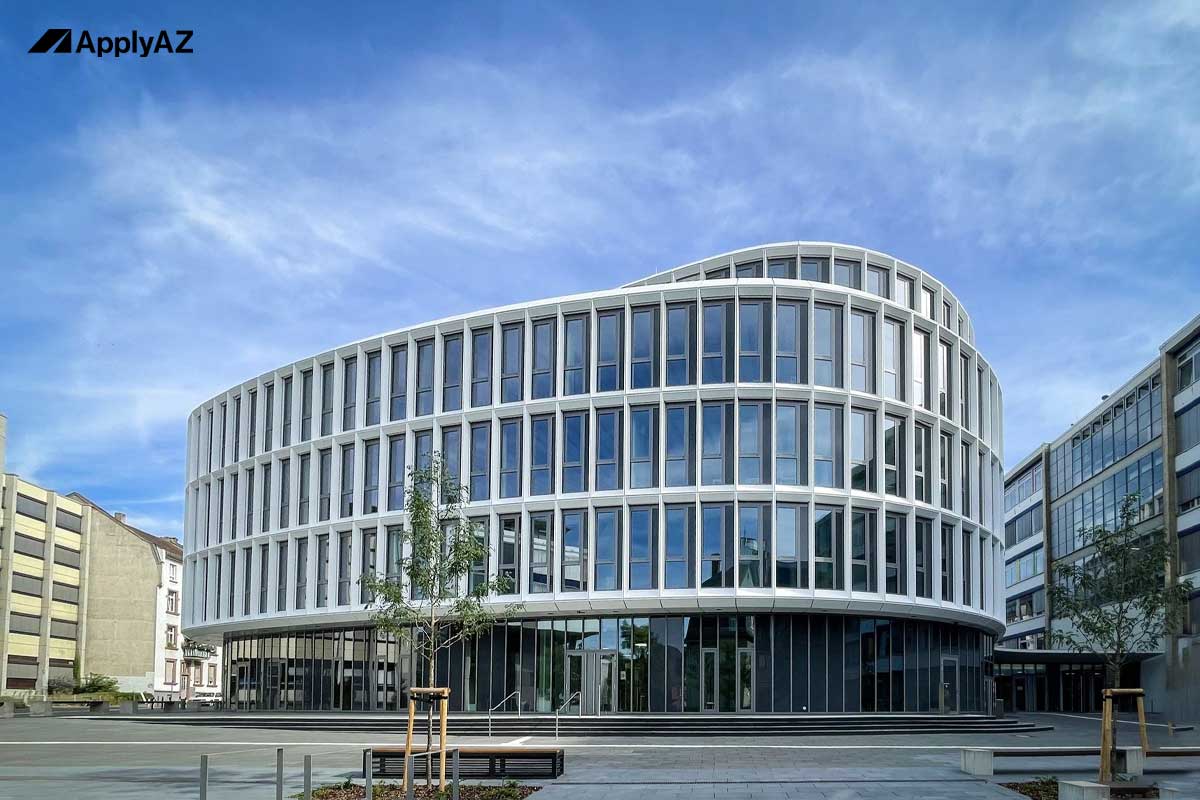
A practical guide to Frankfurt University of Applied Sciences
First look at Frankfurt University of Applied Sciences
Frankfurt University of Applied Sciences is the kind of place that rewards students who want practical learning and clear outcomes. Think of it as applied study with a strong link to real industry problems, not theory for theory’s sake. ApplyAZ usually starts here by helping you decide if an applied university profile matches your goals, your learning style, and your timeline. Many students choose a city and then chase a course. A better approach is to choose the type of university first, then the city that supports your plan.
Frankfurt itself matters. It shapes your daily life, your costs, your part time options, and your network. When students ask “Is it a good university?”, the real question is “Is it good for my plan?”. Look at programme structure, assessment style, and how the curriculum connects to roles you actually want. If you like clear requirements, hands on projects, and steady weekly output, you are usually in the right direction.
What studying feels like there (teaching, exams, pace)
Expect a steady pace with structure. In many applied programmes, you do not cram everything into one final exam. You often have a mix of coursework, presentations, group work, and exams across the term. That can feel intense if you are used to one big test at the end. The upside is that your progress is visible, and your weak areas show up early. ApplyAZ helps students plan their term workload before arrival, so the first weeks do not become a shock.
The classroom culture is usually direct. If you stay quiet, nobody will chase you. You are expected to read the module info, follow instructions, and ask specific questions. A typical student who does well is not necessarily “the smartest”. It is the one who is consistent, attends, submits on time, and learns how each professor tests. If you build a weekly routine early, you will feel in control, even in a fast programme.
English-taught options and how to check the right track
Many students assume “English taught” means everything is in English, including admin, electives, and internships. In reality, English taught can mean the core teaching is in English, while some modules, campus services, or local opportunities still lean on German. ApplyAZ supports you by checking the exact track, intake, and language requirements, so you do not apply to something that looks English on the surface but does not fit your profile.
Before you commit, check these items in the programme description and module handbook:
- Language of instruction for core modules and electives
- Internship or project requirements, and whether German is expected
- Intake term, deadline pattern, and whether it is competitive or first come
- Required background, including specific subjects or credits
A common scenario is a student who qualifies academically but loses time because they picked the wrong intake or missed a language condition hidden inside a module list. The right check early saves months.
Admissions reality: what matters most (and what doesn’t)
Admissions often looks strict, but it is usually logical. Your academic fit matters most: whether your previous subjects match the programme’s required foundation. The name of your past university matters less than people think. The same goes for flashy certificates that do not prove academic readiness. ApplyAZ focuses on mapping your transcripts against programme expectations, so you apply where you truly match instead of hoping an admissions officer “makes an exception”.
Timing matters almost as much as fit. Students underestimate how quickly an application becomes messy when one document is delayed. A typical mistake is spending weeks perfecting a motivation letter while the transcript format, grading scale note, or degree proof is still unclear. In most cases, the clean application wins: correct documents, correct format, correct language proof, and a motivation letter that is specific and consistent with your academic story.
Documents students underestimate (prepare early)
The documents that cause problems are rarely the obvious ones. Students prepare passports and CVs, but miss the academic evidence that German systems depend on. ApplyAZ helps you prepare a document set that matches what universities usually expect, and also what visa and arrival steps tend to require later. When you prepare early, you avoid last minute translation stress and rushed affidavits that look weak.
Most delays come from these items:
- Full transcripts with all semesters and grading scale notes
- Degree certificate or official proof of completion
- Clear course content evidence when the programme requires subject matching
- Language test results that meet the exact requirement for the intake
- APS or other country specific academic verification where applicable
A common scenario is a student who uploads “provisional” documents that are not accepted as final. Another is a student who has the right degree but cannot prove the right modules. Plan this like a checklist, not a hope.
Tuition and real costs in daily life
Germany is attractive because tuition at many public options can be low, but “low tuition” is not the same as “low cost”. Your monthly spending is usually the real driver: housing, deposits, health insurance, transport, and daily expenses. Frankfurt is a major city, so the cost of living can feel higher than smaller student towns. This does not mean it is a bad choice. It means you need a realistic budget and a strong housing plan.
Students often forget the first month costs. You might pay a housing deposit, buy basic items, pay semester fees, and handle insurance setup before your routine becomes stable. ApplyAZ supports students by building a cost plan that matches their timeline, including what needs to be paid before arrival versus what can be paid after registration. When your budget is honest, your decisions become easier, and you avoid the stress that destroys academic focus.
Scholarships and funding: how to think, not guess
Funding becomes simple when you stop guessing and start matching. Scholarships are usually about eligibility rules, timing, and documents, not luck. The best approach is to treat funding as a strategy built around your programme, your intake, and your country status. ApplyAZ supports students by mapping scholarship options to the exact plan, so you do not waste time chasing funding that was never available for your route. Finance it with loan options via ApplyAZ.
A typical student mistake is waiting for admission first and only then thinking about funding. Many funding steps require early preparation: financial documents, translations, and proof of academic merit. Another common mistake is assuming one scholarship fits everyone. The smarter way is to build layers: primary scholarship options, backup funding, and a cash flow plan for the first months. When you plan this early, you reduce risk and keep your choices open.
Housing and arrival planning (what to decide before you land)
Housing is not an admin detail. It is the foundation of your first semester. If you arrive without a clear plan, you spend your first weeks chasing rooms instead of building your study rhythm. Frankfurt can be competitive, so early action matters. ApplyAZ supports students by helping them set the right timeline and prepare the documents landlords and student housing options often ask for, so you can respond quickly when something becomes available.
Decide these before you land:
- Your maximum monthly housing budget and acceptable commute time
- Whether you prefer shared flat, studio, or student residence style living
- What documents you will present for housing and registration steps
- Your first week plan: temporary stay, transport, and essential setup tasks
A common scenario is a student who chooses a cheap room far away, then loses hours daily and burns out. Another is a student who ignores deposits and gets stuck. A balanced choice protects your time, not just your wallet.
After graduation: work options and direction
Work outcomes depend on direction, not just the degree title. The strongest graduates are the ones who build a profile during the programme: relevant projects, internships, a focused CV, and a clear target role. An applied university environment can support this if you treat every semester as portfolio building. ApplyAZ supports students by helping them align programme choices with realistic post study paths, so your modules and projects match the roles you want.
A typical student who struggles after graduation is not “unemployable”. They are unfocused. They apply everywhere with the same CV and no story. Start early: choose a direction, collect evidence, and build relationships. If you plan to work in Germany, German language skills can widen your options over time, even when your programme is in English. The goal is not perfection. The goal is steady progress that compounds.
How ApplyAZ supports you step-by-step
ApplyAZ is most useful when you treat the process like a sequence, not a single application. First, we shortlist programmes that match your academic background and your career plan. Then we turn your documents into a clean, complete application set, so universities see clarity instead of confusion. We also help you avoid the common trap of applying too broadly without fit, which often leads to rejections, delays, and lost intakes.
As you move forward, we support you across the entire journey: application planning, motivation letter positioning, CV structure, and scholarship strategy built around your route. We also guide visa preparation and practical readiness, because a perfect admission means little if your next steps collapse under missing documents or bad timing. Students usually misunderstand one thing: the process is not hard because it is complex. It is hard because it is long, and consistency beats bursts of effort.
How ApplyAZ Gets You In
Most students find one program they like and hope for the best. That is not how we work.
It starts with a quick eligibility check, about 2 minutes, so you instantly know if this opportunity is a real option for your profile. If you are eligible, you book a private one-to-one consultation with one of our experts, where you get a clear and personalised plan built around your exact situation: your best-fit programs, your real deadlines, your scholarship path, and your exact next steps.
If you decide to move forward with us after that call, you enroll, upload your documents, and we take it from there. Our admissions team goes through your transcripts course by course, maps your background against real university requirements, and builds you a shortlist of 20 or more programs that you genuinely qualify for, across prestigious public universities, career-forward degrees taught in English, with strong graduate placement records. You review them, approve the ones you like, and then you lay back.
We write your CV and motivation letter for each program, submit every application, and track every deadline. Alongside admissions, we actively work on securing scholarships that fit your program, university, and country, whether that is DSU, DAAD, or other funding available to your profile, so you have the strongest possible shot at studying public (€0 for eligible students) with your living costs covered. Then we stay with you through visa preparation, arrival, and every practical step that follows.
Depending on your profile, you may qualify for far more programs, universities, and funding opportunities than you would ever find on your own. The only way to know is to start.
Check your eligibility now. It takes about 2 minutes. Because everything begins there.
High Integrity Systems, where safety meets engineering
A quick sense-check: who Master in High Integrity Systems suits
Master in High Integrity Systems at Frankfurt University of Applied Sciences suits students who care about reliability, safety, and preventing failure in complex systems. If you like structured thinking, risk-based decisions, and engineering discipline, this can be an excellent fit. ApplyAZ begins by checking whether your background shows the right foundations: engineering reasoning, maths, and a comfort with standards, testing, and documentation.
A typical fit is mechanical, electrical, civil, industrial engineering, or related technical fields. Candidates with quality, maintenance, or safety engineering exposure often align well too. A weaker fit is someone from a non-technical background without evidence of quantitative work. If you are switching from IT or management, you need to show how you have handled safety-critical thinking and why you can manage technical depth.
What you will gain by the end (real outcomes)
The real outcome is the ability to analyse and reduce risk in systems that cannot afford failure. You should learn to think in terms of integrity management, lifecycle decisions, inspection logic, and robust design. This is valuable in industries where reliability and safety are core: energy, infrastructure, transport, manufacturing, and safety-critical tech environments. ApplyAZ helps you align your application story with these outcomes, because it signals seriousness and a clear direction.
A common scenario is a student who has engineering knowledge but has never framed it as “integrity” work. Another is a student who worked in maintenance but lacks formal methods language. This programme can bridge those gaps, but only if you present your profile as evidence-based and disciplined, not just “interested in safety”.
The learning style you should expect
Expect method-heavy learning with a focus on process, documentation, and decision justification. You may face case-style tasks where you must explain why a decision is safe, not only whether it works. Many students underestimate how much written clarity matters. If you cannot explain your assumptions, your analysis is weak. ApplyAZ supports students by shaping CV and motivation letters to show structured thinking, because this field values process as much as results.
You should also expect that standards and compliance thinking will appear. That does not mean memorising rules. It means learning how to work within constraints and how to communicate safety logic to stakeholders. A typical mistake is treating this like a pure technical course and ignoring the risk and governance layer that makes integrity work real.
Modules, projects, and thesis (how the year often flows)
The year often starts with foundations: how integrity is defined, how failures happen, and how risk is assessed. Mid-phase work typically applies these methods to inspection strategies, maintenance planning, and lifecycle decisions. Later projects and thesis work usually focus on a specific system or failure mode, with a structured approach to improvement. ApplyAZ helps you plan thesis direction early, so your final work supports your target industry.
A typical mistake is choosing a thesis topic that is either too theoretical or too narrow without data. A better approach is to choose a real scenario that can be modelled with reasonable assumptions. Even when you cannot access full industry data, a well-framed method and clear decision logic can produce a strong thesis.
Entry requirements (clear checklist)
Entry is usually about technical background and evidence you can handle analytical depth. ApplyAZ checks whether your academic record shows the key foundations, and we also look for supporting evidence in projects, internships, or work.
Items to prepare:
- A relevant engineering or technical Bachelor degree
- Transcript showing maths, mechanics, materials, systems, or related modules
- CV showing technical work, quality, maintenance, or safety exposure
- Motivation letter with a clear integrity focus and industry direction
- Language proof as required
If your transcript is broad but not directly “integrity”, that is fine if you can show the building blocks and explain your bridge. If you have gaps in core engineering foundations, you should clarify them before applying.
How to read your transcript against the requirements
Look for foundations that support integrity thinking: mechanics, materials, systems, reliability concepts, and structured analysis. Requirements are often written as subject areas, but the real test is whether you can operate within a risk-based method. ApplyAZ maps your courses into relevant skill areas and highlights where your profile is strong or needs explanation.
A useful logic is: can your modules show you understand how things fail, how to test, and how to decide? If you studied design and manufacturing, show how you handled tolerances and quality logic. If you studied civil engineering, show how you handled safety factors and structural reasoning. The mistake to avoid is listing course titles without explaining what skills they prove.
Documents to prepare early (avoid delays)
Safety and integrity programmes are often strict about documentation clarity. ApplyAZ helps you prepare a clean set early so you avoid the common back-and-forth that slows applications.
Documents that often cause delays:
- Transcript with clear grading scale notes
- Degree certificate or official completion proof
- Course descriptions if subject mapping is needed
- Proof of work experience where relevant
- Language certificates meeting the programme rules
Avoid unclear scans and missing pages. Also avoid motivation letters that sound generic. Integrity programmes favour applicants who sound precise, careful, and realistic about the field.
Tuition, fees, and living costs (real planning)
Tuition may be low in many public options, but you still need a strong budget plan. Living costs often dominate. Frankfurt can be more expensive for housing, so plan early and include buffers. ApplyAZ helps students prepare a realistic monthly budget and also plan the first month, which typically includes deposits and setup costs.
The biggest risk is underestimating housing timing. If you arrive without stable housing, your academic focus drops, and integrity programmes demand consistent weekly work. Plan your arrival as part of your study strategy, not as a separate problem. Stability matters more than small savings when the programme workload is steady.
Scholarships and funding (smart approach)
Funding becomes manageable when you stop guessing and build a plan around rules and timing. ApplyAZ helps you align funding routes to your intake and document readiness. Finance it with loan options via ApplyAZ.
A typical mistake is assuming funding is a bonus and delaying preparation. Another is applying without a backup plan. Build a funding strategy that includes scholarship routes you can realistically qualify for and a financial plan for the early months. Integrity-focused programmes reward students who plan well, because planning is part of the mindset of the field.
Career direction after Master in High Integrity Systems
Graduates often move toward roles linked to reliability, safety, inspection planning, maintenance strategy, quality engineering, and risk management in technical environments. Your advantage comes from evidence of method. Employers want to see structured thinking and clear decision logic, not only “interest in safety”. ApplyAZ supports students by aligning thesis topics and projects with target roles, so your graduate profile looks intentional.
A common mistake is presenting yourself as “open to anything”. Instead, choose a direction: asset integrity, reliability engineering, safety assurance, quality systems, or risk-based maintenance planning. Even if you switch later, choosing a direction early helps you select projects that build a coherent profile.
How ApplyAZ supports you step-by-step
ApplyAZ supports you from fit confirmation to document readiness and application planning. We start by checking whether Master in High Integrity Systems at Frankfurt University of Applied Sciences matches your academic base and target industry. Then we shape your CV to highlight method, responsibility, and technical discipline, and we structure your motivation letter to show you understand what integrity work really is.
We also manage planning risks: deadlines, document clarity, and the common points where students lose time. Many rejections happen because the application looks vague or incomplete, not because the candidate is weak. Our role is to keep your application precise, consistent, and ready, and support you through scholarship strategy and visa guidance with a clear path.
We Handle Everything. You Just Need to Qualify.
You upload your transcripts. We go through them carefully, match you to 20 or more English-taught programs at prestigious public universities with strong placement records, write your applications, and actively pursue every scholarship available for your profile, whether that is DSU, DAAD, or others depending on the university and country.
You review your shortlist, approve what fits, and we take care of the rest.
The only thing left for you to do right now is find out if you qualify.
Check your eligibility. It takes about 2 minutes.
Tuition and scholarships
Public universities in Germany charge no tuition fees for international students. A semester contribution typically applies, covering administrative costs and often a public transport pass.
DAAD (German Academic Exchange Service) offers scholarships for international master's students, covering living costs and a travel allowance. Apply through the DAAD portal separately from your university application.
The Deutschlandstipendium provides €300 per month, co-funded by the federal government and private sponsors. Applications go through the university's scholarship office after enrolment.
For Indian applicants
Indian graduates with a degree recognised by AIU (Association of Indian Universities) can apply to German public universities through uni-assist. The uni-assist portal handles degree equivalency verification and is the standard route for most non-EU applicants. Check your eligibility with us first.
Similar programmes
More free programmes in this city

They Began right where you are

