

Master in Global Software Development
Master in Global Software Development suits students who want to build software in international teams and understand how products move from idea to deployment. After graduation, this degree can support roles like software engineer, full-stack developer, backend developer, QA engineer with automation focus, DevOps junior roles, product-oriented engineering roles, and technical project work. For this program, ApplyAZ helps with eligibility checks, scholarship strategy, and visa preparation.
Master
3 semesters, 4 semesters
Fulda
English
Fulda University of Applied Sciences



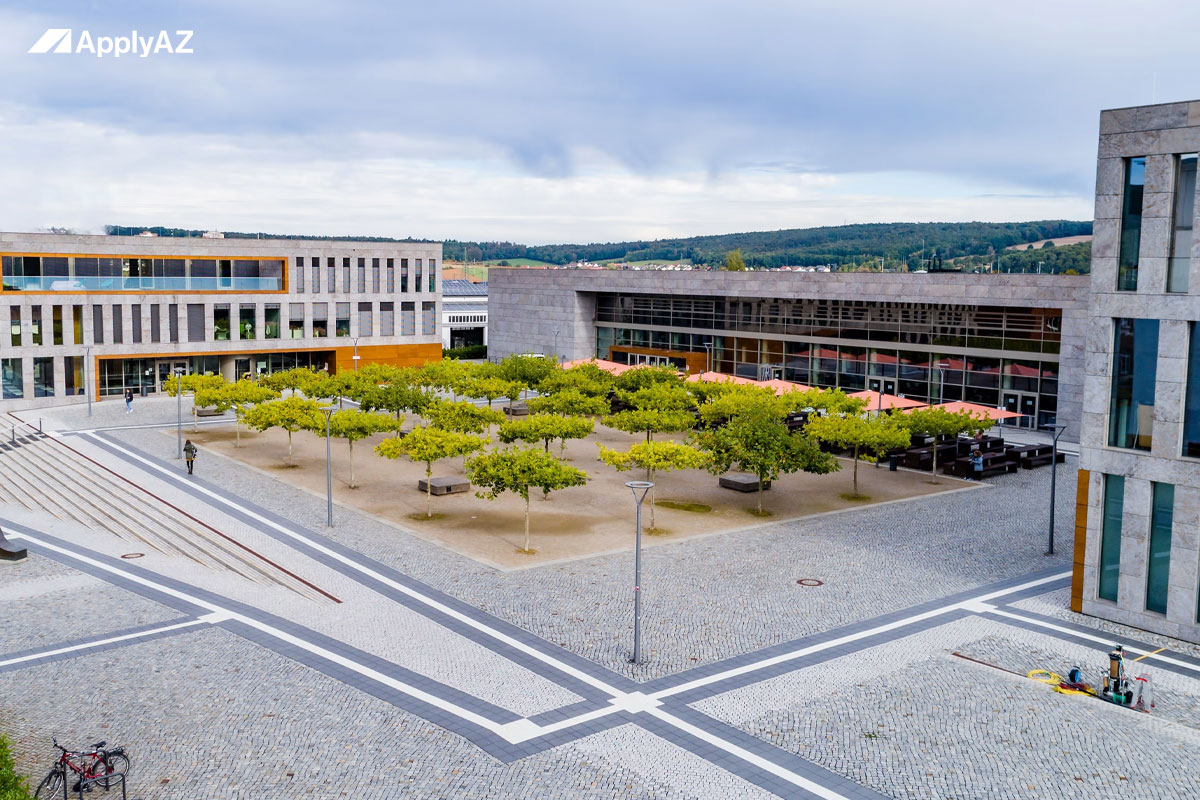
Studying at Fulda University of Applied Sciences
First look at Fulda University of Applied Sciences
Fulda University of Applied Sciences is a public university of applied sciences in the state of Hesse, in the city of Fulda. It is known for practical teaching, close contact with lecturers, and strong links to employers through projects and placements. That “applied” focus matters. You are not only learning theory. You are expected to use it in case work, lab work, and real problem settings.
ApplyAZ helps you treat this choice like a decision, not a guess. Early on, we map your background to the right department and study direction so you do not waste time applying to programmes that look good on paper but do not match your credits, level, or goals.
What studying feels like there (teaching, exams, pace)
Expect a structured week. Many programmes use smaller class formats than large research universities, so your work is seen. Teaching often blends lectures with seminars, labs, group work, and assessed assignments during the semester. The pace can feel steady rather than extreme, but it is not “easy”. Continuous deadlines are common, especially when modules include projects.
A typical student finds that the first surprise is assessment style. It is not always one final exam. You may have presentations, reports, group deliverables, and practical tests. The second surprise is expectations around independence. You are guided, but you must manage time well, ask questions early, and keep your documents and enrolment steps clean.
English-taught options and how to check the right track
Fulda University of Applied Sciences offers a real mix of German-taught and English-taught study options, including programmes fully in English and programmes with English tracks or modules. The key is to verify the language of instruction for your exact intake and curriculum, not just the programme title. Some degrees list English and German because parts of the course or specialisations differ.
Use this quick checklist before you commit:
- Confirm the programme language for the semester you want to start.
- Check whether internships, lab work, or thesis supervision require German.
- Look at module titles across all semesters, not only the first term.
ApplyAZ supports this step by translating the programme structure into a clear plan: what is truly English-taught, what needs German later, and what still fits your long-term career direction.
Admissions reality: what matters most (and what doesn’t)
Admissions usually come down to fit and readiness. Fit means your prior education matches the subject and level, including required modules and credits. Readiness means you can prove language ability, submit complete documents, and meet deadlines. Some programmes are open admission, while others are restricted and competitive. The competitive ones often care about your grades and how closely your previous studies match the field.
What matters less than students think is “branding”. A good application with the right match beats a rushed application to a trendy title. Also, do not overestimate generic achievements if they do not connect to the curriculum. ApplyAZ helps by checking the real admission pathway for international transcripts and reducing avoidable errors that cause rejections, delays, or missed intakes.
Documents students underestimate (prepare early)
Many students focus only on the main items and forget the documents that slow everything down. The small gaps are what cause deadline stress. For international applicants, document format and proof rules matter as much as the content. If you prepare these early, the rest becomes simpler and calmer.
Commonly underestimated documents include:
- Full transcripts with grading scale and course details, not only a marksheet.
- Certified translations where required, plus correct certification format.
- Proof of language, timed to the university’s validity rules.
- APS or other country-specific verification if it applies to your education system.
ApplyAZ supports this step by building a document checklist that matches your case, then reviewing your set for completeness before submission so you do not lose weeks on avoidable corrections.
Tuition and real costs in daily life
In Germany, the big cost is usually not tuition. Public universities of applied sciences typically charge a semester contribution instead. At Fulda University of Applied Sciences, the semester fee includes items like student services, administration, and a Germany semester transport ticket. You should plan for this as a fixed payment each semester, even when tuition is not charged.
The university’s own budgeting guidance puts typical monthly living costs around €1,000, with rent being the largest piece. This number is not a rule, but it is a useful planning anchor. ApplyAZ helps you build a realistic budget for your city, programme timetable, and visa needs, so you do not overpromise financially and underdeliver when you arrive.
Scholarships and funding: how to think, not guess
Funding is rarely one magic source. Think in layers: what you can cover yourself, what your family can support, what scholarships might realistically add, and what timing risks exist. Some scholarships are merit-based, some are need-based, and many depend on strict documentation and deadlines. Students often make two mistakes: assuming they will “surely get something”, or ignoring funding until they already have an admission and no time left.
A common scenario is a student who gets a good admission but misses the best funding window because they started late. ApplyAZ supports this step by building a funding strategy alongside admissions planning. Finance it with loan options via ApplyAZ.
Housing and arrival planning (what to decide before you land)
Housing is where planning becomes real. Your first weeks in Germany shape your whole experience, so treat arrival like a project with decisions, not hope. You need a temporary plan and a long-term plan. You also need to choose what you can compromise on: distance, rent, room type, or move-in date. Many students lose time because they wait for a perfect room that never appears.
Before you land, decide your first address plan, your budget ceiling, and how far you are willing to commute. Plan your first appointments too, like city registration and health insurance steps. ApplyAZ supports by giving you a practical arrival checklist, timed around your admission, visa process, and intake dates.
After graduation: work options and direction
A degree from a university of applied sciences is designed to connect to jobs. Your best outcomes come when you build a direction early: what roles you want, what skills you must prove, and what German level will realistically help. Even in English-speaking workplaces, German can expand your options and make daily life easier. Internships, student jobs, and thesis topics can become your bridge into the labour market.
Do not wait until the final semester to think about employability. A typical student who starts early will tailor projects, build a portfolio, and use career services more effectively. ApplyAZ supports this step by helping you choose programmes that match job outcomes and by keeping your plan realistic around regulations and timelines.
How ApplyAZ supports you step-by-step
ApplyAZ supports you end-to-end: shortlisting, document readiness, applications, scholarship strategy, and visa guidance. We start by matching your academic background to the correct programme level and department, then confirm which intake and language track truly fits your case. Next, we organise your documents so they meet format rules and do not trigger avoidable rejections or delays.
During applications, we manage timelines, submission steps, and follow-ups so you stay on track across multiple programmes. After admission, we shift into funding and visa preparation, with planning that fits your budget and deadlines. The goal is simple: fewer surprises, fewer mistakes, and a clear path from decision to arrival.
How ApplyAZ Gets You In
Most students find one program they like and hope for the best. That is not how we work.
It starts with a quick eligibility check, about 2 minutes, so you instantly know if this opportunity is a real option for your profile. If you are eligible, you book a private one-to-one consultation with one of our experts, where you get a clear and personalised plan built around your exact situation: your best-fit programs, your real deadlines, your scholarship path, and your exact next steps.
If you decide to move forward with us after that call, you enroll, upload your documents, and we take it from there. Our admissions team goes through your transcripts course by course, maps your background against real university requirements, and builds you a shortlist of 20 or more programs that you genuinely qualify for, across prestigious public universities, career-forward degrees taught in English, with strong graduate placement records. You review them, approve the ones you like, and then you lay back.
We write your CV and motivation letter for each program, submit every application, and track every deadline. Alongside admissions, we actively work on securing scholarships that fit your program, university, and country, whether that is DSU, DAAD, or other funding available to your profile, so you have the strongest possible shot at studying public (€0 for eligible students) with your living costs covered. Then we stay with you through visa preparation, arrival, and every practical step that follows.
Depending on your profile, you may qualify for far more programs, universities, and funding opportunities than you would ever find on your own. The only way to know is to start.
Check your eligibility now. It takes about 2 minutes. Because everything begins there.
Master in Global Software Development at Fulda University of Applied Sciences
A quick sense-check: who Master in Global Software Development suits
Master in Global Software Development suits students who want to build software in international teams and understand how products move from idea to deployment. It fits people who like engineering discipline, collaboration, and real delivery constraints. If you are excited by tools, but also by process and teamwork, this can be a strong match.
A typical good match is someone with Computer Science, Software Engineering, IT, or related engineering. Students from other fields can sometimes fit if they have strong coding experience and clear proof of software fundamentals.
ApplyAZ helps you decide if your background shows the right evidence for this programme, so your application reads as credible and complete.
What you will gain by the end (real outcomes)
By the end, you should be able to design, build, test, and ship software with modern practices. That includes version control discipline, clean code habits, testing strategy, and basic DevOps thinking. You also gain confidence working across cultures and roles, which is a real skill employers value.
You should also learn how to handle real trade-offs: speed versus quality, features versus stability, and short-term fixes versus long-term maintainability. Many graduates improve their ability to plan work, estimate effort, and communicate risks.
ApplyAZ keeps your plan outcome-led by matching the programme to your target roles and making sure your profile shows evidence of delivery, not only interest.
The learning style you should expect
Expect applied learning with a strong project rhythm. You will likely work in teams, using tools and workflows similar to industry. That can include sprints, documentation, peer reviews, and presentations. The work is steady and practical, so time management matters.
Some students find the biggest shift is responsibility. In team projects, your output affects others. If you miss deadlines, the group suffers. This pushes you to plan and communicate clearly.
A common scenario is a student who codes well alone but struggles in group delivery. This programme style helps you build that skill, but you need to take it seriously from the start.
Modules, projects, and thesis (how the year often flows)
Early modules often reinforce core engineering foundations: architecture thinking, software quality, project planning, and tooling. Even experienced coders benefit because academic programmes often demand clearer reasoning and documentation than a casual developer workflow.
Projects usually increase in complexity. You may start with smaller builds and move towards larger team products, where design decisions and coordination become the main challenge. That is where you learn what “global development” really means.
Your thesis can become a portfolio piece if planned well. A strong thesis focuses on a real problem, defines scope tightly, and produces a result that can be explained and defended. ApplyAZ helps you plan that scope so it supports job outcomes.
Entry requirements (clear checklist)
Entry requirements often focus on software fundamentals and academic fit. You need to prove you can handle programming, structured problem solving, and the level of the degree.
Use this checklist:
- Essential: a recognised Bachelor’s degree with a relevant field or clear software content.
- Essential: transcript evidence of programming and core computing modules.
- Often required: English proficiency for English-taught study.
- Helpful: projects, internships, or work evidence that shows real development.
- Needs early clarification: unclear course titles, missing module descriptions, or unusual grading systems.
ApplyAZ supports you by checking what evidence you have and what must be added to avoid a weak or confusing application.
How to read your transcript against the requirements
Read your transcript like an admissions reviewer. They ask: did this student study real computing foundations or only surface tools? Modules that usually help include programming, data structures, databases, operating systems, networks, software engineering, and maths for computing.
Background A tends to fit smoothly: a CS degree with software engineering modules and projects. Background B can fit with proof: an engineering degree with strong programming and systems work. Background C needs careful handling: business degrees with limited coding, unless you have strong, verifiable software experience.
A common mistake is relying only on a CV claim like “I know Java”. Without transcript or project evidence, it can look weak. ApplyAZ helps you package proof in the right academic way.
Documents to prepare early (avoid delays)
Software programmes often move fast on deadlines, so document readiness is a real advantage. Small issues can cause evaluation delays, especially for international transcripts.
Prepare early:
- Transcript with full pages, grading scale, and course list.
- Degree certificate or provisional proof if still studying.
- Proof of English level if required for your intake.
- Course descriptions if module titles are vague or non-standard.
- Any name-change or identity consistency documents if your documents differ.
ApplyAZ supports this stage by checking consistency and completeness, so the university can assess your file without back-and-forth requests.
Tuition, fees, and living costs (real planning)
Plan your costs in three layers: semester fees, monthly living costs, and arrival costs. Semester fees are usually paid upfront per term. Living costs include rent, insurance, food, transport, and daily spending. Arrival costs include deposits, initial rent, and setup expenses.
Many students underestimate the first month, especially deposits and temporary housing. If you plan only monthly costs, you can still get stuck at arrival.
ApplyAZ helps you plan cash flow and timing, including what you need ready before travel and what you can arrange after arrival. Finance it with loan options via ApplyAZ.
Scholarships and funding (smart approach)
Treat funding as a process that runs beside admissions, not after it. You need deadlines, documents, and a consistent story about why the programme fits your background. Even when funding is limited, planning helps you avoid last-minute decisions that harm your visa or arrival plan.
Build a base plan you can fund and then pursue scholarships as upside. This keeps you safe and calm. If funding comes, it improves your options. If it does not, you still have a workable path.
ApplyAZ supports this by aligning your application narrative and timeline with funding opportunities, while keeping expectations realistic and documents ready.
Career direction after Master in Global Software Development
This degree can support roles like software engineer, full-stack developer, backend developer, QA engineer with automation focus, DevOps junior roles, product-oriented engineering roles, and technical project work. Your direction depends on what you build during the programme.
Employers respond to proof. A typical strong graduate has a clear Git-style project trail, a solid thesis, and one or two team projects they can explain in terms of decisions and impact.
ApplyAZ helps you choose a path early so your projects and thesis support one direction, instead of looking scattered. That focus often makes interviews easier and outcomes stronger.
How ApplyAZ supports you step-by-step
ApplyAZ guides students end-to-end: programme fit, document check, application plan, scholarship strategy, and visa guidance. We begin by confirming that your academic background shows the fundamentals the programme expects. If there are gaps, we flag them early so you can decide whether to proceed or choose a better-fit option.
Then we prepare your documents so the university can assess your file quickly, without repeated requests. We manage your application timeline across intakes and ensure your profile tells a consistent story.
After admission, we align funding and visa planning with your deadlines so your path stays smooth and practical.
We Handle Everything. You Just Need to Qualify.
You upload your transcripts. We go through them carefully, match you to 20 or more English-taught programs at prestigious public universities with strong placement records, write your applications, and actively pursue every scholarship available for your profile, whether that is DSU, DAAD, or others depending on the university and country.
You review your shortlist, approve what fits, and we take care of the rest.
The only thing left for you to do right now is find out if you qualify.
Check your eligibility. It takes about 2 minutes.
Tuition and scholarships
Public universities in Germany charge no tuition fees for international students. A semester contribution typically applies, covering administrative costs and often a public transport pass.
DAAD (German Academic Exchange Service) offers scholarships for international master's students, covering living costs and a travel allowance. Apply through the DAAD portal separately from your university application.
The Deutschlandstipendium provides €300 per month, co-funded by the federal government and private sponsors. Applications go through the university's scholarship office after enrolment.
For Indian applicants
Indian graduates with a degree recognised by AIU (Association of Indian Universities) can apply to German public universities through uni-assist. The uni-assist portal handles degree equivalency verification and is the standard route for most non-EU applicants. Check your eligibility with us first.
Similar programmes
More free programmes in this city

They Began right where you are

