

Master in Biochemistry
Master in Biochemistry at Dresden University of Technology in Germany suits students who enjoy molecular detail and disciplined lab thinking. Down the line, career direction often splits into research-focused and applied industry paths. ApplyAZ guides students through this program's specific admissions, funding, and visa process.
Master
4 semesters
Dresden
English
Dresden University of Technology


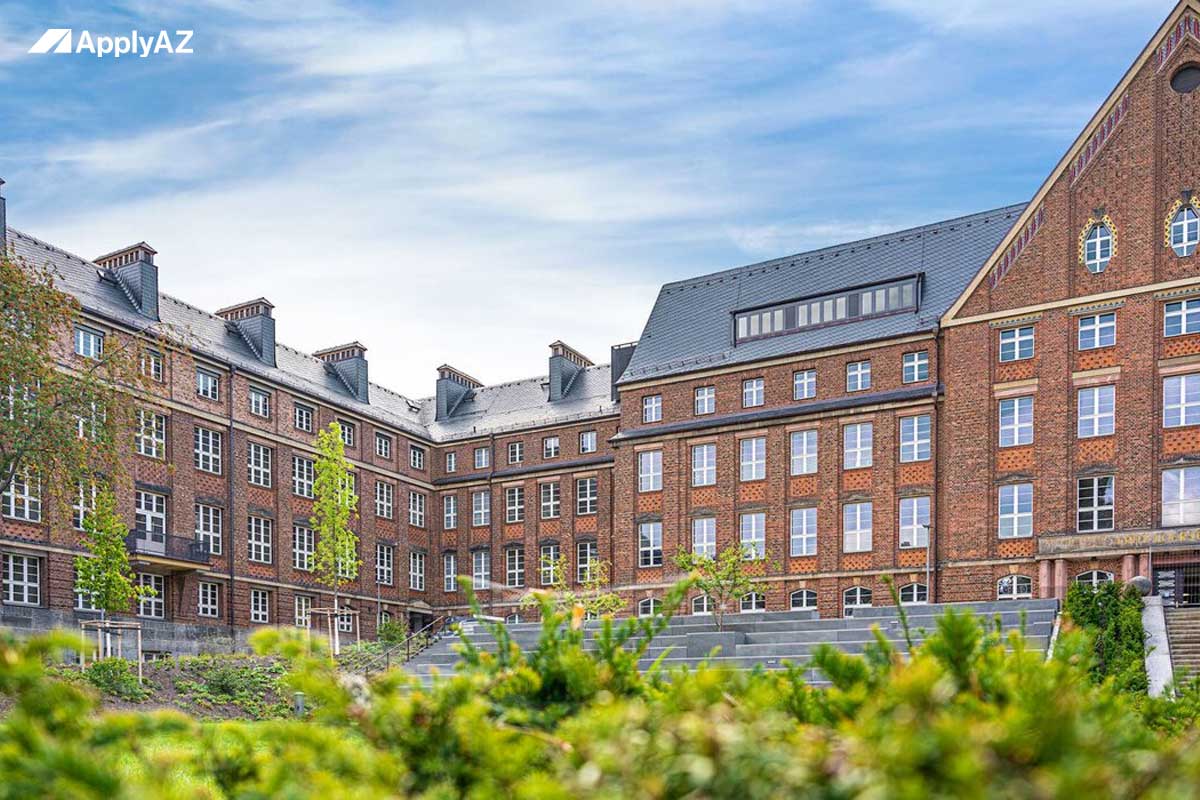
Studying in Dresden
First look at Dresden University of Technology
Dresden University of Technology is a large public university in eastern Germany with a strong research culture and a wide subject range. Many students choose it because it combines serious academics with a liveable city. You can build a profile here that employers recognise, but it works best for students who like structure and independent study. ApplyAZ helps you decide early if this kind of environment fits you, before you spend weeks collecting documents for a programme that is not a match.
The first thing to understand is how German universities “think”. They care less about branding words and more about formal fit: your previous modules, the level of maths or methods, and whether your degree background matches the programme rules. When students struggle, it is often not because they are “not good enough”, but because the eligibility logic was misunderstood. A good plan starts with reading programme regulations like a checklist, not like marketing.
What studying feels like there (teaching, exams, pace)
Teaching is usually a mix of lectures, tutorials, seminars, and lab or project work, depending on the faculty. In many programmes, the pace is steady, but the pressure rises near exam periods because several courses can be assessed at once. You are expected to learn independently between sessions. If you are used to continuous assessment every week, the rhythm can feel different. A typical student does well when they treat the semester as a long project, not a sprint.
Exams can be written, oral, or project-based, and grading can feel strict because expectations are clearly defined. What students commonly misunderstand is that “attendance” does not always equal “progress”. The real progress is shown in problem sets, lab reports, and how early you start exam preparation. ApplyAZ supports you by helping you map your study habits to the programme style, so you do not choose a course structure that fights your strengths.
English-taught options and how to check the right track
Dresden University of Technology has English-taught options, but you must check the exact track and the exact campus requirements, not just the programme title. Some degrees are fully in English, while others include German-taught modules or expect German for certain electives, internships, or admin steps. Students often rely on one line that says “English” and later discover that key modules are offered in German or only in certain semesters.
Use a simple check routine before you commit to an application. ApplyAZ uses the same routine to confirm what you are actually signing up for, and to avoid surprises after admission.
- Read the module handbook and language of instruction for each core module, not only the overview page
- Check if the thesis, internships, and elective pools have language restrictions
- Confirm which intake you are applying for and whether required modules are offered that term
- Compare the stated language requirement with the proof you can realistically provide on time
Admissions reality: what matters most (and what doesn’t)
Admissions are usually decided on eligibility first, then on selection rules if the programme has limited seats. Eligibility often depends on how closely your previous studies match the required subject areas. This is where many applicants lose time. They focus on polishing the CV while the real risk sits in missing credits, missing prerequisites, or unclear course titles in the transcript. A strong profile can still be rejected if the academic match does not meet the rules.
What often does not matter as much as students think is having a “perfect” motivation letter full of big claims. It matters more that your story is consistent with your academic path and the programme content. If selection applies, clarity wins: why this field, why this structure, and what you have already done that proves readiness. ApplyAZ supports this step by checking academic fit first, then shaping your narrative around real requirements.
Documents students underestimate (prepare early)
Students underestimate documents that look “optional” but become critical when the university needs to verify your background quickly. The biggest issues are unclear transcripts, missing grading information, and course titles that do not explain what you studied. Another common problem is timing. Some documents take weeks, and delays can force you to miss an intake even if you are fully qualified.
ApplyAZ works like a document engineer here. We do not just collect files. We make them readable and verifiable, so the admissions team can evaluate you without back-and-forth.
- Full transcript with grading scale and credit system clearly stated
- Degree certificate or provisional certificate, plus official translations if needed
- Course descriptions or module syllabi for key subjects, especially methods and core technical modules
- Proofs that are country-specific in some cases, such as verification certificates that may be required for certain applicants
Tuition and real costs in daily life
Many public universities in Germany do not charge traditional tuition fees in the way some countries do, but students still pay a semester contribution and must budget for living costs. The real cost of your year is shaped by rent, health insurance, food, transport, and setup expenses in the first month. A common scenario is that a student plans only monthly living costs and forgets arrival costs like deposits, temporary housing, and registration fees.
Plan your budget like a system, not a guess. Keep a buffer for the first six to eight weeks, when costs are higher and paperwork is still moving. Finance it with loan options via ApplyAZ if you want predictable coverage for your journey without breaking your savings plan. ApplyAZ also helps you time your payments around deadlines, so you are not forced into rushed decisions when the semester starts.
Scholarships and funding: how to think, not guess
Scholarships in Germany can come from different directions: national organisations, foundations, and sometimes university-related opportunities. The key is to stop thinking of scholarships as a single “application” and start thinking of them as a strategy. Each funding source has its own logic: some reward academic excellence, some focus on social criteria, and some support specific fields or nationalities. Many students miss opportunities because they only search for one famous name and ignore smaller but realistic options.
A practical approach is to build a funding plan that matches your timeline. Some scholarships open far earlier than admissions. Others require proof of enrolment. This means your best path might be to secure admission first, then apply for funding that needs your student status. ApplyAZ supports this by mapping your scholarship path to your intake and documents, so you know which funding you can pursue now and which ones become available later.
Also be realistic about what “funding” means. Some awards help with monthly living costs. Others provide partial support, fee waivers, or one-time grants. A smart plan blends sources: personal funds, family support, part-time work where legal and realistic, and scholarships where you truly fit the criteria. The goal is stability, not chasing the biggest headline.
Housing and arrival planning (what to decide before you land)
Housing is often the most stressful part, not academics. The earlier you decide your housing strategy, the calmer everything becomes. Many students want permanent housing immediately, but a safer approach is often to plan short-term housing first, then search locally once you understand neighbourhoods, commute times, and contract norms. A typical student who struggles is the one who arrives without a temporary plan and then accepts the first expensive option out of pressure.
Decide your arrival plan like a checklist, so you know what must happen in week one. ApplyAZ supports this stage by turning your arrival into steps, not chaos.
- Temporary housing for the first 2 to 4 weeks, plus a backup option
- Documents for registration, insurance, and opening a bank account where needed
- A realistic commute plan between housing and campus buildings
- A plan for deposits and first-month costs, which can be higher than expected
After graduation: work options and direction
Germany can offer strong career paths after graduation, but outcomes depend on planning early. The strongest signal is not the university name alone. It is your combination of skills, project work, internships, and language ability. Students who start building a portfolio in the first year usually find the transition easier than those who wait until the thesis. Employers want proof you can work in teams, solve real problems, and communicate clearly.
Work permissions and post-study residence options exist, but they come with rules, timelines, and paperwork. Do not treat it as automatic. Treat it as a process you prepare for: start tracking requirements, keep documents organised, and plan your job search around graduation dates. ApplyAZ helps you connect your study plan to your career direction early, so your electives, thesis, and internships support the job roles you actually want.
How ApplyAZ supports you step-by-step
ApplyAZ supports you from the first decision to your arrival in Germany. We start by shortlisting programmes that match your academic background and your career goal, so you are not applying blindly. Then we review your documents with an admissions lens: what is missing, what needs translation, what needs clearer proof, and what could cause a rejection even if your profile is strong. This step saves time because it prevents avoidable back-and-forth.
Next, we shape your application package to fit each programme. That includes CV structure, motivation letter logic, and aligning your story with the programme’s learning outcomes. We also guide scholarship strategy in parallel, so deadlines do not surprise you after admission. Finally, we support visa guidance and practical preparation, so you move with a plan, not with hope and stress.
How ApplyAZ Gets You In
Most students find one program they like and hope for the best. That is not how we work.It starts with a quick eligibility check, about 2 minutes, so you instantly know if this opportunity is a real option for your profile. If you are eligible, you book a private one-to-one consultation with one of our experts, where you get a clear and personalised plan built around your exact situation: your best-fit programs, your real deadlines, your scholarship path, and your exact next steps.If you decide to move forward with us after that call, you enroll, upload your documents, and we take it from there. Our admissions team goes through your transcripts course by course, maps your background against real university requirements, and builds you a shortlist of 20 or more programs that you genuinely qualify for, across prestigious public universities, career-forward degrees taught in English, with strong graduate placement records. You review them, approve the ones you like, and then you lay back.We write your CV and motivation letter for each program, submit every application, and track every deadline. Alongside admissions, we actively work on securing scholarships that fit your program, university, and country, whether that is DSU, DAAD, or other funding available to your profile, so you have the strongest possible shot at studying public (€0 for eligible students) with your living costs covered. Then we stay with you through visa preparation, arrival, and every practical step that follows.Depending on your profile, you may qualify for far more programs, universities, and funding opportunities than you would ever find on your own. The only way to know is to start.Check your eligibility now. It takes about 2 minutes. Because everything begins there
Biochemistry in Dresden
A quick sense-check: who Master in Biochemistry suits
Master in Biochemistry at Dresden University of Technology in Germany suits students who enjoy molecular detail and disciplined lab thinking. If you like connecting chemistry to living systems, and you can stay patient with complex experiments, you will likely enjoy the work. A typical good fit is a student from biochemistry, chemistry, biology, biotechnology, or related life sciences with solid lab exposure. ApplyAZ helps you confirm fit by checking whether your transcript shows the right foundations, not just a similar degree title.
This programme can be risky if your background is heavy in theory but light in lab practice, or if your coursework avoided core chemistry. It can still be possible, but you must show readiness through clear module content and strong documentation. A common scenario is a biology graduate with excellent grades but limited chemistry depth. The solution is to highlight the right modules and prepare course descriptions that make your training easy to verify.
What you will gain by the end (real outcomes)
By the end, you should be able to read biochemical problems with a research mindset: form a hypothesis, choose a method, interpret results, and report limitations clearly. You also gain practical competence in data handling and experimental reasoning, because biochemistry is as much about interpretation as it is about technique. Many students finish with stronger scientific writing, since reports, lab notes, and thesis writing reward clarity and discipline.
The real outcome is a profile that can support research roles and advanced study. You may aim for lab-based work in biotech, pharma, diagnostics, or academic research groups, depending on your focus. ApplyAZ helps you connect your intended direction to your electives and thesis planning, so you build evidence for one path. This prevents a common problem where students collect random modules and end up with a scattered story.
The learning style you should expect
Expect a blend of lectures, seminars, and lab-intensive learning. The pace often feels demanding because labs take time and mistakes cost days, not minutes. Students who do well keep strong routines: preparation before lab, clean documentation during lab, and reflection after. If you are used to last-minute revision, biochemistry will push you to plan earlier because lab work and assessments often run in parallel.
You should also expect reading. Scientific papers, methods notes, and protocols become part of your normal week. This can surprise students who only studied from textbooks. ApplyAZ supports you by helping you choose a programme structure that matches your working style and by preparing your application materials to show you understand the reality of the field. Reviewers trust applicants who sound practical.
Modules, projects, and thesis (how the year often flows)
The year often starts by strengthening core biochemical thinking, then moves into specialised themes through projects and lab modules. Projects usually train you to move from a question to an experiment plan, then to results and a conclusion you can defend. Students commonly underestimate the time needed for planning and troubleshooting. The strongest students treat each project as training for the thesis, not as a separate assignment.
The thesis often defines your next step. A well-chosen thesis makes job interviews easier because you can talk about one clear problem, one method, and one result. A common mistake is choosing a topic that is too broad or too dependent on one fragile experiment plan. ApplyAZ helps you think through feasibility early and choose electives that support the thesis topic, so your year flows logically.
Entry requirements (clear checklist)
Entry requirements usually focus on whether you have the right science foundations and whether your prior training matches the expected level. Do not assume the degree name is enough. The reviewer often decides based on module content, credit coverage, and clarity of evidence. ApplyAZ helps you present that evidence cleanly, especially when course titles vary by country.
- A relevant bachelor’s degree in biochemistry, chemistry, biology, biotechnology, or a closely related field
- Clear coverage of core chemistry and life science foundations in your transcript
- Evidence of lab training and methods exposure, shown through modules or documented course content
- Proof of English ability if required for the programme track
How to read your transcript against the requirements
Read requirements like a matching exercise, not a wish list. Start by listing the core foundations you have: general chemistry, organic or physical chemistry elements, molecular biology, genetics, and lab methods. Then check depth. A single “intro” module may not count as advanced readiness. Many students lose time because their transcript looks strong, but the credit distribution does not show enough chemistry or methods.
ApplyAZ checks your transcript with an admissions lens and flags what needs clarification. If a course title is vague, we recommend adding a course description that shows learning outcomes, lab hours, and methods. If you have gaps, we identify whether they are acceptable, or if you should consider a different programme. This reduces the risk of rejection due to missing evidence rather than missing ability.
Documents to prepare early (avoid delays)
Biochemistry applications often slow down because reviewers need proof of content, not only proof of enrolment. Prepare documents that explain your training clearly and quickly. Students underestimate how often a transcript is missing context like grading scale, credit system, or course-level detail. ApplyAZ supports this by turning your documents into a coherent package that reduces follow-up questions.
- Transcript with credits, grading scale, and official issue format, plus translations if needed
- Degree certificate or provisional completion proof, issued correctly
- Course descriptions or syllabi for key chemistry and methods modules when titles are unclear
- CV and motivation letter aligned to lab readiness and research interests
Tuition, fees, and living costs (real planning)
In Germany, the core financial planning often comes from living costs and semester contributions rather than high tuition. You should plan for rent, deposits, health insurance, food, transport, and the first-month setup costs that are easy to forget. Lab-heavy programmes can also create indirect costs, such as commuting to lab locations and time constraints that reduce flexibility. Finance it with loan options via ApplyAZ if you want to plan the move without squeezing your month-to-month buffer.
ApplyAZ supports you by aligning financial planning with deadlines and visa needs. A common mistake is underestimating the first six to eight weeks, when deposits and temporary housing costs are highest. Build a buffer, then stabilise. If you plan early, you can choose calmer housing options and avoid rushed decisions. Your budget should support your study rhythm, especially when lab schedules are fixed.
Scholarships and funding (smart approach)
Funding works best when you treat it as a timeline. Some scholarships open earlier than admissions and expect a strong academic direction. Others require proof of admission or enrolment. Many students waste time applying widely without checking fit, then miss realistic options that match their profile. A better strategy is to map funding options by criteria and required documents, then focus on the few you can genuinely support with evidence.
ApplyAZ supports scholarship strategy alongside your application plan. We help you prioritise opportunities that match your academic background and intended direction, and we help you avoid delays caused by missing documents. Also think in layers. Partial funding can still matter a lot because it reduces stress and keeps you stable while you settle into housing and lab routines. The goal is reliable support, not only one perfect award.
Career direction after Master in Biochemistry
Career direction often splits into research-focused and applied industry paths. Research-focused paths include PhD routes, research assistant roles, and laboratory research work in academia or institutes. Applied paths include biotech, pharma, diagnostics, quality roles, and lab operations where method discipline is valued. Employers usually care about the evidence you built: projects, thesis work, and how clearly you can explain your methods and results.
A common mistake is treating the thesis as only a graduation task. It is also your strongest proof of competence. ApplyAZ helps you keep career direction connected to your academic choices, so your electives and thesis tell one coherent story. Even if you stay flexible, focus on transferable skills like data interpretation, careful documentation, and clear communication. These skills carry across research and industry settings.
How ApplyAZ supports you step-by-step
ApplyAZ starts with programme fit and risk mapping. We check your transcript for foundations, depth, and lab readiness signals, then build a plan that reduces uncertainty. Next, we do a detailed document check and recommend course descriptions where needed, so reviewers can verify your training quickly. Then we shape your CV and motivation letter to reflect real biochemistry work, not generic ambition.
We also align scholarship strategy with your intake timeline, so you do not miss deadlines that move earlier than admissions. Finally, we support visa guidance and arrival planning, so your budget, housing plan, and documents are consistent. The result is a calmer process with fewer resubmissions and fewer avoidable delays.
We Handle Everything. You Just Need to Qualify.
You upload your transcripts. We go through them carefully, match you to 20 or more English-taught programs at prestigious public universities with strong placement records, write your applications, and actively pursue every scholarship available for your profile, whether that is DSU, DAAD, or others depending on the university and country.
You review your shortlist, approve what fits, and we take care of the rest.
The only thing left for you to do right now is find out if you qualify.
Check your eligibility. It takes about 2 minutes.
Tuition and scholarships
Public universities in Germany charge no tuition fees for international students. A semester contribution typically applies, covering administrative costs and often a public transport pass.
DAAD (German Academic Exchange Service) offers scholarships for international master's students, covering living costs and a travel allowance. Apply through the DAAD portal separately from your university application.
The Deutschlandstipendium provides €300 per month, co-funded by the federal government and private sponsors. Applications go through the university's scholarship office after enrolment.
For Indian applicants
Indian graduates with a degree recognised by AIU (Association of Indian Universities) can apply to German public universities through uni-assist. The uni-assist portal handles degree equivalency verification and is the standard route for most non-EU applicants. Check your eligibility with us first.
Similar programmes
More free programmes in this city

They Began right where you are

