

Contents
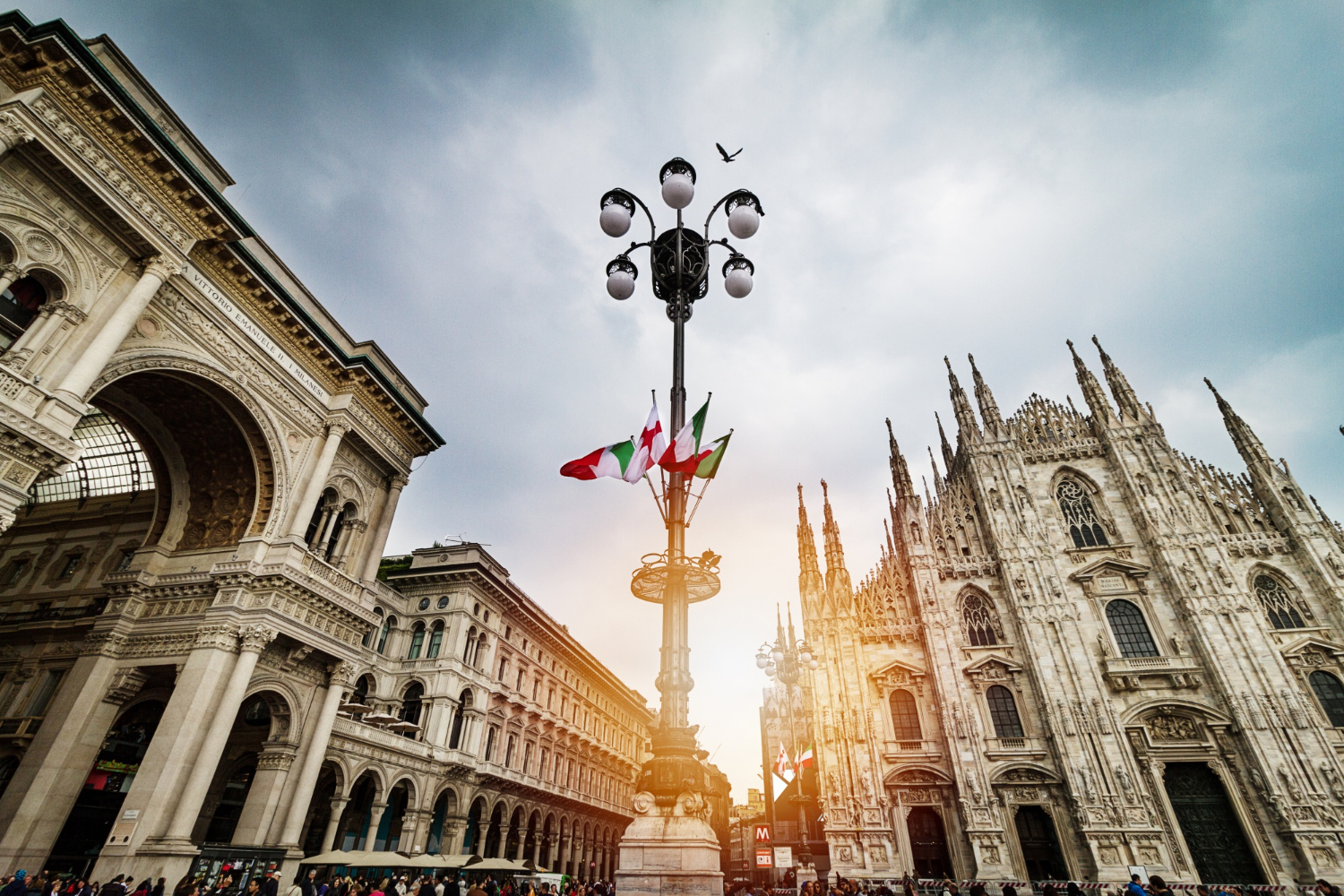
Italy is home to some of the world's oldest universities and welcomes over 100,000 international students every year. Yet when students consider studying abroad, Italy is often overlooked in favour of the UK, the Netherlands, or Spain. That's a mistake worth reconsidering.
Students choose Italy for its highly ranked universities at a fraction of UK costs, Bologna Process degree recognition across Europe, Rome's unique global business ecosystem, a generous DSU scholarship system that can cover full tuition and living costs, and one of Europe's richest cultural environments. Italy is Europe's most underrated study destination, and the financial case is increasingly hard to ignore.
Education at a Fraction of the Cost
Tuition fees in Italy are significantly lower than in the UK, the US, or even the Netherlands. At private business schools, you can expect to pay between €7,400 and €16,500 per year for a master's programme, compared to £20,000-35,000 typically charged to international students at comparable UK institutions.
Italian universities are part of the Bologna Process, which means degrees are recognised within the European Higher Education Area. Whether you're from India, Germany, or Nigeria, your Italian master's is fully compatible with European academic and professional standards, and increasingly valued across international labour markets.
A growing number of programmes, particularly at business schools, are now delivered entirely in English, removing the language barrier that once discouraged international applicants.
For students from countries like India, Italy's DSU scholarship system can cover the full tuition fee plus free accommodation and a monthly stipend, making the cost comparison even more stark. Learn how DSU works for students from countries like India.
Rome Is a Global Business Hub: Not Just a Tourist City
Most people think of Milan when they think of Italian business. But Rome is where policy, diplomacy, and international commerce intersect. The city hosts headquarters of United Nations agencies, including the FAO (Food and Agriculture Organisation) and IFAD (International Fund for Agricultural Development), making it a genuinely unique environment for students interested in international development, sustainability, and global governance.
Major multinationals, including ENI, Enel, and Generali, have significant operations in Rome, alongside a thriving ecosystem in luxury, hospitality, agribusiness, and creative industries. For business students, this translates into real networking opportunities, internships, and company partnerships that are built directly into academic programmes.
Why this matters for career starters: Studying in Rome means your classroom extends to boardrooms, international agency headquarters, and startup hubs. The exposure is qualitatively different from studying in a purely academic environment.
Career Outcomes: What Happens After Graduation
The most compelling reason to study in Italy isn't the history or the food; it's what happens after graduation. Graduates of Italian business schools pursue careers across a wide range of industries, including consulting, finance, marketing, operations, technology, and human resources, both in Italy and internationally.
The combination of an internationally recognised qualification, a diverse student community spanning more than 160 countries, and strong connections with employers creates a powerful launchpad. Leading business schools in Rome integrate career development into every programme: students benefit from dedicated career services teams, access to global alumni communities, and connections with networks of over 1,000 partner companies worldwide.
For graduates from countries like India, a European master's from Italy opens doors to EU work permits, multinational hiring pipelines, and roles across 48+ Bologna Process member countries, a geographic career runway that a UK degree alone cannot match post-Brexit.
Life in Rome: Culture, Cost, and Community
Compared with major European capitals like London, Amsterdam, or Paris, Rome generally offers a more affordable cost of living for students, particularly in terms of housing and everyday expenses. For students from countries like India who are used to navigating budgets carefully, this matters enormously in the day-to-day.
The city is increasingly international, particularly in areas frequented by students and young professionals. At international business schools, courses, student services, and networking events are conducted in English, making it significantly easier for international students to adapt, build connections, and feel at home.
Beyond the practical: living and studying in a city shaped by thousands of years of history, art, politics, and commerce provides a perspective that extends well beyond any curriculum. The cultural intelligence you develop simply by being in Rome is something no online course can replicate.
Cost of living snapshot: Most international students find Rome more affordable than Amsterdam or London in accommodation, food, and transport. The Italian aperitivo culture (free bar snacks with your evening drink) is, admittedly, one of the world's most civilised budget hacks.
Academic Heritage and European Recognition

Italy's academic tradition runs deep. The University of Bologna, founded in 1088, is the oldest university in the Western world. That heritage isn't just trivia; it continues to shape a higher education system whose credentials carry genuine weight in international labour markets.
Italian degrees are fully recognised throughout the European Higher Education Area. For business students specifically, it's worth prioritising schools that hold internationally recognised accreditations such as EQUIS or AACSB, quality signals that help employers compare programmes against globally recognised benchmarks and that demonstrate a school's commitment to academic excellence and internationalisation.
This matters in practical terms: when you walk into a job interview anywhere in Europe with an Italian-accredited master's, the credential needs no explanation.
International Exposure and a Genuinely Diverse Network
One of the most underrated advantages of studying in Rome is the opportunity to build a truly international network. Italian business schools attract students from a remarkably wide range of countries and backgrounds, creating diverse classrooms where different perspectives, experiences, and cultures converge in ways that shape how you think and communicate professionally.
Rome itself plays an important international role as a centre for diplomacy, international organisations, and NGOs. Students have day-to-day access to a multicultural environment where cross-cultural communication is not a theoretical competency but a practical daily reality, inside and outside the classroom.
For students from countries like India, this international peer group becomes a career asset long after graduation. Your classmate from Brazil may be your future client. Your study group partner from Germany may hire you three years later. The network you build in Italy has genuine global reach.
ApplyAZ works with Italian universities that attract students from 160+ countries. Get matched with programmes that fit your profile and career goals. Check your eligibility.
Ready to Study in Italy?
Browse master's programmes that fit your career goals, and let ApplyAZ handle your university applications, DSU scholarship guidance, and visa prep.
Frequently Asked Questions
1. Why did you choose Italy for your studies?
Students choose Italy for its highly ranked universities (including the world's oldest, the University of Bologna), tuition fees that are significantly lower than the UK or the Netherlands, Bologna Process degree recognition across 48+ European countries, a growing number of English-taught master's programmes, and cities like Rome that offer direct access to multinational companies and UN agencies. The DSU scholarship system, which can cover the full tuition fee plus accommodation and a monthly stipend, makes Italy one of the most financially accessible European study destinations for students from countries like India.
2. Which country is best for study: the UK or Italy?
For cost-conscious international students, Italy is often the stronger choice. Tuition fees at Italian private business schools range from €7,400-€16,500 per year, compared to £20,000-35,000 at comparable UK institutions. Italian degrees are recognised across Europe under the Bologna Process. Italy also offers access to EU career markets post-graduation, an advantage the UK has lost post-Brexit. For students who specifically prioritise post-study work in English-speaking environments or direct pathways to English-speaking countries, the UK may retain an edge. But on cost, scholarship availability, and European career reach, Italy wins decisively.
3. Does Italy give a full scholarship?
Yes. Italy's DSU (Diritto allo Studio Universitario) scholarship system can provide a full tuition waiver, free university accommodation, and a monthly living stipend of €160-€300 for eligible international students, including those from India. Eligibility is income-based, calculated for non-EU students through the ISEE PARIFICATO process. Many students from middle-income families in countries like India qualify. This makes Italy arguably the most financially accessible quality study destination in Europe, and a key reason ApplyAZ specialises in Italian university applications. Learn more about DSU eligibility →
4. Can I get a PR in Italy after studying?
Yes, it is possible to obtain permanent residency (PR) in Italy after studying there. International graduates can apply for a job-seeking permit after graduation. After 5 years of legal continuous residence in Italy, non-EU nationals become eligible to apply for a long-term EU residence permit, effectively permanent residency. Italian language proficiency (A2-B1 level) significantly improves employment prospects and residency approval outcomes. Many students from countries like India who study in Italy and secure employment there successfully transition to long-term residency within 5-7 years of arrival.
5. Is Italy a good country to study in?
Yes. Italy offers high-quality education, internationally recognised degrees under the Bologna Process, and significantly lower costs than the UK or the Netherlands. For business students, cities like Rome provide direct access to corporate networks, multinational headquarters, and multilateral institutions like the FAO and IFAD. The quality of life, cultural depth, and scholarship opportunities make Italy one of Europe's most compelling, and most underrated, study destinations.
6. Can I study in Italy in English?
Yes. A growing number of Italian universities and business schools offer master's programmes taught entirely in English, specifically designed for international students. This includes programmes in business, engineering, design, international relations, and data science. The trend toward English-medium instruction has accelerated significantly over the past decade, and major cities like Milan, Rome, and Bologna now have robust English-taught programme offerings across disciplines.
7. How much does it cost to live in Rome as a student?
Most international students find that living in Rome is significantly more affordable than major northern European cities like Amsterdam or London. Accommodation, food, transport, and leisure costs are typically lower: students generally budget €700-€1,100 per month for comfortable living in Rome, compared to €1,200-€1,800+ in cities like Amsterdam or London. With DSU scholarship accommodation support, monthly costs can fall further still.
See if a public university in Italy is realistic for you