

Master of Arts in Development Studies
Master of Arts in Development Studies suits students who want to understand development as a real-world system, not a slogan. Down the line, career direction depends on the story you build during study. ApplyAZ manages the admissions paperwork, scholarship search, and visa process for students applying here.
Master
4 semesters
Möckern
Multiple
Friedensau Adventist University



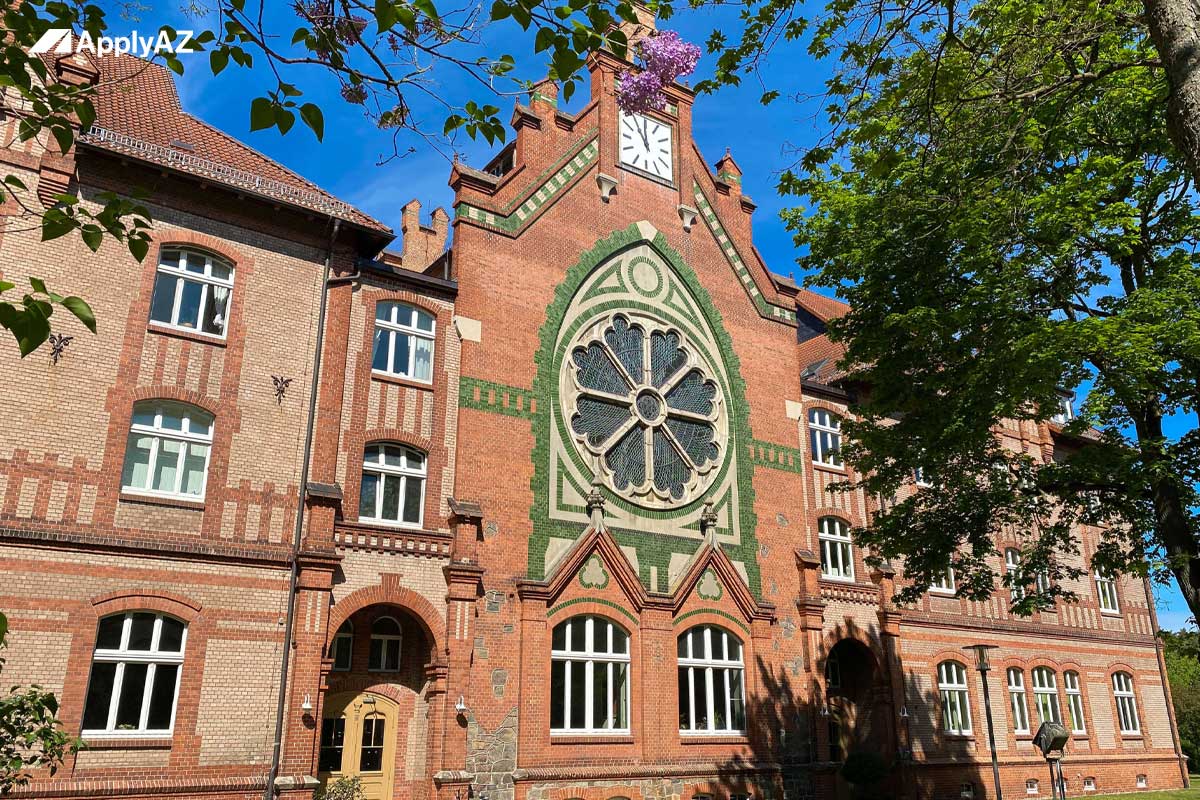
Studying at Friedensau Adventist University in Germany
First look at Friedensau Adventist University
Friedensau Adventist University is a small, state-accredited university in Germany with a clear identity. It is church-run and values community, close contact with lecturers, and a calm study rhythm. That combination suits some students very well and feels too quiet for others, so fit matters more than prestige signals.
ApplyAZ helps you judge that fit early. We look at your goals, your learning style, and what kind of campus you need to do well. A typical student who thrives here wants focus, structure, and a campus where daily life is simple and relationships are easy to build.
The setting is not a big-city campus. It is in a village environment with nature close by, and most facilities are within easy reach. That changes your weekly routine in a good way if you like fewer distractions. It also means you should plan transport, shopping habits, and social life more intentionally than you would in a major city.
What studying feels like there (teaching, exams, pace)
Teaching at a small university often feels personal. You are more visible in class, and you cannot hide in the back row for long. Many students find that this increases confidence and improves their academic writing, presentation skills, and consistency. It also means you must show up prepared, because discussion and participation tend to matter more.
The pace usually feels steady rather than rushed. That is helpful if you are adapting to a new academic culture or switching fields. But steady does not mean easy. Exams, essays, and practical assignments still require planning, especially if you are studying in a second language and need extra time for reading and writing.
A common misunderstanding is thinking that a smaller campus means fewer standards. In reality, smaller environments often expect stronger self-management. You will benefit if you can keep a weekly routine, ask questions early, and treat feedback as part of the learning process rather than a judgement.
English-taught options and how to check the right track
Friedensau Adventist University offers both German and English options, but “English-taught” can mean different things depending on the programme and track. Sometimes the core programme is English, while certain electives, admin steps, or placements involve German. The safest approach is to check the module language, not only the programme title.
ApplyAZ supports you here by reading the programme structure with you like a contract. We confirm what is taught in English, what is assessed in English, and what practical parts may require German. This prevents a painful surprise after you arrive, when changing programmes is harder.
A typical scenario is a student who chooses an English master’s and assumes daily life will also be fully English. Academically, that might be true, but internships, part-time work, health services, and housing often run in German. Planning language progress early gives you more freedom later, even if your degree is English-taught.
Admissions reality: what matters most (and what doesn’t)
Admissions are usually decided by readiness and match, not by perfect branding. The university wants students who can complete the programme, follow the academic rules, and handle the language demands. If you are applying for a master’s, your previous degree and grade expectations can matter, but so does whether your background genuinely fits the content.
What often does not matter as much as students fear is having a flashy CV. A simple CV is fine if it is consistent and credible. What matters more is that your academic story makes sense, your documents are clean, and you can explain why this programme is the right next step.
Key signals admissions teams usually care about:
- Clear academic fit between your prior studies and the target programme
- Complete documents submitted on time, with correct format and translations
- A motivation letter that explains your direction, not just your dreams
ApplyAZ helps you build those signals. We focus on reducing doubts, because admissions decisions often come down to risk: “Will this student struggle or succeed?”
Documents students underestimate (prepare early)
Most delays happen because students underestimate “small” documents. They focus on transcripts and forget the supporting papers that make those transcripts usable in Germany. If your documents are inconsistent, even a strong profile can get stuck in back-and-forth email cycles, which is dangerous when deadlines are close.
A typical pain point is translation and certification rules. Some documents need official translation, some need specific formatting, and some need clear stamps and signatures. Another common issue is naming differences across passports, transcripts, and certificates. These sound minor, but they can create real administrative problems.
Documents students often miss or prepare too late:
- Course descriptions or syllabus outlines when the programme checks subject match
- Proper translations, plus the right certification style for your country
- Proof of language, even when you studied partly in English
ApplyAZ supports document readiness step-by-step. We build a checklist for your exact case and keep it practical, so you are not collecting papers that no one asked for.
Tuition and real costs in daily life
Friedensau Adventist University is a private, church-run institution, so tuition exists and should be planned carefully. Tuition can vary by programme and level, and there may also be a semester registration fee. When students compare Germany, they sometimes assume “Germany equals free”. That is often true for public universities, but not the rule for every institution.
Real costs are not only tuition. Daily life includes housing, food, transport, health insurance, study materials, and the first-month setup cost. A smaller village setting can reduce some spending temptations, but it can also increase planning needs, like fewer shopping options and more reliance on specific transport links.
ApplyAZ helps you build a realistic budget plan that matches your lifestyle. Finance it with loan options via ApplyAZ. The goal is not to scare you, but to make sure your plan survives real life, not only the first week of excitement.
Scholarships and funding: how to think, not guess
Funding is not a lottery if you treat it like a strategy. First, separate what is guaranteed, what is competitive, and what is conditional. Many students waste time chasing funding that does not match their nationality, degree level, or intake timing. Better planning means fewer applications, but stronger ones.
A smart approach starts with timing. Scholarships and support options often have windows that do not match university deadlines. If you wait until you have an admission letter, you may already be late for certain funding routes. That is why planning must begin while you are still preparing documents and shortlisting programmes.
ApplyAZ supports scholarship strategy by mapping your options to your profile and timeline. We also make sure your motivation letter and CV support the same story, because reviewers notice when your direction changes across documents. Consistency is one of the easiest ways to increase trust.
Housing and arrival planning (what to decide before you land)
Housing decisions should be made like a project, not a last-minute scramble. Smaller campuses often have clearer housing processes, but you still need to confirm dates, contracts, deposits, and what is included. Your arrival plan should also cover where you will sleep the first night, how you will reach campus, and what you will do if transport runs less frequently on weekends.
Before you arrive, decide:
- Your arrival window and how it fits with housing check-in dates
- What you need for registration steps in the first two weeks
- Whether you need a backup plan if a room is delayed
A common scenario is a student who arrives with the “main plan” only. Then a minor delay happens and the stress spikes fast. ApplyAZ helps you build a main plan and a backup plan, so your first month stays stable while you adapt to Germany.
After graduation: work options and direction
Your outcome after graduation depends on direction, not just the degree title. Some students do well because they choose a programme that matches a clear career route, then build experience step-by-step through internships, volunteering, research support, or relevant part-time work. Others struggle because they only think about work after graduation, which is late.
In Germany, work options are strongly influenced by language, location, and the kind of role you are targeting. If you aim for people-facing roles, German becomes important faster. If you aim for international roles, strong writing, research, and cross-cultural communication can matter more, but you still benefit from practical experience.
ApplyAZ helps you connect study choices to a realistic plan: what skills you will build, what experience you should target during study, and how to explain your profile to employers. The goal is to graduate with a story that sounds credible and employable.
How ApplyAZ supports you step-by-step
ApplyAZ stays practical at every stage. We start by helping you shortlist the right type of programmes based on your academic history, language level, and career direction. Then we move to document readiness, because strong applicants still lose time when documents are missing or inconsistent. After that, we support programme-specific CV and motivation letter work, so each application reads like it belongs to that programme.
We also guide the operational side that students often underestimate: deadlines, submission order, and communication with admissions teams. This matters because many rejections happen for simple reasons like incomplete submissions or unclear document formats, not because the student was “not good enough”.
Finally, we support scholarship strategy and visa guidance, so your plan works from start to arrival. The goal is a clean process with fewer surprises, and decisions made early, when you still have options.
How ApplyAZ Gets You In
Most students find one program they like and hope for the best. That is not how we work.
It starts with a quick eligibility check, about 2 minutes, so you instantly know if this opportunity is a real option for your profile. If you are eligible, you book a private one-to-one consultation with one of our experts, where you get a clear and personalised plan built around your exact situation: your best-fit programs, your real deadlines, your scholarship path, and your exact next steps.
If you decide to move forward with us after that call, you enroll, upload your documents, and we take it from there. Our admissions team goes through your transcripts course by course, maps your background against real university requirements, and builds you a shortlist of 20 or more programs that you genuinely qualify for, across prestigious public universities, career-forward degrees taught in English, with strong graduate placement records. You review them, approve the ones you like, and then you lay back.
We write your CV and motivation letter for each program, submit every application, and track every deadline. Alongside admissions, we actively work on securing scholarships that fit your program, university, and country, whether that is DSU, DAAD, or other funding available to your profile, so you have the strongest possible shot at studying public (€0 for eligible students) with your living costs covered. Then we stay with you through visa preparation, arrival, and every practical step that follows.
Depending on your profile, you may qualify for far more programs, universities, and funding opportunities than you would ever find on your own. The only way to know is to start.
Check your eligibility now. It takes about 2 minutes. Because everything begins there.
Master of Arts in Development Studies at Friedensau Adventist University
A quick sense-check: who Master of Arts in Development Studies suits
Master of Arts in Development Studies suits students who want to understand development as a real-world system, not a slogan. If you like asking “why did this policy fail?” and “what changes people’s lives at scale?”, you will feel at home. It is also a good fit if you can work with complexity without needing a single perfect answer.
ApplyAZ helps you sense-check fit early by mapping your background and goals to the programme’s core themes. A typical good-fit student has studied social sciences, economics, politics, international relations, education, theology, or related fields and wants a structured way to turn that knowledge into practice.
If your background is highly technical, you can still fit, but you may need bridging. For example, an engineering graduate interested in humanitarian systems can be strong if they show evidence of reading, writing, and research ability. If you dislike long reading, academic writing, and careful argument, this programme will feel heavy.
What you will gain by the end (real outcomes)
By the end, you should be able to read development problems with more discipline. That means analysing stakeholders, power, incentives, and unintended consequences. You will learn to separate good intentions from effective action and to justify choices with evidence. This skill is useful across NGOs, international organisations, policy roles, and research settings.
You will also strengthen academic skills that employers quietly value: structured writing, working with sources, designing a question, and communicating findings clearly. Many students underestimate this. It is not just “writing essays”. It is learning how to think in a way that stands up to scrutiny.
ApplyAZ keeps your outcome focus clear. We help you connect what you learn to what you want next, so your motivation letter, CV, and choices inside the programme all point in one direction. That alignment makes your profile feel coherent to admissions and to employers later.
The learning style you should expect
Expect a discussion-based style where reading and reflection matter. Development studies often rewards students who can compare cases, challenge assumptions, and write with balance. You will likely spend more time reading and writing than doing timed calculations, even if you use data at points.
You should also expect a pace that requires consistency. Many students struggle not because the content is “too hard”, but because they delay weekly reading and then feel overwhelmed before deadlines. The safest approach is to treat the programme like a steady routine, not a last-minute sprint.
ApplyAZ helps you plan around your strengths. If English is not your first language, we guide you to prepare early for academic writing. If you have work experience, we help you use it wisely without turning your applications into a job story instead of an academic one.
Modules, projects, and thesis (how the year often flows)
Most programmes in this space follow a pattern: foundations first, then deeper themes, then research work. Early modules usually give you frameworks and core debates. After that, you often choose directions such as policy, sustainability, humanitarian action, peacebuilding, or social justice themes, depending on what the programme offers.
Projects tend to build your ability to move from a topic to a researchable question. That shift is harder than it sounds. A topic like “migration” is too wide. A question like “how do local housing rules shape migrant access to services in one setting?” is workable. The thesis then becomes the proof that you can do this independently.
ApplyAZ supports you with planning logic. We help you choose a direction that you can defend academically and that fits your documents. A common mistake is picking an exciting topic that does not match your prior study, which creates doubt for admissions and makes the thesis harder.
Entry requirements (clear checklist)
Entry requirements are usually about academic fit, proof you can study at master’s level, and language readiness. For Master of Arts in Development Studies, your previous degree should relate to the themes enough that you can handle theory, writing, and research methods. If your background is different, you may still qualify if you show clear evidence of preparation.
Use this decision checklist:
- You have a recognised bachelor’s degree with relevant content, or a clear reason you can bridge quickly
- Your transcript shows writing-heavy or analysis-heavy coursework, not only practical training
- You can provide language proof if required, and you can handle academic English writing
ApplyAZ checks these points in a structured way. We look at what is essential, what is flexible, and what needs clarification from the university before you apply. This reduces wasted applications and prevents avoidable rejections.
How to read your transcript against the requirements
Transcript reading is not just “do you have a degree”. It is “does your degree prepare you for the content”. Development studies often expects familiarity with concepts like policy, society, economics, governance, research, or ethics. If your transcript shows modules that build these skills, your application feels low-risk.
A common scenario: two students both have a BA. One has courses in policy analysis, sociology, political theory, and research methods. The other has only language and general electives. The first one usually reads as a safer fit. That does not mean the second cannot apply, but they must explain their preparation more clearly.
ApplyAZ does this matching properly. We review your transcript course by course and identify the strongest evidence for fit. If something looks weak, we suggest how to frame it honestly, or whether a bridging step is needed before applying.
Documents to prepare early (avoid delays)
Delays often come from document quality, not student quality. When documents are incomplete or inconsistent, admissions cannot evaluate you fast, and your file gets pushed aside. Start early, even if you have not finalised your university list, because some documents take weeks to collect.
Prepare these early:
- Official transcripts and degree certificate, with correct names and dates
- A CV that matches academic expectations, not only job bullet points
- A motivation letter that explains fit, focus, and why this programme now
ApplyAZ guides the document build step-by-step. We help you avoid common issues like mismatched names across documents, unclear grading explanations, and weak letters that repeat your CV. The goal is clean, complete, and easy for admissions to approve.
Tuition, fees, and living costs (real planning)
Friedensau Adventist University is not the same cost story as a public German university. You must plan for tuition and any semester-related fees. Students often make a budgeting mistake by focusing only on tuition while ignoring cash flow. Your first months can be expensive because you pay deposits, setup costs, and insurance before your routine stabilises.
Living costs depend on lifestyle and housing choices. A smaller location can reduce daily spending, but you still need a realistic plan for food, transport, health insurance, and study needs. The safest method is to budget for higher costs at the start and then adjust downward once you know your real pattern.
ApplyAZ helps you build a plan that holds up in real life. Finance it with loan options via ApplyAZ. The key is not just affordability, but stability so you can study without constant money stress.
Scholarships and funding (smart approach)
Funding works best when you treat it like a system. First, know what type of support you are targeting: tuition reduction, living support, or partial support. Then match that to your timeline. Many students lose opportunities because they look for funding after admission, when some windows are already closed.
Your application story should support funding too. Reviewers want clarity: what problem interests you, what skills you already have, and how the programme will help you contribute. Vague “I want to help people” statements are common and rarely persuasive. A narrower focus, even if it evolves later, reads stronger.
ApplyAZ supports funding strategy by aligning documents and deadlines. We help you avoid the mistake of applying for many things with one generic letter. Small changes in framing can make a big difference when scholarships are competitive.
Career direction after Master of Arts in Development Studies
Career direction depends on the story you build during study. Development studies can lead to NGO roles, programme coordination, policy research, advocacy, evaluation work, humanitarian operations, or further research. The degree alone does not guarantee any path. What matters is how you shape your skills and evidence while studying.
A practical approach is to choose one primary direction and one secondary option. For example, “policy research” as primary and “project coordination” as secondary. Then pick modules, thesis topic, and part-time or volunteer experience that support those directions. This creates a strong signal to employers.
ApplyAZ helps you plan for that signal early. We guide students to make choices that add up, so they graduate with a profile that looks intentional. That is often the difference between “interesting degree” and “hireable candidate”.
How ApplyAZ supports you step-by-step
ApplyAZ supports you from programme fit to arrival planning. We start with fit and risk: does your background align, and what could cause rejection or delay. Then we move to document readiness. We check transcript alignment, improve your CV to match academic expectations, and shape your motivation letter so it explains direction, not just ambition.
We also build an application plan that respects deadlines and processing time. That includes sequencing, so you do not waste weeks on low-impact tasks while urgent documents are still missing. We guide scholarship strategy alongside admissions, because funding planning is usually time-sensitive.
Finally, we support visa guidance and practical planning, so your project does not fall apart after you get admitted. The goal is a clean, realistic path with fewer surprises.
We Handle Everything. You Just Need to Qualify.
You upload your transcripts. We go through them carefully, match you to 20 or more English-taught programs at prestigious public universities with strong placement records, write your applications, and actively pursue every scholarship available for your profile, whether that is DSU, DAAD, or others depending on the university and country.
You review your shortlist, approve what fits, and we take care of the rest.
The only thing left for you to do right now is find out if you qualify.
Check your eligibility. It takes about 2 minutes.
Tuition and scholarships
Public universities in Germany charge no tuition fees for international students. A semester contribution typically applies, covering administrative costs and often a public transport pass.
DAAD (German Academic Exchange Service) offers scholarships for international master's students, covering living costs and a travel allowance. Apply through the DAAD portal separately from your university application.
The Deutschlandstipendium provides €300 per month, co-funded by the federal government and private sponsors. Applications go through the university's scholarship office after enrolment.
For Indian applicants
Indian graduates with a degree recognised by AIU (Association of Indian Universities) can apply to German public universities through uni-assist. The uni-assist portal handles degree equivalency verification and is the standard route for most non-EU applicants. Check your eligibility with us first.
Similar programmes
More free programmes in this city

They Began right where you are

