

Master in Mining Engineering
Master in Mining Engineering at Clausthal University of Technology suits students who want specialised technical training in resource extraction and mining systems. ApplyAZ maps out the entry requirements, funding routes, and visa timeline for this program specifically.
Master
4 semesters
Clausthal-Zellerfeld
English
Clausthal University of Technology



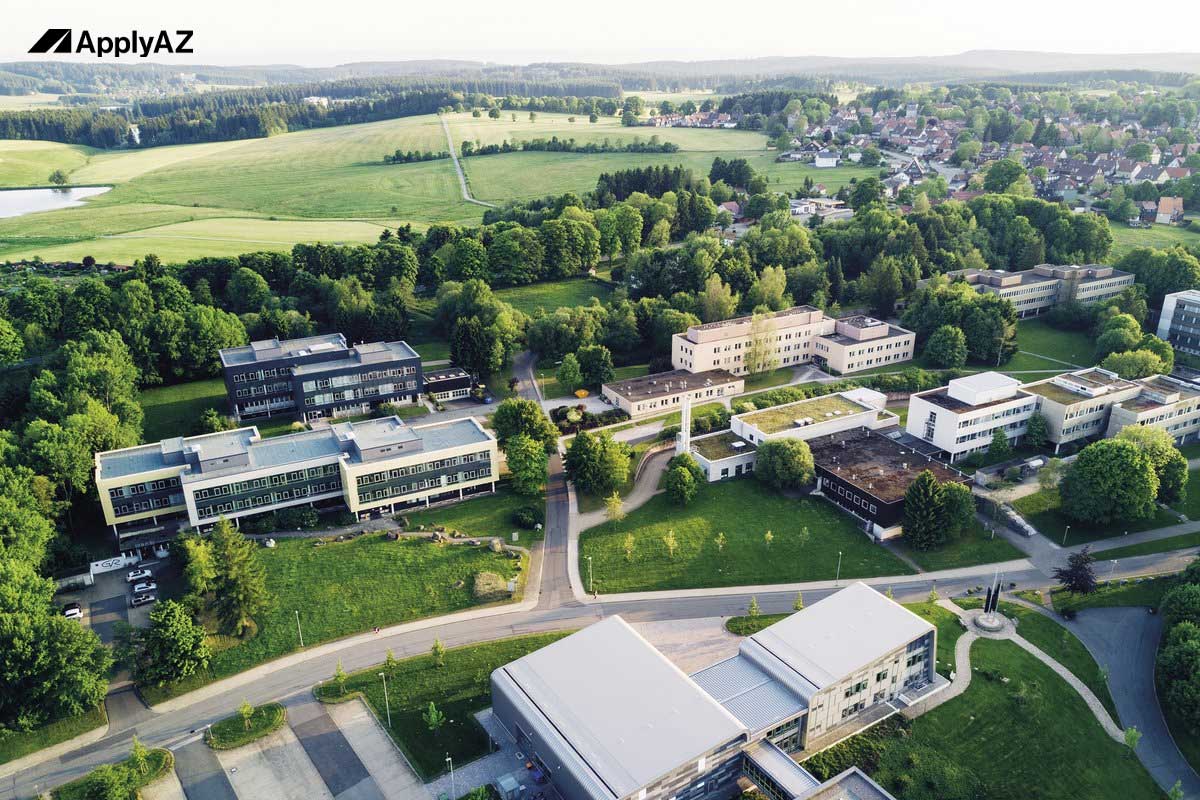
Clausthal University of Technology
First look at Clausthal University of Technology
Clausthal University of Technology is a small, technical university in Germany with a strong engineering identity. It is the kind of place where you notice the focus quickly: labs, practical problem-solving, and programmes built around industry-type thinking. Many students like it because it feels concentrated. You are not lost in a huge city campus, and you can get to know your department and lecturers over time.
When ApplyAZ guides students here, we start by translating the university into real decisions. What kind of university is it, what is the learning style, and what will daily life feel like? A “good university” on paper can still be a poor match if you prefer a different pace, teaching style, or location.
Clausthal is located in a quieter town setting. That can be a big advantage if you want fewer distractions and more routine. It can also feel limiting if you need a large-city lifestyle, a wide part-time job market, or a big international community around you. The right choice depends on what you need to stay consistent for two years.
What studying feels like there (teaching, exams, pace)
Expect a structured, technical rhythm. Many courses are designed to build step by step: concepts first, then applied work, then assessment. A typical student week often includes lectures, tutorials, and independent study, plus lab sessions or project work depending on the programme. The pace can feel intense at exam times because topics are cumulative. Falling behind early makes later weeks harder.
Exams in Germany often reward clarity and method. You are usually judged on whether you can apply principles correctly, not only whether you remember facts. That means practice matters. Students who do well usually start solving problem sets early and use office hours, tutorials, and peer study groups.
One common misunderstanding is thinking the hardest part is getting in. For many students, the harder part is adapting to the study culture: planning your weeks, reading course material before class, and working steadily instead of cramming. ApplyAZ helps you plan your preparation so your first semester is not a shock.
English-taught options and how to check the right track
At many German technical universities, English-taught programmes exist, but the details can be tricky. Some programmes are fully English. Some are mixed, where English is used in many modules but German appears in electives, lab work, or administration. Some tracks are English in the first year and more flexible later. You should confirm the language of instruction at module level, not only at programme level.
When ApplyAZ supports your shortlisting, we check the “real track” you will follow. We look at the module handbook, the course list per semester, and the exam language where relevant. This avoids a common situation: a student chooses a programme because the title looks English-taught, then discovers key modules are offered mainly in German.
Also check what “English-taught” means for daily life. Even in an English programme, you will still deal with housing, local registration, insurance, and part-time work. Basic German helps with comfort, speed, and independence. You do not need perfect German, but you should plan to learn enough to handle real life.
Admissions reality: what matters most (and what doesn’t)
Admissions at technical universities often come down to fit and proof. Fit means your prior studies match the subject area and the required foundations. Proof means your documents clearly show what you studied and at what level. A strong application is not always the one with the most achievements. It is the one that makes your academic match obvious and easy to evaluate.
What usually matters most:
- Your degree background and course content compared to prerequisites
- Your grades in relevant subjects
- Clear, consistent documents (transcripts, certificates, translations where needed)
- A motivation letter that explains choices without drama or exaggeration
What often matters less than students think:
- Fancy formatting
- Overlong personal stories
- Listing every online course you ever took
- Trying to sound like a researcher if your programme is industry-focused
ApplyAZ helps you treat admissions like a checklist, not a guessing game. We build your plan around requirements, not around assumptions. That reduces rejections that happen simply because the university could not confirm your fit from the file.
Documents students underestimate (prepare early)
Many applications fail for boring reasons. Not because the student is not good, but because the file is incomplete, unclear, or inconsistent. Students often underestimate how long it takes to collect and prepare documents in the exact form universities accept.
Two categories cause the most trouble: academic documents and formal identity documents. Academic documents include transcripts with course lists, grading scale notes if available, and degree certificates. Identity documents include passport pages and name consistency across records. Even small differences in spelling can create delays.
ApplyAZ supports document readiness early, because it affects everything else. If your transcript does not show course content clearly, we help you prepare supporting material in the right format. If your documents need certified copies, translations, or specific scans, we guide you on how to do it once, properly, instead of fixing issues again and again close to a deadline.
A common scenario is a student who has the “right” degree but the transcript does not show enough detail. Preparing a clean, readable file in advance can save weeks later.
Tuition and real costs in daily life
Germany is known for low tuition at many public universities, but “low tuition” does not mean “low cost”. The bigger cost is usually living. Your monthly budget is shaped by housing, health insurance, food, transport, and personal spending. In a smaller town, rent can be lower than in major cities, but options can also be limited, so you need to start early.
You should also plan for upfront costs. The first weeks can be expensive: deposits, first month rent, basic household items, registration fees, and sometimes blocked account requirements depending on your situation. Students often forget that these costs hit at the same time.
A practical way to plan is to separate costs into three buckets: one-time arrival costs, monthly fixed costs, and monthly flexible costs. ApplyAZ helps students map these costs realistically so they do not rely on hope. If you need support with funding, Finance it with loan options via ApplyAZ.
Scholarships and funding: how to think, not guess
Funding is easiest when you stop treating it like luck. In Germany, scholarships can be competitive and can vary by programme, region, and your profile. Some are merit-focused. Some are need-based. Some are linked to foundations or specific criteria. The smartest approach is to create a funding strategy early, then line up your documents and timeline to match.
Think in layers. Layer one is affordability: can you cover the basics without stress? Layer two is opportunity: scholarships that reduce risk or improve flexibility. Layer three is optimisation: funding that lets you focus on academics instead of constant part-time work.
A typical student mistake is applying to everything without a plan. That leads to weak applications and missed deadlines. ApplyAZ supports scholarship strategy alongside admissions planning. We help you decide what is realistic, what documents you will need, and when to apply, so you are not trying to build a case in the final week.
Even when you do not get a scholarship, a solid funding plan still matters because it protects your study performance and your visa process.
Housing and arrival planning (what to decide before you land)
Housing is not just “find a room”. It is part of your academic success. If your housing is unstable, everything becomes harder: sleep, study routines, attendance, and mental energy. In smaller university towns, supply can be tight at certain times of year, so early action matters.
Before you arrive, decide what you can compromise on and what you cannot. For example, you might accept a smaller room, but you should avoid long commutes if your schedule includes early labs or frequent on-campus sessions. Also decide your acceptable budget range and whether you prefer a shared flat or a studio.
Use a simple arrival plan checklist:
- Temporary accommodation for the first days if needed
- A plan for registration and basic paperwork
- Health insurance setup and what proof you must show
- A realistic first-week budget, including deposits
ApplyAZ supports the planning logic behind arrival. We help you line up timing so you are not doing critical paperwork while also starting classes and trying to settle in at the same time.
After graduation: work options and direction
Students often think about jobs only after they arrive. It is better to think about direction earlier. The best outcome is not just a degree, but a clear story: what you learned, what you built, and what roles you can do next. At a technical university, your projects, lab work, and thesis can become your portfolio if you plan them well.
A common scenario is a student who studies a strong technical programme but graduates with a vague CV. They completed courses, but they cannot show outcomes. You want the opposite: a focused CV with a few strong projects that match your target roles.
ApplyAZ supports students by encouraging practical decisions early. Choose electives that match a direction. Choose a thesis topic that signals skills employers value. Build your CV around measurable work, not only course titles. If you want to work in Germany after graduation, also plan your German learning steadily. It improves job options and daily life, even in international environments.
How ApplyAZ supports you step-by-step
ApplyAZ acts like your planning team, not just a document checker. We start with shortlisting based on fit, not popularity. We look at your academic background, then match it to programmes where prerequisites make sense. This saves time and reduces the emotional rollercoaster of applying randomly.
Next comes document readiness. We review what you have, identify what is missing, and help you prepare a clean file that universities can evaluate quickly. Then we build an application plan with deadlines and sequences, because timing matters. Submitting early can reduce stress and gives you more time to respond if a university asks for clarification.
We also guide scholarship strategy alongside applications, because funding decisions affect programme choices and visa planning. Finally, we support visa guidance and practical planning so you arrive with fewer unknowns. The goal is simple: fewer surprises, fewer delays, and a clearer path from “interested” to “settled and studying”.
How ApplyAZ Gets You In
Most students find one program they like and hope for the best. That is not how we work.
It starts with a quick eligibility check, about 2 minutes, so you instantly know if this opportunity is a real option for your profile. If you are eligible, you book a private one-to-one consultation with one of our experts, where you get a clear and personalised plan built around your exact situation: your best-fit programs, your real deadlines, your scholarship path, and your exact next steps.
If you decide to move forward with us after that call, you enroll, upload your documents, and we take it from there. Our admissions team goes through your transcripts course by course, maps your background against real university requirements, and builds you a shortlist of 20 or more programs that you genuinely qualify for, across prestigious public universities, career-forward degrees taught in English, with strong graduate placement records. You review them, approve the ones you like, and then you lay back.
We write your CV and motivation letter for each program, submit every application, and track every deadline. Alongside admissions, we actively work on securing scholarships that fit your program, university, and country, whether that is DSU, DAAD, or other funding available to your profile, so you have the strongest possible shot at studying public (€0 for eligible students) with your living costs covered. Then we stay with you through visa preparation, arrival, and every practical step that follows.
Depending on your profile, you may qualify for far more programs, universities, and funding opportunities than you would ever find on your own. The only way to know is to start.
Check your eligibility now. It takes about 2 minutes. Because everything begins there.
Master in Mining Engineering
A quick sense-check: who Master in Mining Engineering suits
Master in Mining Engineering at Clausthal University of Technology suits students who want to work with the full mining value chain, from resource evaluation to extraction, processing, safety, and mine management. It fits best if you enjoy applied engineering and can handle multi-step problem solving under real constraints like cost, risk, and regulation.
A typical good fit is someone with a bachelor’s in mining, geological engineering, mineral processing, metallurgy, civil engineering with geotechnics, or a closely related field. If your background is mechanical or industrial engineering, you may still fit, but you must show strong grounding in earth science, geotechnics, or processing.
ApplyAZ helps you judge fit early by reading the programme logic, not just the title. We look at your previous modules and map them against what the programme will assume you already know.
What you will gain by the end (real outcomes)
By the end of Master in Mining Engineering, you should be able to approach mining projects like an engineer who can make decisions, justify trade-offs, and communicate clearly with technical and non-technical teams. The real outcome is not only knowledge. It is the ability to plan, model, and evaluate mining operations with safety and sustainability in mind.
You usually graduate with stronger skills in mine planning basics, rock mechanics or geotechnics, drilling and blasting concepts, ventilation and safety, mineral processing flows, and the systems thinking needed for real operations. Many students also improve data and modelling habits, because modern mining relies on consistent measurement and optimisation.
ApplyAZ supports this step by helping you pick a programme track that matches your target role. A student aiming for operations will choose differently from someone aiming for processing or sustainability and regulation work.
The learning style you should expect
Expect a structured engineering pace. Lectures often teach the principles and methods, then exercises and projects test whether you can apply them under constraints. In technical programmes, assessment is usually built around problem solving and clear reasoning, not storytelling.
You should also expect teamwork. Mining engineering often uses group projects because the real industry is cross-functional. A common scenario is a project where you must propose a plan, defend assumptions, and show how risk is managed. Your marks will depend on how well you explain choices, not only the final numbers.
Many students underestimate how early they need to start. Waiting until exam season makes the semester feel impossible. ApplyAZ helps students plan their study rhythm, so the workload stays steady and you avoid last-minute stress.
Modules, projects, and thesis (how the year often flows)
The first part of the programme usually strengthens foundations and aligns students from different backgrounds. This is where you might see core modules that standardise methods and introduce the way the department expects you to think and calculate. If you arrive with gaps, this phase can feel heavy, but it is also where you can stabilise quickly if you work consistently.
The middle phase often becomes more applied. You might work on case-style tasks, lab work, or project modules, where you have to interpret data and make decisions. This is typically where students start to see their future direction clearly.
The thesis is where many students either shine or struggle, depending on preparation. A strong thesis topic is not “the biggest idea”. It is a focused question with clear methods and available supervision. ApplyAZ helps you plan for this by choosing electives that build towards a thesis you can complete with confidence.
Entry requirements (clear checklist)
Entry rules can vary by intake and track, but the decision logic is usually consistent. You need a relevant prior degree, proof of required foundations, and the language documents the programme asks for.
Use this checklist to self-check before you apply:
- A bachelor’s degree in a relevant engineering or earth-related field
- Evidence of key foundations in your transcript (mining-related or adjacent)
- Language proof that matches the programme rules
- A complete document set with correct format, translation, and consistency
What is flexible is often the exact title of your bachelor’s degree. What is not flexible is missing foundations. If you have the right title but the modules do not show the right content, the application can fail. ApplyAZ reviews your transcript as a technical document and flags risk early, so you do not waste an application cycle.
How to read your transcript against the requirements
Read your transcript like an admissions reviewer. They do not know you. They only see module names, credits, grades, and sometimes short descriptions. Your goal is to make your match obvious without forcing them to guess.
Start by grouping your modules into themes: maths and mechanics, geology or earth science, geotechnics, processing or metallurgy, and any mining-specific modules. Then ask a simple question: does this show that you can handle advanced mining engineering methods without extra teaching?
Here is a realistic example. Background A: mining engineering with rock mechanics, ventilation, processing, and mine design. This is usually a clean fit. Background B: mechanical engineering with strong mechanics but no earth science or geotechnics. This may need bridging or may be rejected unless electives or projects clearly cover the gap.
ApplyAZ does this mapping with you and turns it into a clear application plan, including what needs clarification and what can be presented as strength.
Documents to prepare early (avoid delays)
Delays usually come from documents, not from academic weakness. Universities need clean, readable files. If something is confusing, they may pause the review or ask for extra proof. That costs weeks.
Prepare early:
- Transcript and degree certificate in the required format
- Clear grading scale information if your transcript does not explain it
- Official translations if required, and consistent name spelling across documents
- Language certificate that matches the programme’s rules
- CV and motivation letter that focus on fit, not exaggeration
A common mistake is sending blurry scans or mixed documents with different name spellings. Another is submitting a motivation letter that talks about passion but does not explain readiness for the curriculum. ApplyAZ checks your full file for consistency and helps you present your background in a way that avoids unnecessary questions.
Tuition, fees, and living costs (real planning)
In Germany, tuition at many public universities can be low, but your real monthly budget comes from living costs. Plan for housing, health insurance, food, transport, and study materials. Also plan for one-time arrival costs, because deposits and first-month expenses stack up quickly.
Clausthal is a smaller town environment, which can make daily life calmer and sometimes cheaper than major cities. The trade-off is that housing options can be limited during peak arrival months, so timing matters. Your planning should include a backup option for the first weeks if your long-term housing is not ready.
ApplyAZ helps you turn costs into a plan. We separate arrival costs from monthly costs, and we match your budget to realistic housing choices. If you need support, Finance it with loan options via ApplyAZ.
Scholarships and funding (smart approach)
Scholarships are easiest when you stop guessing and start aligning. Funding decisions depend on eligibility rules, deadlines, and what documents you can provide on time. The smartest approach is to build a funding plan alongside your application plan, not after you get admitted.
Think in layers. First, build a baseline plan that is affordable without scholarships, so you are not trapped if funding is delayed. Second, target scholarships that match your profile and timing. Third, avoid over-applying. Many weak applications waste time and create stress.
A common scenario is a student who finds a scholarship late, then rushes to collect documents and misses a deadline. ApplyAZ supports scholarship strategy by mapping likely options to your programme, intake timing, and document readiness, so your timeline stays realistic.
Career direction after Master in Mining Engineering
Master in Mining Engineering can lead to several paths, and your electives and thesis should support your choice. Some graduates aim for mine planning and operations, where optimisation, safety, and production thinking matter. Others aim for mineral processing and metallurgy, where process control and materials understanding matter. Another path is sustainability, environmental management, and regulatory work, where compliance and risk management are central.
The strongest graduates leave with evidence, not just a degree. Evidence can be a thesis that solves a real technical problem, a project with clear methods, or a portfolio of applied work. Employers often care more about what you can do than what you studied in theory.
ApplyAZ helps you plan this early by choosing modules that support your target role and by shaping your documents to show a consistent story from bachelor’s background to master’s focus.
How ApplyAZ supports you step-by-step
ApplyAZ supports you as a guide across the full process, from choosing the right programme to arriving in Germany ready to start. We begin with programme fit, because mining engineering is not one single job and not one single curriculum. We shortlist options based on your transcript and your career direction, so you apply where you are genuinely competitive.
Next, we check documents like an admissions reviewer would. We look for gaps, unclear module content, inconsistent names, missing translations, and anything that can trigger delays. Then we build an application plan with timelines and priorities, so you do not miss deadlines or submit rushed materials.
Alongside applications, we help shape your scholarship strategy and your visa planning logic. The goal is simple: reduce uncertainty, avoid avoidable delays, and help you make decisions you can stand behind.
We Handle Everything. You Just Need to Qualify.
You upload your transcripts. We go through them carefully, match you to 20 or more English-taught programs at prestigious public universities with strong placement records, write your applications, and actively pursue every scholarship available for your profile, whether that is DSU, DAAD, or others depending on the university and country.
You review your shortlist, approve what fits, and we take care of the rest.
The only thing left for you to do right now is find out if you qualify.
Check your eligibility. It takes about 2 minutes.
Tuition and scholarships
Public universities in Germany charge no tuition fees for international students. A semester contribution typically applies, covering administrative costs and often a public transport pass.
DAAD (German Academic Exchange Service) offers scholarships for international master's students, covering living costs and a travel allowance. Apply through the DAAD portal separately from your university application.
The Deutschlandstipendium provides €300 per month, co-funded by the federal government and private sponsors. Applications go through the university's scholarship office after enrolment.
For Indian applicants
Indian graduates with a degree recognised by AIU (Association of Indian Universities) can apply to German public universities through uni-assist. The uni-assist portal handles degree equivalency verification and is the standard route for most non-EU applicants. Check your eligibility with us first.
Similar programmes
More free programmes in this city

They Began right where you are

