

Master in Master in Advanced Functional Materials
Master in Advanced Functional Materials at Chemnitz University of Technology suits students who want deep technical training in engineered material systems. ApplyAZ guides students through this program's specific admissions, funding, and visa process.
Master
4 semesters
Chemnitz
English
Chemnitz University of Technology



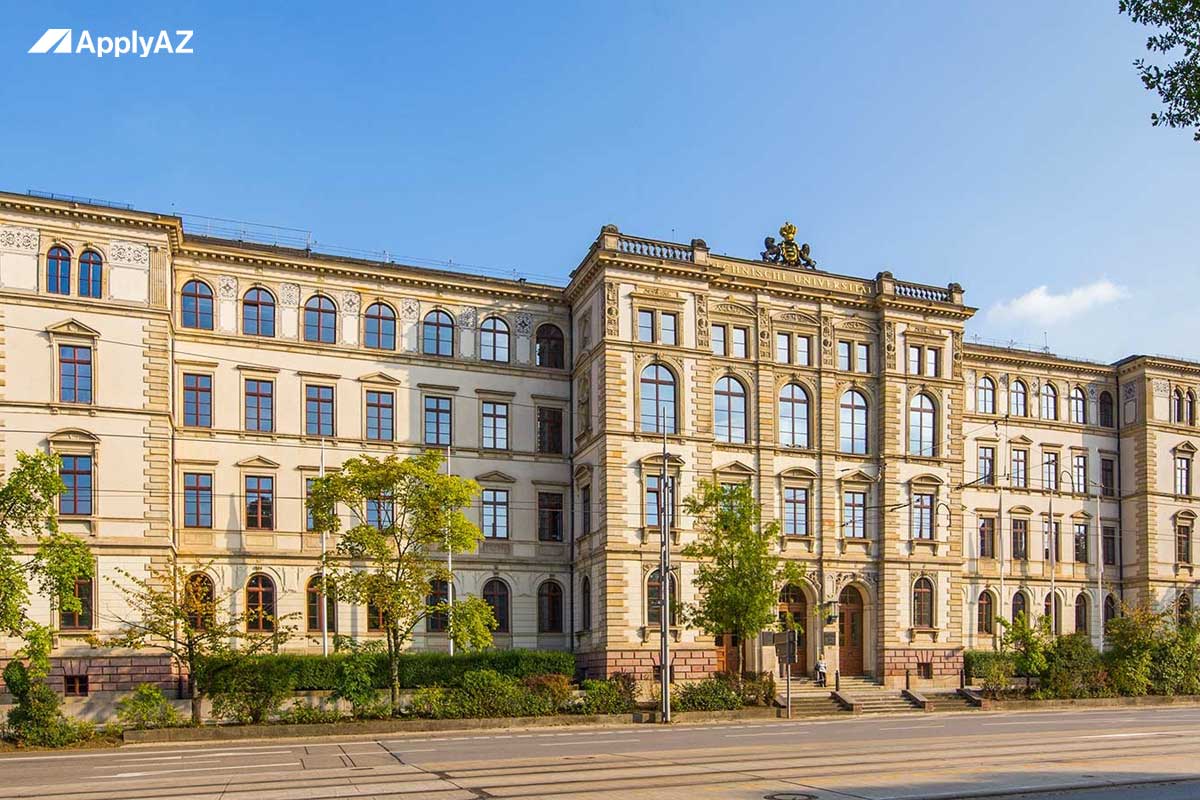
Chemnitz University of Technology, explained simply
First look at Chemnitz University of Technology
Chemnitz University of Technology sits in a mid-sized German city with a practical, engineering-led feel. Many students choose it because it is focused, not flashy. The university is known for technical fields and applied research links, which often shows up in how modules are designed and how projects are assessed. You will see a lot of structure: clear module handbooks, set exam periods, and defined credit loads. That structure helps international students plan, but it also means you need to read rules carefully.
ApplyAZ helps at this stage by turning the university into a real plan. We look at your background, what you want after graduation, and how much risk you can take with deadlines, documents, and funding.
A useful first question is not “Is it a good university?” but “Is it the right kind of university for me?” If you prefer hands-on labs, steady weekly work, and clear outcomes, it may suit you. If you want very flexible study paths or a heavy humanities environment, you may need to compare carefully.
What studying feels like there (teaching, exams, pace)
Most programmes in Germany follow a clear rhythm. Lectures and tutorials build the theory, then you prove it through problem sets, lab work, or projects. At Chemnitz University of Technology, the pace can feel calm week to week, then intense around exams and submission periods. A typical student underestimates the self-study hours. You might have fewer classroom hours than you expect, but you are still working many hours to keep up.
Exams often test understanding, not memory. You may face written exams, oral exams, and graded coursework, depending on the module. It is common to feel uncertain early on because expectations can be implicit. Your best move is to read the module handbook, attend the first sessions, and ask how grading works before you commit fully.
ApplyAZ supports you by helping you interpret the programme structure in plain language, so you know what the workload and assessment style will actually look like, not just what the brochure suggests.
English-taught options and how to check the right track
Chemnitz University of Technology offers English-taught options, but “English-taught” can mean different things. Some programmes are fully in English. Others are mixed, or they have English modules but key requirements in German later. Some also have English instruction, but admin processes, course registrations, and local communication still happen mainly in German. This does not make it impossible, but it changes what support you need and how fast you must learn basic German for daily life.
When you check a programme, look beyond the headline. Confirm the language of teaching for every semester, the language of exams, and the language requirements for internships or thesis work. Also check whether you are applying to a specific track inside a broader degree, because tracks can have different prerequisites and deadlines.
ApplyAZ helps you verify the exact track and language path so you do not enter a programme expecting one thing and discover another after arrival.
Admissions reality: what matters most (and what doesn’t)
Admissions decisions usually follow a logic: do you match the academic prerequisites, and can you realistically handle the programme. Grades matter, but they are not the only signal. Course content match often carries a lot of weight, especially for technical degrees. If your transcript shows the right foundations, you are in a stronger position than someone with a slightly higher GPA but missing key subjects.
What matters most is clarity and completeness. Missing documents, unclear grading scales, or weak proof of prerequisites can hurt you more than you expect. What often matters less than students think is “branding”. In many German universities, it is not about storytelling. It is about meeting formal requirements and showing consistency.
A common scenario is a student who rushes the application with incomplete documents, then loses time fixing issues during the review stage. ApplyAZ reduces that risk by checking programme fit and document readiness together, so you are not guessing what the admissions office will accept.
Documents students underestimate (prepare early)
Many students focus on the big items like transcripts and degree certificates, then get stuck on the supporting documents. These are the pieces that slow the process because they take time to issue, translate, or legalise. The earlier you prepare, the more control you have over deadlines.
- Transcript details: course titles, credits, grading scale, and any missing semesters explained
- Language proof: correct test type, validity window, and required score sections
- CV and motivation letter: aligned to the programme’s modules and outcomes, not generic
- Passport and identity documents: consistent spelling across all files
- Translations and legalisation: done in the format the university accepts
ApplyAZ supports you by building a document checklist per programme and reviewing each file for format, consistency, and acceptance risk. That way, you are not discovering problems when it is too late to fix them.
Tuition and real costs in daily life
Public universities in Germany often have low tuition compared to many countries, but “low tuition” does not mean “low cost.” Your real budget depends on housing, health insurance, transport, and daily living. Many students plan only for rent and food, then get surprised by upfront costs at arrival, deposits, and admin fees. Your first month is usually the most expensive.
A typical student needs to pay a housing deposit, buy basics for the room, and cover insurance and semester contributions early. Costs also vary by lifestyle. Cooking at home, choosing a student room, and using student transport options can keep spending stable. Eating out often, choosing private studios, or travelling frequently pushes costs up quickly.
ApplyAZ helps you plan realistic monthly ranges and a buffer strategy, so you are not forced into bad housing or short-term decisions when you land. Finance it with loan options via ApplyAZ.
Scholarships and funding: how to think, not guess
Funding is easiest when you stop treating it like a lottery and start treating it like a process. Scholarships often depend on timing, specific eligibility rules, and the documents you submit. Many students miss opportunities because they apply late, misunderstand criteria, or cannot produce the required proofs quickly.
Think in layers. First, confirm what funding paths are linked to your university status in Germany and what depends on your region, your programme, or your background. Next, map each option to a timeline: when you can apply, when decisions happen, and what you need to show. Finally, decide how much you can rely on each option, and build a backup budget if it comes later than expected.
ApplyAZ supports you by creating a funding plan tied to your admissions plan. That means you are not chasing scholarships randomly, and you are not risking your visa timeline because a document was missing.
Housing and arrival planning (what to decide before you land)
Housing is often the biggest practical challenge, not the university itself. Many students assume they will “find something after arrival.” That can work, but it is risky, especially if you need an address for admin steps or you are arriving close to semester start. Your first decision is whether you want a student dorm-style room, a shared flat, or a private studio. Each choice changes your budget, your search time, and your stress level.
Here are decisions to make early:
- Your maximum rent, including utilities
- Your preferred housing type and what you will compromise on
- Your arrival date and how many weeks of temporary stay you can afford
- Whether you need housing close to campus or near transit
- Your plan for first-week essentials: SIM, bank steps, insurance, registration
ApplyAZ guides you through arrival planning in a structured way, so you know what must be done before you land and what can wait. This reduces last-minute mistakes that can affect registration, residence paperwork, and your ability to settle quickly.
After graduation: work options and direction
Students often ask, “Will I get a job after graduation?” The honest answer is that outcomes depend on your choices long before you graduate. Your internship strategy, your thesis topic, your project portfolio, and your language skills shape your options. At a technical university like Chemnitz University of Technology, it can help if you build evidence of skills through practical work: labs, code repositories, applied projects, and thesis work linked to industry problems.
A common scenario is a student who studies well but waits too long to think about employability. In Germany, steady progress matters. Start early: learn how hiring works, improve your German step by step, and choose electives that support a clear direction. Even if your programme is in English, German can widen your options for part-time work, internships, and post-study roles.
ApplyAZ supports you by helping you plan your programme choices around a real career direction, so your degree supports your next step instead of leaving you with a vague profile.
How ApplyAZ supports you step-by-step
ApplyAZ is most useful when you treat your plan as a system, not a single application. We support you end-to-end: shortlisting, document readiness, applications, scholarship strategy, and visa guidance. We start by shortlisting programmes that genuinely fit your academic background and goals, then we build an application plan that respects deadlines and document lead-times. This helps you avoid the common trap of applying to “popular” programmes that you do not actually match on prerequisites.
Next, we work on document readiness. That includes aligning your transcript information with module requirements, preparing clear supporting documents, and ensuring consistency across files. Then we support application execution: timelines, submissions, and follow-ups. Alongside admissions, we build a funding strategy that fits your situation, so you are not depending on hope or last-minute information.
Finally, we guide the visa stage with a practical checklist approach. The goal is simple: fewer surprises, fewer delays, and decisions you can feel calm about.
How ApplyAZ Gets You In
Most students find one program they like and hope for the best. That is not how we work.
It starts with a quick eligibility check, about 2 minutes, so you instantly know if this opportunity is a real option for your profile. If you are eligible, you book a private one-to-one consultation with one of our experts, where you get a clear and personalised plan built around your exact situation: your best-fit programs, your real deadlines, your scholarship path, and your exact next steps.
If you decide to move forward with us after that call, you enroll, upload your documents, and we take it from there. Our admissions team goes through your transcripts course by course, maps your background against real university requirements, and builds you a shortlist of 20 or more programs that you genuinely qualify for, across prestigious public universities, career-forward degrees taught in English, with strong graduate placement records. You review them, approve the ones you like, and then you lay back.
We write your CV and motivation letter for each program, submit every application, and track every deadline. Alongside admissions, we actively work on securing scholarships that fit your program, university, and country, whether that is DSU, DAAD, or other funding available to your profile, so you have the strongest possible shot at studying public (€0 for eligible students) with your living costs covered. Then we stay with you through visa preparation, arrival, and every practical step that follows.
Depending on your profile, you may qualify for far more programs, universities, and funding opportunities than you would ever find on your own. The only way to know is to start.
Check your eligibility now. It takes about 2 minutes. Because everything begins there.
Understanding Advanced Functional Materials
A quick sense-check: who Master in Advanced Functional Materials suits
Master in Advanced Functional Materials at Chemnitz University of Technology in Germany suits students who want to work where chemistry, physics, and engineering meet. A strong fit is a student who enjoys understanding why materials behave the way they do, then using that to design better performance. Typical backgrounds that fit well include materials science, chemistry, chemical engineering, physics, and related engineering fields with solid lab exposure.
It is a weaker fit if you dislike lab work, careful measurement, and long reporting cycles. It can also be a stretch if you have never studied basic solid-state concepts or core chemistry. ApplyAZ helps you sense-check fit early by matching your transcript to the programme’s material focus and by highlighting where your background is strong and where it may need proof.
What you will gain by the end (real outcomes)
By the end, you should understand how structure, processing, and properties connect. This sounds simple, but it is the core skill that makes materials graduates valuable. You learn to select or design materials for specific functions, to analyse performance limits, and to interpret characterisation results without guessing. You also learn how to think across scale, from atomic interactions to real-world devices.
A common scenario is a student who expects “new materials” only, then realises the programme is also about methods: synthesis, characterisation, modelling, and quality judgement. ApplyAZ helps you plan your outcomes by choosing module clusters that support a clear direction, such as energy materials, functional coatings, polymers, or electronic materials, depending on what you want next.
The learning style you should expect
Expect a mix of lectures, lab components, and project-based learning. The pace is often shaped by lab availability and reporting deadlines. Many students underestimate how much time goes into lab preparation, data cleaning, and writing. The work can feel steady, then suddenly intense when reports and presentations cluster together.
Assessment tends to reward precision and reasoning. It is not enough to report results. You must explain why results make sense, what the errors could be, and what you would do differently next time. ApplyAZ helps you plan a realistic semester rhythm, so you balance lab-heavy modules with theory modules in a way that keeps your workload stable and your performance consistent.
Modules, projects, and thesis (how the year often flows)
The year often begins with fundamentals and methods, then moves toward specialisation. Early modules typically strengthen your base in materials behaviour, processing, and characterisation. Later, electives let you focus, and projects become more applied. This is where you start building a “story” through your choices: not marketing, but technical coherence.
Your thesis often becomes your strongest proof of skill, especially if it includes real experimental work or a structured modelling approach. Topic choice is where many students make mistakes, by choosing something interesting but poorly supported by their prior modules. ApplyAZ helps you plan the year flow so your modules support your thesis, and your thesis supports your career direction.
Entry requirements (clear checklist)
Entry requirements usually focus on whether you have the right scientific base to handle advanced materials topics.
- Solid foundation in chemistry and/or physics relevant to materials
- Basic lab skills and comfort with experimental methods
- Understanding of materials structure and properties is helpful
- Maths skills for data analysis and modelling, depending on electives
- Proof you can handle scientific writing and reporting
Background A fits well if it includes materials, physical chemistry, solid-state, or polymers. Background B may need clarification if it is general engineering with limited chemistry or limited lab work. ApplyAZ helps you turn your background into clear evidence of readiness, and flags gaps early so you avoid surprises.
How to read your transcript against the requirements
Look for foundations, not course names. If your transcript shows repeated exposure to chemistry or physics relevant to materials, plus lab work, you are likely on solid ground. If your degree is broad, the admissions team may need extra clarity on what you actually studied. This is where module descriptions and structured explanations help.
Use a decision logic. If you have a clear chain from fundamentals to applied lab modules, you can argue readiness. If you have only one materials-related course, you may need to show extra proof through a project, thesis topic, or later coursework. ApplyAZ reviews your transcript line by line and translates it into programme-relevant language, so admissions can see the match without guessing.
Documents to prepare early (avoid delays)
Materials programmes often require extra clarity because course titles vary widely across countries. Prepare the documents that prove content and lab exposure.
- Transcript with clear grading scale explanation
- Module descriptions for key chemistry, physics, and lab courses
- CV highlighting lab methods, instruments, and projects
- Motivation letter showing a clear materials direction
- Language certificate and identity documents with consistent spelling
Common mistakes include vague project descriptions and missing module details for lab courses. Another frequent delay is inconsistent naming across documents. ApplyAZ helps you build a consistent document set and a clear narrative of technical fit, so the reviewer can understand your readiness quickly and confidently.
Tuition, fees, and living costs (real planning)
Your biggest costs will usually be monthly living and your initial setup period. Plan for housing deposits, insurance, transport, and daily expenses. Lab-focused programmes can also include practical costs such as printing, lab-related supplies for projects, or travel for academic activities, even if most core lab access is covered through the university setting. Build a buffer so you do not make rushed choices under stress.
Cashflow matters. You may spend more in the first month than in the next two combined because of deposits and setup. ApplyAZ helps you plan a realistic budget and timeline so your funding matches when you need money, not just the total you need. Finance it with loan options via ApplyAZ.
Scholarships and funding (smart approach)
Scholarships and funding are easiest when you plan around evidence and timing. Materials programmes can be competitive, and funding often expects strong documentation and clear academic direction. A scattered application can weaken your funding case even if you are academically capable.
A typical student mistake is waiting for admission decisions before preparing funding documents, then losing time. Another mistake is assuming one funding path fits everyone. ApplyAZ helps you map funding options to your intake timeline and your profile, so you prepare proofs early and avoid delays that can affect both enrolment and visa planning.
Career direction after Master in Advanced Functional Materials
Career direction depends on what you specialise in and how you present your skills. Functional materials can lead to roles in R&D, quality and testing, process development, and applied research settings. If your electives and thesis focus on energy materials, you can move toward battery or photovoltaics-related work. If you focus on polymers or coatings, you can aim for manufacturing and performance improvement roles. If you focus on electronic materials, you can target device-adjacent pathways.
The strongest signal is a thesis that shows method, validation, and clear reporting. ApplyAZ helps you pick module clusters that lead to a coherent profile, so your CV reads like a focused materials specialist, not a student who tried a bit of everything.
How ApplyAZ supports you step-by-step
ApplyAZ guides you end-to-end: programme fit, document check, application plan, scholarship strategy, and visa guidance. For this programme, we start by confirming your scientific base and lab readiness. Then we help you choose a focus area early, so your module choices support a clear thesis direction.
We prepare your documents to reduce review friction: transcript mapping, module descriptions, and programme-specific writing that shows technical fit. We then manage deadlines and application sequencing, and build a funding timeline that matches your intake. Finally, we guide visa preparation and practical planning so you arrive with fewer surprises and more control.
We Handle Everything. You Just Need to Qualify.
You upload your transcripts. We go through them carefully, match you to 20 or more English-taught programs at prestigious public universities with strong placement records, write your applications, and actively pursue every scholarship available for your profile, whether that is DSU, DAAD, or others depending on the university and country.
You review your shortlist, approve what fits, and we take care of the rest.
The only thing left for you to do right now is find out if you qualify.
Check your eligibility. It takes about 2 minutes.
Tuition and scholarships
Public universities in Germany charge no tuition fees for international students. A semester contribution typically applies, covering administrative costs and often a public transport pass.
DAAD (German Academic Exchange Service) offers scholarships for international master's students, covering living costs and a travel allowance. Apply through the DAAD portal separately from your university application.
The Deutschlandstipendium provides €300 per month, co-funded by the federal government and private sponsors. Applications go through the university's scholarship office after enrolment.
For Indian applicants
Indian graduates with a degree recognised by AIU (Association of Indian Universities) can apply to German public universities through uni-assist. The uni-assist portal handles degree equivalency verification and is the standard route for most non-EU applicants. Check your eligibility with us first.
Similar programmes
More free programmes in this city

They Began right where you are

