

Master in Life Science Innovation
Master in Life Science Innovation at Albstadt-Sigmaringen University often leads to roles at the intersection of science and business. ApplyAZ guides students through this program's specific admissions, funding, and visa process.
Master
3 semesters
Albstadt
English
Albstadt-Sigmaringen University


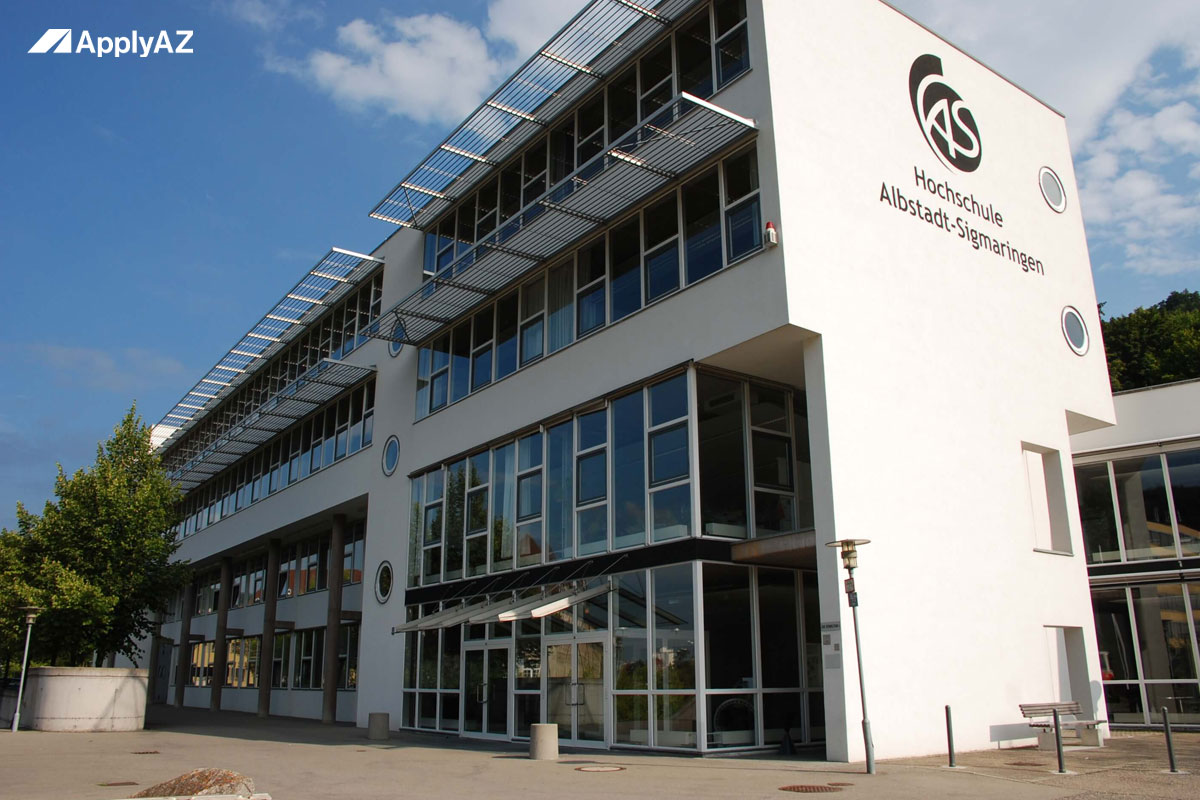
Albstadt-Sigmaringen University is a practical choice for international students in Germany who want clear teaching, industry focus, and a cost plan they can actually manage. If your goal is English-taught programs in Germany, this guide helps you study in Germany in English while staying close to the idea of cheap tuition universities Germany. It also explains how public German universities compare, and where this university fits.
Some students assume every German degree is free. That is a common mistake. Fees can be low, but you still pay semester contributions, health insurance, and living costs in Germany. Another common slip is waiting too long to prepare documents. German university application timelines reward early, calm preparation, not last-minute rush.
Why Albstadt-Sigmaringen University works well for international students
Albstadt-Sigmaringen University is located in Baden-Württemberg, a region known for engineering and manufacturing. That matters if you want internships and a first job path in Germany. Many international students in Germany prefer a smaller city because it can feel safer, calmer, and easier to budget for, compared to large capital cities.
Before choosing it, do one quick reality check: travel time, housing options, and your comfort with a quieter place. Some students love the focus. Others miss big-city life. Neither is wrong, but it affects motivation and day-to-day costs.
Checklist to decide fast:
- Do you prefer applied, practical courses over theory-heavy study?
- Are you happy living in a smaller town with fewer distractions?
- Can you handle a structured timetable and steady workload?
- Do you want a region with strong industry links?
English-taught study options at Albstadt-Sigmaringen University
If you want to study in Germany in English, start by identifying which degrees are fully taught in English and which are mixed. Many applicants miss this detail and only notice it after admission. That can create stress later, especially if the programme expects German for projects, labs, or local placements.
Your safest approach is to shortlist degrees that match your background and prove eligibility early. English-taught programs in Germany can be competitive, and requirements can be strict on subject match. If your Bachelor’s modules are too far from the Master’s content, you may get rejected even with strong grades.
Quick shortlisting checklist:
- Confirm the language of instruction for every semester
- Check if internships or thesis work needs German
- Match your Bachelor’s modules to required subjects
- Prepare IELTS/TOEFL if asked, even if you studied in English before
If you want a quick, eligibility-first shortlist, use: ApplyAZ [Eligibility Check]
Tuition and what you really pay (simple cost map)
Many people search for cheap tuition universities Germany and expect a single number. Real costs have layers. Tuition can be low, but semester contributions are common. Living costs in Germany can be the biggest item, especially housing. Think of this as a monthly plan, not a one-time payment.
Keep an eye on Baden-Württemberg rules for non-EU students. Some public German universities in this state charge tuition for non-EU students in many cases. It depends on your status and the current rules for your programme. Always budget with a safety margin so a fee change does not break your plan.
Simple cost map to plan your budget:
- One-time: application document costs, translations, courier fees
- Each semester: semester contribution (admin, student services, transport tickets)
- Monthly: rent, groceries, phone, local transport
- Mandatory: health insurance
- Visa side: blocked account or proof of funds, plus visa fees
Small caution: do not spend your full budget on the first month. The first weeks often cost more because you pay deposits, bedding, and setup items.
Admissions step-by-step (clear and calm)
A German university application works best when you treat it like a checklist project. Start with your programme requirements, then build your document pack. Some programmes use uni-assist, some do not. Many rejections happen because the wrong portal was used or documents were uploaded in the wrong format.
If uni-assist is required, plan extra time. Verification can take weeks. Another common mistake is uploading transcripts without the grading scale or missing official stamps. Keep every document clear, complete, and consistent in spelling across passport and certificates.
Step-by-step checklist:
- Pick 1–3 suitable programmes at Albstadt-Sigmaringen University
- Confirm if you apply via uni-assist or the university portal
- Prepare: passport, transcripts, grading scale, degree certificate (or provisional)
- Prepare English test results if required
- Write a focused motivation letter that matches the programme
- Check deadlines, then submit early
- Track emails daily and reply fast to requests
Practical example: if your transcript uses CGPA, include the university’s grading explanation. If it does not exist, ask your college for an official note. It saves time and avoids “incomplete file” decisions.
Scholarships and funding (realistic and useful)
Scholarships in Germany exist, but most are competitive and targeted. Your best funding plan is usually a mix: personal funds, part-time work, and selective scholarship applications. Some students waste months applying to every scholarship they find. A smarter approach is to apply to a small set where you truly match the criteria.
Also plan for visa requirements. A German student visa often needs strong proof of funds. Even if you expect support later, you still need a compliant plan at the time of application. Build your funding story early, and keep it consistent across documents.
Funding checklist:
- List your monthly living costs in Germany (rent first, then the rest)
- Prepare proof of funds for the German student visa route you will use
- Search scholarships in Germany that match your level and field
- Collect documents early: CV, references, grades, motivation letter
- Track deadlines in a calendar and submit before the rush
Quick caution: avoid “guaranteed scholarship” claims from random sites. If it sounds too easy, it usually is.
Jobs and career outcomes after graduation in Germany
Germany rewards practical skills, internships, and good communication with employers. If Albstadt-Sigmaringen University fits your field, your best advantage is building experience while studying. Many international students in Germany start with student jobs, then move into internships, and later transition to full-time roles.
Your job results will depend on three things: region demand, your portfolio, and your German level. Even when you study in Germany in English, basic German can widen your options. Aim for steady progress, not perfection. Employers notice effort.
Career-building checklist you can start in month one:
- Create a one-page CV in a German-friendly style
- Build a small portfolio (projects, GitHub, case studies, lab reports)
- Apply for a student job to learn workplace rhythm
- Use internships as your bridge to full-time work
- Start basic German and practise weekly
- Keep a clean LinkedIn profile with specific project outcomes
Small human tip: do not wait until final semester to look for internships. Many roles are filled early.
How ApplyAZ helps you apply with less stress
Most application stress comes from uncertainty: which programme fits, which portal to use, what documents are missing, and how to prepare a visa-safe plan. ApplyAZ helps you reduce errors and move step-by-step, so you can focus on your studies and your next move.
Support typically includes programme shortlisting based on your background, document checks, uni-assist guidance when needed, and a practical plan for scholarships in Germany and the German student visa file. You still do the final decisions, but you do them with clarity.
What to prepare before you start:
- Your latest transcript and grading scale
- Degree certificate or provisional letter
- Passport scan
- English test score (if you have it)
- A short note on your budget and preferred intake
If you want a calm review of your options and next steps, use: ApplyAZ [Book a Free Consultation]
Run an eligibility check or book a free consultation, and you will know what to apply for and what to prepare next.
Master in Life Science Innovation at Albstadt-Sigmaringen University is often shortlisted by international students who want English-taught programs in Germany with a realistic budget. This path can help you study in Germany in English while comparing cheap tuition universities Germany options without guesswork. It also sits within the wider system of public German universities, where costs are usually manageable but never “zero”.
A quick human caution: “life science” can mean biotech, pharma, medtech, or even health data. Students sometimes apply thinking it is purely lab science, then realise it is more innovation and business-led. Another common confusion is the application route. Some intakes use uni-assist, others do not. Checking early saves weeks.
What Master in Life Science Innovation is really about (simple overview)
Master in Life Science Innovation blends life science with innovation skills. Expect a mix of science thinking, product development, and how ideas move from research to real use. It can suit students who like problem-solving and want to work across teams, not only at the bench.
Simple example: you might analyse a healthcare need, shape a solution, test feasibility, and present a go-to-market plan. That is different from a classic wet-lab MSc, so the fit matters.
Quick fit checklist:
- You enjoy science, but also like strategy and planning
- You can explain complex ideas in plain words
- You want projects with real-world constraints
- You like teamwork and presenting outcomes
Why Albstadt-Sigmaringen University is a good place to study Master in Life Science Innovation
Albstadt-Sigmaringen University has an applied profile. That can be helpful for Master in Life Science Innovation because you often learn through projects, cases, and practical tasks. Many international students in Germany prefer this style because it feels closer to workplace reality.
One small warning: a smaller university environment can mean fewer elective choices in some terms. Read the curriculum carefully and make sure it matches your direction, whether that is biotech products, medtech, or health innovation.
Decision checklist:
- You want applied learning, not only theory
- You prefer clear structure and steady deadlines
- You plan to build a portfolio of projects
- You are open to internships and industry contact
Modules, projects, and thesis (what your year may look like)
A typical year in Master in Life Science Innovation may include core modules, group projects, and a thesis that links to a real problem. Projects can involve user needs, regulations, quality, and scaling. That is why students with only lab experience sometimes feel a learning curve at first.
A practical habit: keep a “proof file”. Save slide decks, reports, and feedback. When you apply for internships, you will have ready examples, not vague descriptions.
Project checklist:
- Pick a focus area early (biotech, pharma, medtech, digital health)
- Track each project with a one-page summary and results
- Collect evidence: slides, reports, prototypes, validation notes
- Practise presenting your work in 60 seconds and 5 minutes
Entry requirements and eligibility (easy checklist)
Entry requirements Germany for Master’s programmes often focus on subject match and formal documents. Your Bachelor’s should connect to life sciences, health, engineering, or another acceptable base, depending on the programme rules. Many applicants only check language and grades. They forget module relevance. That is where surprises happen.
Also confirm your application route. If uni-assist is required, you need extra time for document checking and processing. Do not leave it for the final weeks.
Eligibility checklist:
- Relevant Bachelor’s degree with suitable modules
- Official transcript plus grading scale
- Degree certificate or provisional completion proof
- English proof if required (IELTS/TOEFL or accepted alternative)
- CV tailored to Master’s in PROGRAM_NAME
- Motivation letter that explains your innovation interest clearly
- Correct portal confirmed (uni-assist or direct)
If you want a quick review of your fit and document readiness, use: ApplyAZ [Eligibility Check]
Tuition, fees, and living costs (real planning)
People search cheap tuition universities Germany and expect a simple promise. In reality, you need a full plan. Even with low tuition, you pay semester contributions. You also budget for housing, insurance, and daily costs. For international students in Germany, the first month can be expensive because deposits and setup costs hit at once.
Public German universities often keep study costs low, but your German student visa file still needs proof you can support yourself. Start budgeting early so you do not rush later.
Planning checklist:
- Semester contribution and student services fees
- Health insurance (monthly, usually mandatory)
- Rent, deposit, and initial setup costs
- Food, transport, phone, study materials
- Visa proof of funds route and timeline
Quick warning: do not assume a room will be available when you arrive. Start searching before you book flights.
Scholarships and funding options
Scholarships in Germany can help, but they are competitive and usually targeted. A smart strategy is to apply to a smaller number that match your background. Build one strong scholarship pack, then adapt it. Many students lose weeks rewriting everything from scratch for each call.
Also keep your funding story consistent. If your CV says one plan and your motivation letter says another, reviewers notice. Consistency helps in both scholarships and visa checks.
Funding checklist:
- One clean academic CV with measurable achievements
- A focused motivation letter with your innovation angle
- Proof documents: grades, certificates, references
- A monthly budget aligned with the German student visa plan
- A deadline tracker for scholarships in Germany
Career paths and jobs after graduation
Jobs after graduation in Germany for Master in Life Science Innovation often sit at the intersection of science and business. Employers like candidates who can translate science into product decisions. Internships are a strong bridge, especially if you can show project outcomes, not only course titles.
Studying in Germany in English can work well, but basic German helps in day-to-day work, meetings, and wider job options. You do not need to be fluent at the start. Steady progress is enough to stand out.
Career checklist:
- Build a portfolio with 3–4 strong projects and results
- Target internships early, not only after graduation
- Practise interviews using clear stories and metrics
- Learn basic German for workplace situations
- Follow regulated-industry basics (quality, compliance, documentation)
Possible paths:
- Product or project coordinator in life sciences
- Innovation or business development analyst
- Regulatory or quality-related roles (entry level, depending on profile)
- Clinical or health innovation project roles
- Startup or incubator support roles in biotech/medtech
How ApplyAZ helps you apply step-by-step
Applying for Master in Life Science Innovation can be simple on paper, then stressful in real life. The stress often comes from small details: wrong portal choice, missing grading scale, unclear motivation letter, or late uni-assist submission. ApplyAZ supports programme shortlisting, document checks, admissions steps, scholarship support, and German student visa guidance.
You will still own the decision-making. The process becomes clearer and calmer, with fewer avoidable mistakes.
Step-by-step checklist we help you run:
- Shortlist programmes where your background truly fits
- Confirm the route: uni-assist or direct submission
- Check documents for format, stamps, and consistency
- Improve CV and motivation letter for this exact field
- Build a funding and visa-ready plan
If you want a calm plan and a clear next step, use: ApplyAZ [Book a Free Consultation]
Run an eligibility check or book a free consultation.
Tuition and scholarships
Public universities in Germany charge no tuition fees for international students. A semester contribution typically applies, covering administrative costs and often a public transport pass.
DAAD (German Academic Exchange Service) offers scholarships for international master's students, covering living costs and a travel allowance. Apply through the DAAD portal separately from your university application.
The Deutschlandstipendium provides €300 per month, co-funded by the federal government and private sponsors. Applications go through the university's scholarship office after enrolment.
For Indian applicants
Indian graduates with a degree recognised by AIU (Association of Indian Universities) can apply to German public universities through uni-assist. The uni-assist portal handles degree equivalency verification and is the standard route for most non-EU applicants.
How ApplyAZ supports you
Not sure if your qualifications meet the entry requirements? Check your eligibility before you start your application — it takes a few minutes and confirms whether your background is a fit.
Similar programmes
More free programmes in this city

They Began right where you are

