

Master in Legal Theory
Master in Legal Theory suits students who enjoy analysing how law works, not only what the law says. In terms of outcomes, career direction depends on your target role. ApplyAZ handles the admissions requirements, funding options, and visa steps for this specific program.
Master
2 semesters
Frankfurt
English
Goethe University Frankfurt


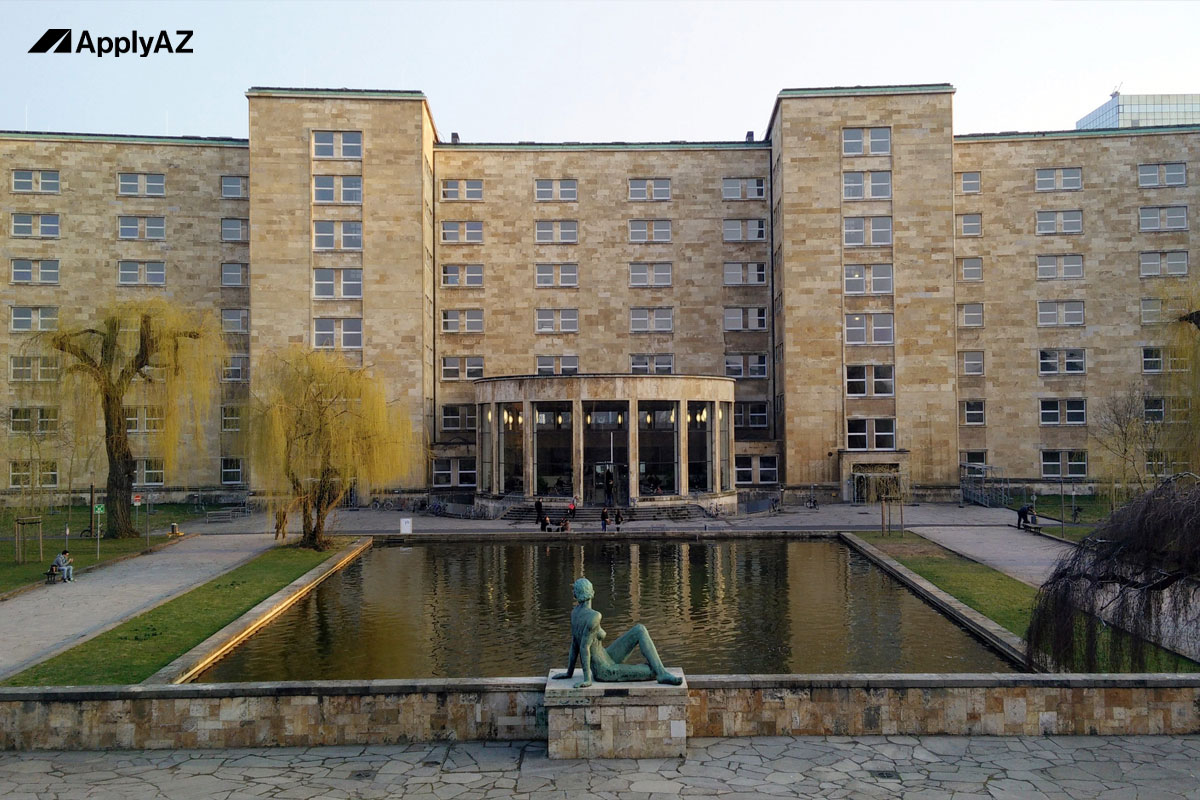
Studying at Goethe University Frankfurt
First look at Goethe University Frankfurt
Goethe University Frankfurt is a large public research university in Germany, based in a city that mixes academia, global business, and everyday student life. It is not a small campus where everything happens in one building. It is a place where you learn to navigate systems, people, and choices. Many students underestimate that part. ApplyAZ helps you understand how the university is structured, where your programme sits, and what that means for teaching style, admin steps, and future options.
A common scenario is a student choosing the university for the city, then realising their department culture matters more than the postcode. Some departments are very research-driven, others are practical and career-facing, and the difference shows in supervision, exams, and the kind of internships students realistically get. Your first job is to judge fit at department level, not just university level.
What studying feels like there (teaching, exams, pace)
Expect a self-directed style. Lectures and seminars give you the framework, but you are responsible for reading, planning, and turning ideas into assessed work. In many programmes, the real pressure is not weekly homework. It is deadlines, exam phases, and long projects that run alongside other modules. Students who do best are the ones who build a routine early and protect study time like it is a job.
Exams can be written, oral, project-based, or a mix. The pace often feels calm in the middle of the term, then intense near assessment windows. A typical student mistake is waiting for “clear instructions” the way some other systems provide. At Goethe University Frankfurt, you need to ask early, attend office hours, and learn how each professor prefers work to be presented. ApplyAZ prepares students for this reality before they arrive.
English-taught options and how to check the right track
There are English-taught options, especially at Master’s level, but you must check the exact track, not just the programme title. Some degrees are fully English, some are mixed, and some offer English modules that do not cover all required credits. Students often misunderstand this and only discover the language balance after admission or after arriving. The result is stress, delays, or switching plans late.
The safest way to check is to read the programme rules and the module handbook, then confirm how many compulsory modules are in English across all semesters. Also check the thesis supervision language and whether internships or lab placements require German. ApplyAZ reviews these details with you so you do not choose a path that looks English on paper but becomes difficult in practice.
Admissions reality: what matters most (and what doesn’t)
Admissions tend to reward clarity and fit. What matters most is whether your academic background matches the subject area, whether you meet credit or prerequisite requirements, and whether your documents prove it cleanly. Your statement and CV matter, but they usually cannot compensate for missing academic foundation. Many rejections happen for simple reasons: course content does not match, documents are incomplete, or deadlines are misunderstood.
What matters less than people think is having a “fancy” internship or a long list of certificates. Those can help, but only when the academic match is already strong. A typical strong application reads like a straight line: your prior studies, your reasons, and the programme structure all align. ApplyAZ focuses on building that straight line, and on avoiding preventable mistakes that cause avoidable rejection.
Documents students underestimate (prepare early)
Most students plan for the obvious documents and forget the ones that slow everything down. The risk is not just rejection. It is delays that push you into a later intake, or leave you without time for housing and visa steps. This is where preparation wins. ApplyAZ helps you build a document pack that is complete, consistent, and ready early, so you are not forced into rushed decisions.
Commonly underestimated documents include:
- Full transcripts with clear grading scale and course titles that match your CV
- Degree certificate or provisional certificate with correct issuance details
- Language proof that matches the programme’s accepted tests and validity rules
- Course descriptions or syllabi when credits and prerequisites must be proven
- A clean passport timeline, including renewal planning if it expires soon
Even small inconsistencies can become big problems later. For example, different spellings of your name across documents can create administrative friction during enrolment. Fixing these early is faster and cheaper than fixing them under deadline pressure.
Tuition and real costs in daily life
As a public university, Goethe University Frankfurt generally charges a semester contribution rather than tuition for most standard degree programmes. Students often hear “public (€0 for eligible students)” and think the cost is near zero. In reality, the semester payment, insurance, and daily living costs define your budget. Frankfurt can be more expensive than smaller German cities, so planning matters. The good news is that if you budget well and choose housing wisely, the costs stay manageable.
Typical cost areas to plan for:
- Semester contribution and student services costs each term
- Health insurance and initial setup payments after arrival
- Rent and deposits, often the biggest single expense
- Food, local transport, and study materials
- Uni-assist or application processing fees if applicable to your route
ApplyAZ helps you map the real costs to your timeline, so you know what must be paid first, what can be spaced out, and what to avoid when landlords or agents pressure you into bad deals.
Scholarships and funding: how to think, not guess
Scholarships are not a lottery if you approach them correctly. Start by separating three things: merit-based awards, need-based funding, and programme-specific support. Each has different timing, different documents, and different expectations. Students often guess, apply randomly, and miss the scholarships that match their profile because they did not understand the criteria. A smarter approach is to build a shortlist of realistic scholarships early and align your application story to them.
Funding is also about cash flow. Even with a scholarship, you may need to cover deposits, flights, and the first months of living costs. Finance it with loan options via ApplyAZ. The goal is not just “getting money.” It is building a plan where your funding sources match your deadlines, and where you are not forced to decline an offer because the timing does not work.
Housing and arrival planning (what to decide before you land)
Housing in Frankfurt is competitive, and timelines matter. Many students wait for an admission result before doing anything, then discover the best options are gone. You need two parallel plans: student housing applications and a private-market fallback. Your first weeks should be boring, stable, and close enough to commute without stress. That is how you start strong academically.
Before you land, decide:
- Your maximum rent and how long you can pay temporary accommodation if needed
- Which areas make sense for your campus location and daily commute
- Whether you will accept a smaller room to reduce cost and stress
- Your arrival window, so you can complete registration and setup tasks calmly
ApplyAZ guides students through practical choices: realistic timelines, safe documentation for landlords, and how to avoid scams that target new arrivals. The right housing plan reduces academic risk more than most students realise.
After graduation: work options and direction
Frankfurt offers strong exposure to finance, consulting, research, and many international employers, but outcomes depend on your choices during study. The students who do best usually start early: they build German basics even if the programme is English, they find a professor or lab fit, and they treat internships as part of the degree plan, not an optional extra. Waiting until the final semester to think about work is the most common mistake.
Your direction also depends on whether you want industry, research, or a hybrid path. Goethe University Frankfurt can support all three, but you need to choose signals that match your target. For industry, that means practical projects, internships, and networking. For research, it means strong grades in core modules, good relationships with supervisors, and a thesis topic that proves capability. ApplyAZ helps you plan this path early, not at the last minute.
How ApplyAZ supports you step-by-step
ApplyAZ supports you end-to-end: shortlisting, document readiness, applications, scholarship strategy, and visa guidance. We start by understanding your academic background and constraints, then we translate that into a plan that matches how German universities actually evaluate applications. We help you avoid the two biggest risks: applying to programmes you do not truly qualify for, and missing details that cause delays during enrolment and arrival. The outcome is not just an application. It is a full study plan that holds up under real deadlines.
How ApplyAZ Gets You In
Most students find one program they like and hope for the best. That is not how we work.
It starts with a quick eligibility check, about 2 minutes, so you instantly know if this opportunity is a real option for your profile. If you are eligible, you book a private one-to-one consultation with one of our experts, where you get a clear and personalised plan built around your exact situation: your best-fit programs, your real deadlines, your scholarship path, and your exact next steps.
If you decide to move forward with us after that call, you enroll, upload your documents, and we take it from there. Our admissions team goes through your transcripts course by course, maps your background against real university requirements, and builds you a shortlist of 20 or more programs that you genuinely qualify for, across prestigious public universities, career-forward degrees taught in English, with strong graduate placement records. You review them, approve the ones you like, and then you lay back.
We write your CV and motivation letter for each program, submit every application, and track every deadline. Alongside admissions, we actively work on securing scholarships that fit your program, university, and country, whether that is DSU, DAAD, or other funding available to your profile, so you have the strongest possible shot at studying public (€0 for eligible students) with your living costs covered. Then we stay with you through visa preparation, arrival, and every practical step that follows.
Depending on your profile, you may qualify for far more programs, universities, and funding opportunities than you would ever find on your own. The only way to know is to start.
Check your eligibility now. It takes about 2 minutes. Because everything begins there.
Master in Legal Theory at Goethe University Frankfurt
A quick sense-check: who Master in Legal Theory suits
Master in Legal Theory suits students who enjoy analysing how law works, not only what the law says. If you like reading complex texts, debating concepts, and writing structured arguments, this is a good fit. It also suits students thinking about academic research, policy work, or legal roles where reasoning and interpretation matter more than memorising rules.
A typical good-fit background is law, jurisprudence, philosophy, political science, or related social sciences with strong writing. A common “maybe” profile is a practice-focused law graduate who wants a break from casework and wants deeper foundations. If you want purely corporate skills, this programme may feel abstract. ApplyAZ helps you test fit early by mapping your goals to the programme’s real outputs.
What you will gain by the end (real outcomes)
By the end, you should be able to read legal arguments with precision, identify hidden assumptions, and build your own positions clearly. You learn to compare legal systems and approaches, and to explain why one interpretation is stronger than another. These outcomes matter in research, policy, and advanced legal analysis.
You also gain a portfolio of writing that can support future applications, such as PhD routes or research assistant roles. Many students underestimate how important writing samples become after graduation. ApplyAZ helps you plan your academic narrative from the start, so your modules, papers, and thesis point in one coherent direction rather than feeling like disconnected coursework.
The learning style you should expect
Expect seminar-heavy learning with discussion, reading, and writing. You will spend significant time preparing before class, not just attending. Assessment often rewards clarity and structure, not “big words”. If you can explain a complex idea in simple language, you usually score better.
A common scenario is a student who did well in exam-based systems, then struggles because there is no single “right answer” to learn. You need comfort with ambiguity and feedback. ApplyAZ prepares students for this shift. We show how to manage reading lists, how to extract arguments, and how to build essays that match academic expectations in Germany.
Modules, projects, and thesis (how the year often flows)
The year often starts with core theory foundations and methods. Then you move into special topics such as interpretation, legitimacy, rights, constitutional theory, or law and society themes. In parallel, you learn how to research and write at postgraduate level, using proper academic referencing and argument structure.
Later, focus shifts to selecting a topic area and building a thesis plan. The thesis is usually where the programme becomes personal. A strong thesis is not just “interesting”. It is narrow, researchable, and connected to staff expertise. ApplyAZ helps you pick a topic with a realistic supervision path, so you are not stuck with an idea that cannot be supported or completed on time.
Entry requirements (clear checklist)
Entry requirements can vary by track and faculty rules, but most successful applicants share the same basics. Your job is to show academic fit and readiness for postgraduate-level reading and writing.
Key items to check early:
- A relevant Bachelor’s degree with enough law or related theory content
- Proof of English proficiency if your prior education is not recognised as English-medium
- A transcript that shows modules aligned with legal studies, theory, or close social science fields
- Motivation letter that explains your academic direction, not just interest
- CV that clearly shows writing, research, or analytical experience
ApplyAZ checks these items as a system, not one by one. The goal is to avoid applying with a “nice story” but weak academic matching.
How to read your transcript against the requirements
Do not only look at your degree title. Admissions usually evaluates course content. Take your transcript and group modules into themes: public law, private law, jurisprudence, philosophy, politics, economics, research methods, and writing-based coursework. Then compare these themes to what the programme expects you to already know.
A common mistake is assuming “any law degree” is enough. Another mistake is coming from a non-law background and hoping the motivation letter will compensate. It usually will not unless you can prove close academic overlap. ApplyAZ reviews transcripts course by course and highlights what strengthens your case, what needs explanation, and what might require a bridging plan or alternative programme choice.
Documents to prepare early (avoid delays)
Delays usually come from document details, not from “big” requirements. Students often lose weeks because they wait for official papers or because documents do not match the required format.
Prepare early:
- Full transcript with grading scale and clear course titles
- Degree certificate or official provisional certificate if you have not graduated yet
- English test result that meets accepted formats and validity timing
- Passport validity that covers the full plan, including visa processing time
- If needed, course descriptions or syllabi to prove content match
ApplyAZ builds a document checklist aligned to your target intake. The aim is simple: no missing item should be discovered after applications open.
Tuition, fees, and living costs (real planning)
Goethe University Frankfurt is a public university, so most standard programmes are linked to a semester contribution rather than high tuition. Still, you must plan for the full cost of studying in Germany. Your real budget is shaped by rent, health insurance, deposits, and setup costs in the first month.
A typical student mistake is budgeting only for monthly rent and food, then getting surprised by one-time payments like deposits, registration steps, and initial accommodation. ApplyAZ helps you build a timeline budget: what must be paid before arrival, what is due after enrolment, and what can be managed later. Finance it with loan options via ApplyAZ.
Scholarships and funding (smart approach)
Scholarships work best when you stop guessing and start filtering. First, separate merit-based awards from need-based support and country-specific funding. Each has different document logic and different timelines. Then decide what you can realistically compete for based on your profile, not on hope.
A smart approach is to align your programme narrative with funding logic. If your interests are clear and your documents are consistent, funding applications become easier. A common mistake is writing a generic motivation letter for admission and then rewriting everything for scholarships. ApplyAZ plans both together. That reduces workload and improves consistency across applications.
Career direction after Master in Legal Theory
Career direction depends on your target role. This degree can support academic pathways, policy and governance roles, think tanks, compliance research, and legal analysis roles that value reasoning and writing. It is less direct for practice-heavy legal careers unless you already have the qualification path in place in your home country.
A realistic example: a student interested in human rights policy uses the programme to build a thesis, research experience, and a focused writing portfolio. Another student aiming for corporate compliance uses theory training to sharpen reasoning, then adds practical compliance exposure through internships or targeted electives. ApplyAZ helps you define your target early, so your module choices and thesis topic build a credible profile.
How ApplyAZ supports you step-by-step
ApplyAZ guides students end-to-end: programme fit, document check, application plan, scholarship strategy, and visa guidance. For Master in Legal Theory, we focus on proving academic match and building a coherent intellectual direction. We review your transcript in detail, help you position your past coursework properly, and ensure your writing materials match what this type of programme rewards.
We also plan your timing. This includes document readiness, language tests, and realistic application sequencing. We reduce avoidable rejections caused by weak course matching or inconsistent documents. And we keep your funding strategy connected to your academic story, so you are not trying to “patch” scholarships at the last minute.
We Handle Everything. You Just Need to Qualify.
You upload your transcripts. We go through them carefully, match you to 20 or more English-taught programs at prestigious public universities with strong placement records, write your applications, and actively pursue every scholarship available for your profile, whether that is DSU, DAAD, or others depending on the university and country.
You review your shortlist, approve what fits, and we take care of the rest.
The only thing left for you to do right now is find out if you qualify.
Check your eligibility. It takes about 2 minutes.
Tuition and scholarships
Public universities in Germany charge no tuition fees for international students. A semester contribution typically applies, covering administrative costs and often a public transport pass.
DAAD (German Academic Exchange Service) offers scholarships for international master's students, covering living costs and a travel allowance. Apply through the DAAD portal separately from your university application.
The Deutschlandstipendium provides €300 per month, co-funded by the federal government and private sponsors. Applications go through the university's scholarship office after enrolment.
For Indian applicants
Indian graduates with a degree recognised by AIU (Association of Indian Universities) can apply to German public universities through uni-assist. The uni-assist portal handles degree equivalency verification and is the standard route for most non-EU applicants. Check your eligibility with us first.
Similar programmes
More free programmes in this city

They Began right where you are

