

Master in IT Engineering
Master in IT Engineering at Fachhochschule Wedel University of Applied Sciences suits students who want hands-on, engineering-grade software and systems training. ApplyAZ supports applicants through the entry requirements, scholarship options, and visa steps tied to this program.
Master
3 semesters
Wedel
English
Fachhochschule Wedel University of Applied Sciences


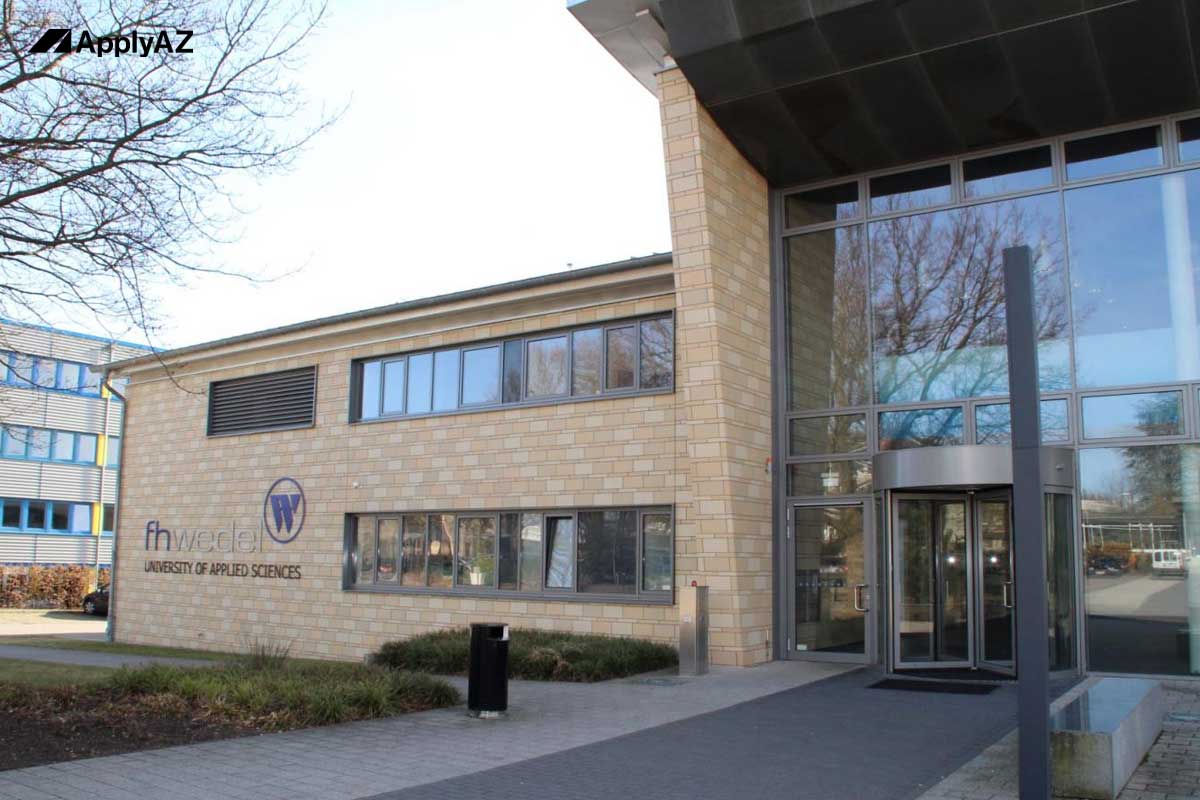
A practical guide to Fachhochschule Wedel University of Applied Sciences
First look at Fachhochschule Wedel University of Applied Sciences
Fachhochschule Wedel University of Applied Sciences is a private, state-recognised university of applied sciences in northern Germany, close to Hamburg. That matters because the style is usually more practice-led than many large public universities. You will often see smaller cohorts, structured timetables, and a clear link between coursework and real company problems. For some students, that feels focused and manageable. For others, it can feel intensive.
ApplyAZ starts by helping you decide whether this kind of applied, structured environment fits your learning style and your career plan. We also help you separate what is “nice to have” from what will actually affect your admission.
Fachhochschule Wedel University of Applied Sciences is known for programmes connected to computing, engineering, and business. When you evaluate it, look beyond the name and focus on what you will do weekly: lab work, projects, case studies, and assessment style. A typical student mistake is to judge fit only by module titles. Two programmes can sound similar but train very different skills. Pay attention to whether courses build a coherent path, how much group work there is, and how early you start applied projects. These details shape your daily life more than marketing text ever will.
What studying feels like there (teaching, exams, pace)
At a university of applied sciences, teaching often follows a steady rhythm. You attend regular classes, work through exercises, and get assessed through a mix of exams and coursework. The pace can feel fast because deadlines arrive throughout the semester, not only at the end. Many students do best when they treat it like a full-time job: consistent study blocks, weekly revision, and quick feedback loops when something is unclear.
ApplyAZ helps you plan for this reality early. We explain what a typical semester workload looks like, how to balance project work with exam prep, and how to set up a schedule that prevents last-minute stress.
Exams in Germany can be high-stakes, even when teaching is supportive. A common misunderstanding is thinking that “applied” means “easy”. It usually means you are expected to use concepts, not just repeat them. Another common scenario is international students underestimating academic writing standards, referencing, and the need to show your own reasoning. If you have been in a system where memorisation is rewarded, you may need a deliberate shift in how you study and how you present answers.
English-taught options and how to check the right track
At Fachhochschule Wedel University of Applied Sciences, English-taught degree options for international applicants are limited. So your first step is not “Which programme do I like?” but “Which programme is actually delivered in English as a full degree track?” Many students lose weeks because they assume a programme is English-taught based on a few English pages or a couple of modules offered in English. That is not enough for most visa and admission pathways.
ApplyAZ helps you confirm the teaching language at the degree level, not at the module level. We also help you check whether any German-language components still apply, such as electives, thesis supervision, or administrative steps.
A reliable way to judge the right track is to look for three signals: the official programme page clearly stating the language of instruction, the module handbook showing English module titles and descriptions across semesters, and the stated language requirement matching what you can prove. If any one of these is unclear, you treat it as a risk and verify it before you plan your timeline. This is where many applicants get surprised, especially when intakes, document deadlines, and language proof deadlines do not line up.
Admissions reality: what matters most (and what doesn’t)
Admissions decisions usually come down to fit and readiness. Fit means your previous studies match the academic core of the programme. Readiness means you can prove that match clearly, with proper documents, and within deadlines. For applied programmes, relevance can matter more than perfection. A strong match in core subjects, plus a clear motivation that connects your background to the programme, often beats a generic “I love Germany” statement.
ApplyAZ supports you by mapping your transcripts to the programme’s expectations and identifying gaps early. We also help you decide whether you should apply now, strengthen your profile first, or choose a better-aligned option.
What usually matters less than students think: fancy internships with unclear duties, long lists of online certificates, and overly designed CVs. What matters more: clear evidence of relevant coursework, consistent academic progress, and a motivation letter that shows you understand what you are applying for. If the programme expects a strong base in maths, programming, engineering, or similar foundations, you need to show that directly. If you cannot, the application often fails no matter how passionate you sound.
Documents students underestimate (prepare early)
Many rejections and delays are not about ability. They are about paperwork. Students often prepare the obvious documents and forget the ones that take the longest: official transcripts with grading scales, properly issued degree certificates, and translations that meet the accepted format. Another common pain point is unclear module content. If your transcript lists only course names, the university may not be able to judge relevance. That is when course descriptions and syllabi become critical.
ApplyAZ works with you to build a document plan that starts early and avoids panic. We also check consistency across documents, because mismatched names, dates, or programme titles can create avoidable delays.
Here is a practical checklist students commonly miss:
- Grading scale or explanation from your institution
- Course descriptions or syllabus for key modules
- Proper translations (when required) from an accepted provider
- Proof of language level that matches the programme requirement
- Passport validity and correctly formatted photos for later steps
If you prepare these early, you gain flexibility. If you prepare them late, you are forced into rushed choices that increase risk.
Tuition and real costs in daily life
Germany is often described as low-cost for study, but the reality depends heavily on whether your university is public or private and what city you live in. Fachhochschule Wedel University of Applied Sciences charges tuition for at least some degree tracks, and you should treat tuition and semester fees as separate items. Then you add living costs that do not feel academic at all: rent deposits, basic furniture, health insurance, and local registration steps.
ApplyAZ helps you build a realistic budget that includes the hidden one-off costs students forget. We also help you plan cash-flow, because the timing of payments can matter as much as the total amount.
A typical monthly budget usually includes:
- Rent and utilities
- Food and basic household costs
- Health insurance
- Local transport and required semester charges
- Study expenses (software, materials, occasional printing)
The biggest swing factor is housing. If you solve housing early, your budget becomes predictable. If you do not, costs can spike fast and create stress during the first semester.
Scholarships and funding: how to think, not guess
Funding in Germany is rarely one simple answer. Some options are merit-based, some are need-based, and many have rules that depend on your nationality, programme type, and timeline. The mistake students make is guessing based on what worked for someone else. A smarter approach is to treat funding like a strategy: identify what funding routes exist for your profile, what documents they require, and when decisions are made compared to your intake.
ApplyAZ supports this by turning funding into a timeline, not a hope. We align your applications, document readiness, and funding path so you do not miss an opportunity simply because paperwork was late.
Finance it with loan options via ApplyAZ. Loans are not the right fit for everyone, but they can be a tool when timing matters, especially for visa planning and early costs. The key is knowing what you need, when you need it, and what the repayment reality looks like after graduation. Funding planning is not just about getting money. It is about reducing risk, keeping your options open, and avoiding last-minute decisions that hurt your long-term outcomes.
Housing and arrival planning (what to decide before you land)
Arrival goes smoothly when you decide a few things early. First, where you will live for the first 4 to 8 weeks. Second, how you will handle local registration and health insurance. Third, what your first-week schedule looks like so you are not dealing with admin while also trying to keep up with classes. Students often focus on the visa and forget that the first month sets the tone for the whole semester.
ApplyAZ helps you build an arrival plan that is realistic, step-by-step, and matched to your intake date. We also help you prepare backup options, because housing timelines do not always behave.
Before you land, make these decisions:
- Temporary housing plan with a clear move-in date
- Budget for deposits and first purchases
- Document folder for registration, insurance, and enrolment steps
- A first-week plan that includes time for admin tasks
When these are decided early, you arrive calmer, start stronger, and avoid preventable issues that distract from your studies.
After graduation: work options and direction
Germany can offer strong career routes, but outcomes depend on your direction and preparation, not only your degree title. A common scenario is students graduating with decent grades but unclear positioning. Employers look for evidence that you can apply skills: projects, portfolios, internships, and the ability to communicate clearly in a professional setting. If your programme includes applied projects, treat them like career assets, not just coursework.
ApplyAZ supports you by helping you plan your pathway from the first semester. That includes choosing modules that match your target roles, shaping projects toward employable skills, and building documents and narratives that make sense to recruiters.
Also be realistic about language and location. Some roles are open in English, especially in tech, but many opportunities expand significantly with German skills. The earlier you decide whether you will invest in German, the better your job search plan becomes. Think in systems: a clear target role, a portfolio that proves it, and a timeline that matches graduation and hiring cycles. That is what turns a degree into a career step.
How ApplyAZ supports you step-by-step
ApplyAZ supports you end-to-end: shortlisting, document readiness, applications, scholarship strategy, and visa guidance. We start by understanding your academic background and constraints, then we build a plan that matches real programme requirements and real timelines. We do not rely on vague assumptions. We work through what the university will actually check, what could block your application, and how to present your profile clearly and professionally.
We also keep you organised. That means document checklists, deadline tracking, and guidance on what to prioritise first so you do not waste time on low-impact tasks.
When it is time to apply, we help you tailor your CV and motivation letter to the programme’s logic, not generic templates. We also support you through scholarship planning and visa readiness, so you are not doing these steps in isolation. Students often feel overwhelmed because they treat each step as separate. Our job is to connect the steps into one clean pipeline, reduce risk, and keep your momentum strong from first plan to arrival.
How ApplyAZ Gets You In
Most students find one program they like and hope for the best. That is not how we work.
It starts with a quick eligibility check, about 2 minutes, so you instantly know if this opportunity is a real option for your profile. If you are eligible, you book a private one-to-one consultation with one of our experts, where you get a clear and personalised plan built around your exact situation: your best-fit programs, your real deadlines, your scholarship path, and your exact next steps.
If you decide to move forward with us after that call, you enroll, upload your documents, and we take it from there. Our admissions team goes through your transcripts course by course, maps your background against real university requirements, and builds you a shortlist of 20 or more programs that you genuinely qualify for, across prestigious public universities, career-forward degrees taught in English, with strong graduate placement records. You review them, approve the ones you like, and then you lay back.
We write your CV and motivation letter for each program, submit every application, and track every deadline. Alongside admissions, we actively work on securing scholarships that fit your program, university, and country, whether that is DSU, DAAD, or other funding available to your profile, so you have the strongest possible shot at studying public (€0 for eligible students) with your living costs covered. Then we stay with you through visa preparation, arrival, and every practical step that follows.
Depending on your profile, you may qualify for far more programs, universities, and funding opportunities than you would ever find on your own. The only way to know is to start.
Check your eligibility now. It takes about 2 minutes. Because everything begins there.
Master in IT Engineering at Fachhochschule Wedel University of Applied Sciences
A quick sense-check: who Master in IT Engineering suits
Master in IT Engineering at Fachhochschule Wedel University of Applied Sciences suits students who want applied, career-facing tech training with clear structure. It fits best if you enjoy building systems, not only discussing ideas. If you like turning requirements into working software, testing assumptions, and improving performance, you will feel at home. It is also a good match if you want a programme where deadlines and deliverables keep you moving.
ApplyAZ helps you sense-check fit before you invest time. We compare your background to the programme’s likely expectations and help you decide if you should apply now or strengthen a few areas first.
A typical good-fit profile is a student from computer science, IT, software engineering, or related engineering fields. A common “almost fit” profile is someone from electronics, maths, physics, or business analytics with some coding but missing core CS modules. Those applicants may still be viable, but only if they can prove the right foundations or complete bridging steps. The key is not the title of your degree, but what your transcript proves you actually studied.
What you will gain by the end (real outcomes)
By the end of Master in IT Engineering, you should be able to design, build, and evaluate complex IT systems with stronger engineering discipline. Think clearer architecture choices, better reasoning about trade-offs, and the ability to ship work that is reliable, secure, and maintainable. You should also be more comfortable working in teams, managing technical scope, and communicating decisions to both technical and non-technical stakeholders.
ApplyAZ helps you define what “outcomes” mean for you, because the same degree can lead to very different roles. We help you choose a direction early so your projects, electives, and thesis support a coherent career story.
A realistic outcome is not just “a job in Germany”. It is a profile that is easy for employers to understand. For example, you might graduate positioned as a software engineer with strong systems thinking, or as a developer who can handle integration and deployment, or as someone focused on data-driven engineering work. The better you align your coursework and portfolio with one track, the faster your job search usually moves. Students who try to keep all options open often end up looking vague.
The learning style you should expect
Expect an applied learning style. You will likely learn concepts and then use them quickly in exercises, labs, and project work. The pace can feel steady and demanding because assessment is often spread across the term. Many students underestimate how much consistent weekly work matters. If you fall behind, catching up can be hard because each topic builds on the last.
ApplyAZ prepares you for this with a realistic semester plan. We help you map your time around projects, exam periods, and the administrative tasks international students must handle alongside study.
You should also expect engineering standards. That means code quality, documentation, testing, and clear reasoning. A common mistake is treating projects like short-term hacks. In this kind of programme, your process matters, not only the final output. Another common scenario is students with strong theoretical knowledge struggling in group work. If teamwork, planning, and version control are weak points, you should build those skills early. Small improvements here can change your entire experience.
Modules, projects, and thesis (how the year often flows)
The programme flow often feels like a ramp. Early modules tend to strengthen foundations and align everyone to a shared baseline. Then projects become more complex and more open-ended. You may move from guided tasks to building something that must work under constraints: time, performance, security, or integration. The thesis usually becomes the place where you prove depth. It is your chance to show you can investigate a problem, build a solution, and defend your decisions.
ApplyAZ helps you plan this flow backwards. We ask what you want your thesis and portfolio to say about you, then we help you select choices that support that message.
A practical way to judge the programme is to ask yourself what kind of work energises you. If you prefer clear requirements and structured builds, you will enjoy the engineering rhythm. If you want pure research with long reading cycles and minimal building, you may feel frustrated. Many students only discover this difference after arriving. Planning early avoids that mismatch. It also helps you pick a thesis area that supports your post-study work direction, instead of choosing something random because it seems “safe”.
Entry requirements (clear checklist)
Entry requirements are usually about proof, not potential. Your application must show that you have the academic base and the language readiness to study successfully. Even strong candidates get delayed when documents are incomplete or the match is unclear. Focus on making the evaluator’s job easy: show relevance quickly, show level clearly, and show consistency across all documents.
ApplyAZ checks the essentials early and flags what needs clarification. We also help you avoid applying into uncertainty, where the university is likely to ask for extra proof and push you past deadlines.
A simple decision checklist looks like this:
- A relevant bachelor’s degree or clearly relevant coursework
- Evidence of core IT or computer science foundations
- Proof of language at the level required for instruction
- Clean, consistent documents with correct names and dates
- A motivation letter that explains fit in practical terms
If one item is weak, it does not always mean rejection. It means you need a strategy: bridging evidence, stronger documentation, or a better-aligned programme. The goal is to reduce grey areas before you submit.
How to read your transcript against the requirements
Your transcript is not just a record of grades. It is a map of what you can claim academically. When a university checks your fit, they look for signals: did you study the right topics, at the right level, with enough depth. Course titles alone can be misleading, especially if your university uses generic names. You want to show the content behind those titles and connect it to what the programme expects.
ApplyAZ reads your transcript like an admissions evaluator. We identify which modules carry the most weight, which gaps may trigger questions, and how to present your background so the match is obvious.
A realistic example: a student from computer science with programming, data structures, databases, and systems courses usually has a clear fit. A student from electronics engineering might fit if they have strong programming, networks, embedded systems, and software projects, but they may need to clarify CS foundations. A student from business may need bridging unless they can prove serious technical coursework and project work. The smart move is to decide based on evidence, not hope. That is how you avoid rejections that could have been predicted.
Documents to prepare early (avoid delays)
Delays usually come from documents that take time to issue, translate, or standardise. International students often assume a PDF scan is enough, then discover that the university needs official formats, grading explanations, or specific content details. Another common problem is inconsistency: your name spelling differs across passport, transcript, and certificates. Small mismatches can trigger extra steps and slow everything down.
ApplyAZ builds a document plan that starts early. We tell you what to request from your university, what to translate, and how to organise everything so you can respond fast if the admissions office asks for clarification.
Here is what students commonly underestimate:
- Grading scale or an official explanation of your marking system
- Course descriptions or syllabi for key modules
- Properly issued degree certificate or provisional certificate wording
- Translation requirements and whether notarisation is needed
- A CV that matches your documents and does not contradict dates
If you prepare these early, you can apply calmly. If you do not, you end up rushing and increasing risk.
Tuition, fees, and living costs (real planning)
Your budget must reflect timing, not only totals. Tuition and fees may have specific payment windows, and living costs spike at the start because of deposits and setup. Even students with good monthly budgets get stressed if they forget the first 30 days: accommodation deposit, initial transport costs, health insurance setup, and basic essentials. If the university is private, tuition becomes a major planning item, and you should model what happens if currency shifts or processing delays occur.
ApplyAZ helps you build a realistic cost plan for Germany. We include one-off costs, monthly costs, and timing risks so you do not get surprised when you arrive.
Finance it with loan options via ApplyAZ. This can help some students manage early cash-flow and visa-related planning, especially when scholarship timing does not match payment timing. The key is to plan responsibly and avoid assumptions. A practical plan includes a buffer, a housing strategy, and a clear view of when each payment is due. When students plan this well, their first semester is calmer and their academic performance is stronger.
Scholarships and funding (smart approach)
Funding should be treated like a process, not a guess. Many students waste time chasing options that do not match their profile, intake, or programme type. The smart approach is to list the funding routes that realistically apply to you, identify what documents they require, and build a timeline that fits your admission plan. Scholarships and funding are often decided on strict criteria and deadlines. Missing one document can quietly kill an opportunity.
ApplyAZ supports you by turning funding into a strategy tied to your application plan. We help you identify realistic options, prepare the right documents early, and avoid last-minute moves that create stress.
A common mistake is waiting for admission before preparing scholarship documents. Another is assuming every programme has the same funding landscape. It varies by university, region, and student profile. The practical mindset is this: control what you can control. Prepare documents early, keep proof consistent, and align your choices with timelines. When you do that, you maximise your odds without relying on luck.
Career direction after Master in IT Engineering
Career direction depends on what you build during the programme. Employers respond to evidence. A degree title helps you get noticed, but projects, portfolio, and clarity of positioning help you get hired. If you want software engineering roles, you should graduate with strong examples of well-structured code, testing, and real system design choices. If you want more systems or integration roles, show work that touches deployment, reliability, and performance. If you want data-adjacent roles, show pipeline work, analysis, and engineering discipline, not only dashboards.
ApplyAZ helps you shape your story from the first semester. We guide you to pick projects and a thesis topic that support one clear direction, so your profile reads as focused.
A typical student problem is staying too general. They do “a bit of everything” and become hard to place. A better approach is to choose one primary direction and one secondary support skill. For example, software engineering plus cloud basics. Or systems engineering plus security awareness. This keeps you flexible without being vague. Your goal is simple: when someone reads your CV, they should instantly know where you fit and what you can do.
How ApplyAZ supports you step-by-step
ApplyAZ guides students end-to-end: programme fit, document check, application plan, scholarship strategy, and visa guidance. We start by checking if Master in IT Engineering at Fachhochschule Wedel University of Applied Sciences is truly aligned with your academic evidence and career direction. Then we build a clean plan: what to prepare first, which documents will take the longest, and what risks could delay your timeline.
We also support your positioning. That means a CV that matches your real profile and a motivation letter that explains fit with clarity and credibility, not generic claims. We make sure your application reads like it belongs in the programme.
Finally, we keep you organised across moving parts. Deadlines, document versions, translations, and follow-ups are where many applicants lose control. We reduce that chaos by giving you a structured path and checking each step for consistency. The goal is to submit a strong, clean application that makes the university’s decision easy, and to keep you ready for funding and visa steps without scrambling.
We Handle Everything. You Just Need to Qualify.
You upload your transcripts. We go through them carefully, match you to 20 or more English-taught programs at prestigious public universities with strong placement records, write your applications, and actively pursue every scholarship available for your profile, whether that is DSU, DAAD, or others depending on the university and country.
You review your shortlist, approve what fits, and we take care of the rest.
The only thing left for you to do right now is find out if you qualify.
Check your eligibility. It takes about 2 minutes.
Tuition and scholarships
Public universities in Germany charge no tuition fees for international students. A semester contribution typically applies, covering administrative costs and often a public transport pass.
DAAD (German Academic Exchange Service) offers scholarships for international master's students, covering living costs and a travel allowance. Apply through the DAAD portal separately from your university application.
The Deutschlandstipendium provides €300 per month, co-funded by the federal government and private sponsors. Applications go through the university's scholarship office after enrolment.
For Indian applicants
Indian graduates with a degree recognised by AIU (Association of Indian Universities) can apply to German public universities through uni-assist. The uni-assist portal handles degree equivalency verification and is the standard route for most non-EU applicants. Check your eligibility with us first.
Similar programmes
More free programmes in this city

They Began right where you are

