

Master in International Tourism Management
Master in International Tourism Management suits students who like a mix of business thinking and people-focused service industries. ApplyAZ guides students through this program's specific admissions, funding, and visa process.
Master
4 semesters
Heide
English
FH Westküste University of Applied Sciences


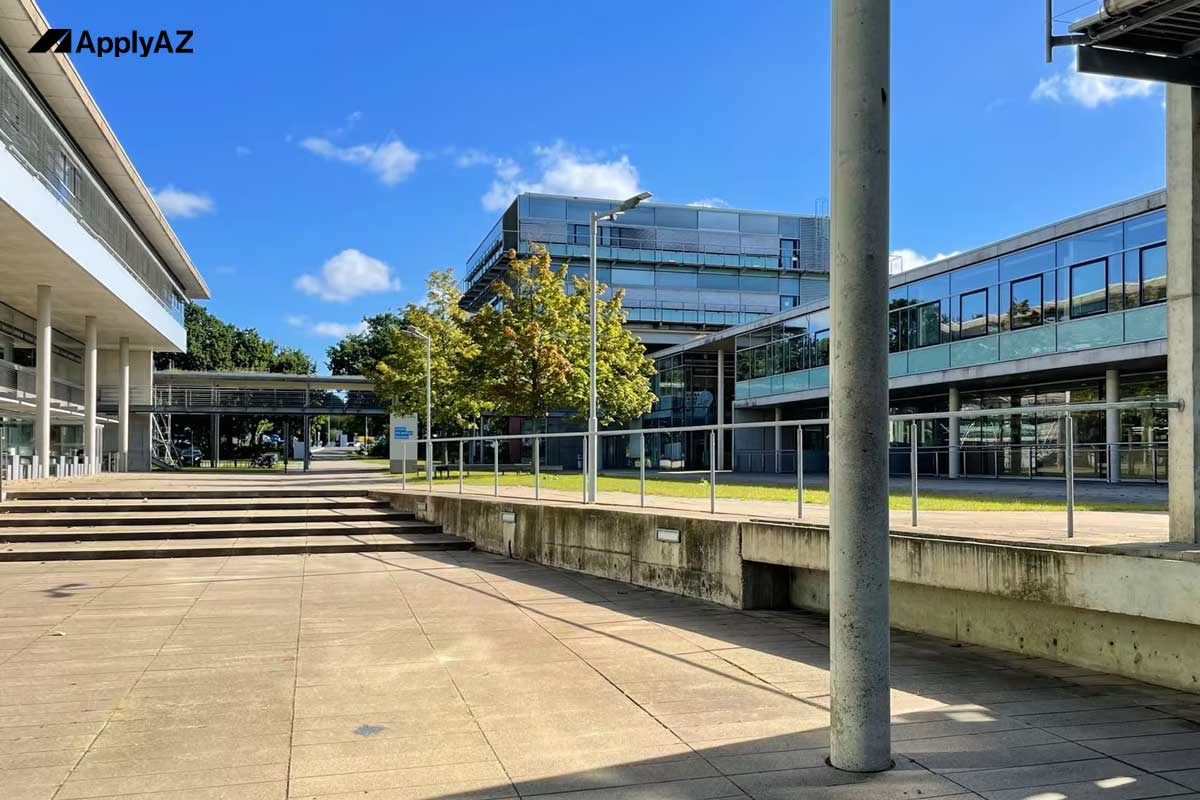
Studying at FH Westküste University of Applied Sciences
First look at FH Westküste University of Applied Sciences
FH Westküste University of Applied Sciences is the kind of German university that usually appeals to students who want practical learning and a clear link to jobs. As a University of Applied Sciences, it tends to be closer to industry projects, smaller class settings, and applied modules that build usable skills. Before you fall in love with the name or the city, look at how the degree is structured and how “applied” it really is in your field. ApplyAZ helps you read the programme structure like an admissions officer, not like a brochure.
A smart first step is to judge fit using the daily reality, not the headline. Ask yourself what you want to be doing every week: case work, labs, group projects, presentations, or theory-heavy reading. Then map that to your strengths and the story you can defend in a motivation letter. Many students compare universities by rankings alone and miss the point: in Germany, the strongest choice is often the one where your profile matches the modules, and where you can show a clean academic logic.
What studying feels like there (teaching, exams, pace)
In many applied sciences universities, teaching can feel structured and fast-moving. You often have regular assignments, group work, and clear deadlines that keep the semester on track. Exams can include written tests, presentations, project submissions, and sometimes oral components, depending on the department. What surprises students most is not difficulty, but rhythm: if you fall behind in week three, catching up in week nine can be stressful. ApplyAZ guides you to plan the semester pace early so you are not reacting under pressure.
A typical student who does well here treats the programme like a job. They read module outlines, build weekly study blocks, and take project work seriously because it often shapes internship opportunities. If you prefer open-ended self-study with one big exam at the end, you may find the structure intense. If you like clear tasks and practical deliverables, the environment can be motivating. The best signal of fit is whether you can imagine enjoying the work even when it is repetitive and time-bound.
English-taught options and how to check the right track
English-taught options can be real, but you must check what is fully in English and what quietly switches to German later. Many students misunderstand this and discover late that a “mostly English” track still includes compulsory German-taught modules, local internship requirements, or thesis supervision expectations that assume German. ApplyAZ helps you verify the language of instruction at module level, not just at programme title level, so you know what you are signing up for.
Use a simple checklist when you review an English-taught option:
- Confirm the language for each semester, not only the first.
- Check if internships, labs, or electives require German.
- Look for the thesis language rules and supervision expectations.
- Verify what level of English proof is accepted and what must be official.
When you do this properly, you avoid painful delays. You also build a stronger application because your motivation letter can reference the right track with confidence, which admissions teams notice.
Admissions reality: what matters most (and what doesn’t)
Admissions is usually less about sounding impressive and more about being clearly eligible. The biggest drivers tend to be academic match, prerequisites, and document quality. If the programme expects certain foundations, your transcript needs to show them in a way the evaluator can understand quickly. A polished CV cannot replace missing academic fit. This is why ApplyAZ starts by mapping your background against real module expectations, so you do not waste time applying where a mismatch will stop you.
What matters less than students think is generic “passion” language. German admissions teams typically prefer clarity: why this programme, why now, and how your past studies connect to the modules. Another common misunderstanding is timing. Students focus on the final deadline and forget the earlier steps that take weeks: document preparation, translations, grading conversions, and sometimes platform processing. A strong plan is not a nice-to-have. It is the difference between submitting calmly and missing a key requirement by a small technical detail.
Documents students underestimate (prepare early)
Most rejections that feel “unexpected” are document issues in disguise. Students assume a transcript and a passport are enough, then realise that the university needs very specific formats and supporting papers. Even when you have the right documents, the presentation can make them unreadable: unclear course titles, missing grading scale notes, or inconsistent name spelling across files. ApplyAZ checks document readiness like a quality audit, so your application reads cleanly to the evaluator.
Here are documents students often underestimate:
- Transcript details that show course content and credit system.
- Degree certificate timing, especially if you are graduating soon.
- Official grading scale documentation from your university.
- Proof of language that matches the programme’s accepted list.
- CV structure that matches European expectations for clarity.
Preparing these early reduces stress and improves outcomes. It also protects you from last-minute “urgent” fixes that lead to mistakes.
Tuition and real costs in daily life
In Germany, tuition rules can vary by programme type, state policies, and whether you pay semester contributions. Many students hear “Germany is free” and stop planning, then get surprised by upfront costs like semester fees, insurance, deposits, and first-month setup. Daily life costs depend heavily on housing and personal habits. A typical student spends most on rent, health insurance, groceries, and local transport, with smaller but important one-off costs when they arrive.
Planning is easier when you separate what is predictable from what is flexible. Predictable: semester contributions, insurance, basic housing deposits, and visa-related financial proof requirements. Flexible: lifestyle spending, travel, eating out, and how quickly you buy essentials. ApplyAZ helps you build a realistic cost picture based on your situation and timeline, and we also cover how to handle funding planning without relying on optimistic assumptions. Finance it with loan options via ApplyAZ.
Scholarships and funding: how to think, not guess
Scholarships are not a lottery if you approach them strategically, but they also are not automatic. The smart approach is to treat funding like a plan with constraints: your profile, the programme’s eligibility rules, deadlines, and required documents. Students often guess based on what they saw online, then build false confidence. ApplyAZ supports scholarship strategy by matching your academic background and timeline to realistic funding paths, and by preparing the documents that scholarship reviewers actually evaluate.
A common scenario is a student who applies to programmes first, then thinks about scholarships later. That usually creates timing problems because funding often has its own deadlines and proof requirements. Another scenario is applying for funding without a clear programme plan, which makes your story feel weak. The best approach is coordinated: admissions planning and funding planning move together. When your programme shortlist is built with funding in mind, you reduce risk and avoid wasted applications.
Housing and arrival planning (what to decide before you land)
Housing is where most students lose time and money, especially in the first month. If you arrive without a clear plan, you may accept a bad option just to stop the stress. Decide early what you will prioritise: proximity to campus, a private room, budget, or flexibility. ApplyAZ helps you build an arrival checklist that fits your actual intake and document timeline, so you are not making housing decisions while also handling enrolment and visa steps.
Before you land, lock these decisions:
- Your target move-in window and how it matches semester dates.
- Your maximum rent including utilities, not just base rent.
- Your temporary stay plan if long-term housing is delayed.
- Your document folder for city registration, bank, and insurance.
When you plan these in advance, arrival becomes a sequence of simple steps. You can focus on settling in, not firefighting.
After graduation: work options and direction
After graduation, outcomes depend on your skills, language progress, and how early you start building experience. Many students wait until the final semester to think about internships, then realise the best opportunities require earlier preparation. The strongest direction usually comes from aligning your coursework with practical proof: projects, internship experience, and a CV that shows what you can do, not only what you studied. ApplyAZ supports you with a plan that connects your programme choices to the type of roles you want to pursue.
A realistic mindset is helpful here. Germany rewards consistency and evidence. If you want a job, your goal is to make it easy for an employer to trust your skills. That means choosing electives that strengthen your profile, documenting your projects well, and improving language where it matters for your field. Even in English-friendly workplaces, daily life and many roles benefit from German. Planning for that early often changes a student’s trajectory more than any single exam result.
How ApplyAZ supports you step-by-step
ApplyAZ supports you from the first decision stage, where most students make costly mistakes. We start by shortlisting programmes that match your academic background and your future direction, so every application has a reason to exist. Then we move into document readiness, where we check consistency, format, and how your transcript will be interpreted in Germany. This prevents avoidable rejections and reduces back-and-forth with universities. Our approach is practical: we focus on what reviewers actually use to decide.
Next comes application execution and tracking. We help tailor your CV and motivation letter to each programme’s logic, so your story matches the modules and your academic path. We also support scholarship strategy in parallel, so you do not treat funding as an afterthought. Finally, we guide visa preparation and arrival planning, with a focus on predictable steps and clean documentation. The goal is not stress. The goal is control, so you always know what happens next and why.
How ApplyAZ Gets You In
Most students find one program they like and hope for the best. That is not how we work.
It starts with a quick eligibility check, about 2 minutes, so you instantly know if this opportunity is a real option for your profile. If you are eligible, you book a private one-to-one consultation with one of our experts, where you get a clear and personalised plan built around your exact situation: your best-fit programs, your real deadlines, your scholarship path, and your exact next steps.
If you decide to move forward with us after that call, you enroll, upload your documents, and we take it from there. Our admissions team goes through your transcripts course by course, maps your background against real university requirements, and builds you a shortlist of 20 or more programs that you genuinely qualify for, across prestigious public universities, career-forward degrees taught in English, with strong graduate placement records. You review them, approve the ones you like, and then you lay back.
We write your CV and motivation letter for each program, submit every application, and track every deadline. Alongside admissions, we actively work on securing scholarships that fit your program, university, and country, whether that is DSU, DAAD, or other funding available to your profile, so you have the strongest possible shot at studying public (€0 for eligible students) with your living costs covered. Then we stay with you through visa preparation, arrival, and every practical step that follows.
Depending on your profile, you may qualify for far more programs, universities, and funding opportunities than you would ever find on your own. The only way to know is to start.
Check your eligibility now. It takes about 2 minutes. Because everything begins there.
Master in International Tourism Management at FH Westküste University of Applied Sciences
A quick sense-check: who Master in International Tourism Management suits
Master in International Tourism Management suits students who like a mix of business thinking and people-focused service industries. If you enjoy turning messy real-world situations into clear plans, you will probably feel at home. Think of work like destination strategy, hospitality operations, experience design, or tourism marketing. ApplyAZ helps you check fit early by matching your past studies and your career direction to the programme’s actual content, not the name.
A typical good-fit background is business, management, economics, hospitality, geography, or social sciences with relevant modules. Another fit is an engineer or data-focused student who already worked in travel, events, or customer experience and can explain the link clearly. A weak fit is someone choosing tourism only because it feels “easy” or because Germany sounds attractive. If the story is not coherent, the application becomes hard to defend.
What you will gain by the end (real outcomes)
By the end, you should be able to analyse tourism markets, build a strategy, and present decisions with evidence. The useful outcomes are not just “knowledge”. They are practical habits: structured problem-solving, stakeholder thinking, and confidence writing and presenting. You should also learn how tourism systems connect, from policy and sustainability to pricing and demand. That breadth helps you enter many roles, not only classic tourism jobs.
A realistic outcome is clarity. Many students start with a vague goal like “I want international work”. After a year of projects and case-based tasks, they can say what function they want, what sector they prefer, and what kind of company fits them. ApplyAZ supports this by helping you shape your CV and motivation letter around outcomes you can prove, not ambitions you cannot yet support.
The learning style you should expect
Expect applied learning with group tasks, presentations, and written work that builds through the semester. You will likely discuss real scenarios and solve problems with limited information, which is close to how the industry works. That means you must be comfortable making reasonable assumptions, defending them, and improving your work after feedback. If you are used to only memorising and repeating, the adjustment can feel uncomfortable at first.
The pace is usually steady. Small deadlines come often, and the best students treat it like a routine. A common mistake is underestimating group work. Tourism projects often require coordination, and uneven teams are normal. The key skill is managing scope so you deliver something strong, not perfect. ApplyAZ helps you plan the semester workload realistically, so you do not crash during peak weeks.
Modules, projects, and thesis (how the year often flows)
The year often starts with foundations: tourism systems, management basics in an international context, and tools for analysis. Then it moves into deeper topics like destination development, sustainability, consumer behaviour, or strategic marketing. Projects usually become more complex as the semester continues. The goal is to move from “good ideas” to defendable decisions with data or structured reasoning.
Later, many students focus on a theme that can turn into the thesis. A typical student might explore sustainable destination management, digital tourism marketing, visitor experience design, or tourism policy impacts. The best theses are narrow and practical. They solve one clear question and connect to a real career direction. ApplyAZ helps you spot thesis topics early that are credible, manageable, and easy to explain in an application story.
Entry requirements (clear checklist)
Entry decisions usually come down to academic match and clean documentation. If your past degree includes relevant modules and your transcript is readable, you are already ahead. What students often miss is how strict universities can be about formal proof. ApplyAZ checks your profile against the requirement logic so you know what is essential and what can be clarified.
- A relevant Bachelor’s degree with appropriate subject coverage
- A transcript that shows modules and grading clearly
- Language proof that matches the programme’s accepted options
- A CV that explains your direction in a simple, credible way
- A motivation letter that connects your background to the programme content
If you are missing one element, it is not always a dead end, but it must be addressed correctly and early.
How to read your transcript against the requirements
Do not read requirements like a student. Read them like an evaluator who is scanning for evidence. The evaluator is asking: does this applicant already have the foundations to succeed without extra teaching? That is why the same degree can be accepted for one student and rejected for another, depending on module mix. ApplyAZ reviews your transcript course by course and identifies where the match is strong and where it needs explanation.
A common scenario: a business graduate fits well, but the transcript uses vague course names. In that case, the risk is not eligibility, it is clarity. Another scenario: a social science student fits conceptually but lacks quantitative modules. That may still work if the programme is not heavily analytical, but your motivation letter must show readiness. The goal is to reduce reviewer doubt in the first two minutes.
Documents to prepare early (avoid delays)
Delays usually happen when students start collecting documents after the call opens. That is too late. Some documents take weeks, and small errors cause resubmissions. ApplyAZ prevents this by building a document plan tied to deadlines, not to your convenience.
Prepare early because these are the files that most often create problems: transcripts with missing grading scale notes, degree certificates not yet issued, name mismatch across passport and academic records, and language proofs that do not meet the exact format. Another overlooked item is proof documents that explain your university’s credit system or course structure. When these are missing, the evaluator may not “interpret kindly”. Clean paperwork is not bureaucracy. It is strategy.
Tuition, fees, and living costs (real planning)
Your planning should separate university-related costs from daily-life costs. Even when tuition is not the big expense, students still face semester-related fees, insurance, and setup costs when they arrive. Daily life is mainly housing, then food, transport, and personal spending. The first month is often the most expensive because of deposits and initial purchases.
A typical mistake is planning based on your best month, not your worst month. Budget for delays: housing not found immediately, deposits higher than expected, or extra administrative steps. ApplyAZ helps you plan funds to avoid stress and visa issues, and to keep your study focus intact. Finance it with loan options via ApplyAZ.
Scholarships and funding (smart approach)
Funding works best when you treat it as a process, not a hope. You need a shortlist that is realistic for your profile and timeline, then you align documents and deadlines. Students often apply widely without a plan, then miss scholarship windows or submit weak funding documents because they rushed. ApplyAZ supports you by building a funding strategy alongside admissions, so you are not trying to “fix money” at the end.
A realistic example: student A has a strong academic profile and a consistent story, so the funding plan is to apply early and keep documentation clean. Student B has a mixed transcript but strong work experience, so the strategy is to strengthen narrative and choose programmes where work evidence matters. Both can work, but the approach is different. The key is consistency and timing.
Career direction after Master in International Tourism Management
Career direction depends on the skills you build and how you position them. Many graduates move toward tourism marketing, destination management, hospitality management, experience design, or operations roles in travel and events. Some go into consulting roles connected to services and place-based development. Your projects and thesis can become proof of capability, especially if you present them clearly on your CV.
A common mistake is staying too broad. “Tourism” is huge, and employers hire for functions. Choose a direction early: strategy, marketing, operations, sustainability, analytics, or policy. Then build evidence. Even if you change direction later, the act of choosing improves your applications and interviews. ApplyAZ helps you shape your profile so your career goal sounds specific and believable, not generic.
How ApplyAZ supports you step-by-step
ApplyAZ starts by checking programme fit properly, so you do not waste time on options that look good but do not match your transcript. We then run a document readiness check to remove common rejection risks like unclear modules, missing proof, or inconsistent naming. After that, we build an application plan that respects deadlines and processing time, so you are not relying on last-week submissions.
We also support how you present your story. We guide CV structure and motivation letter logic so each application feels tailored and coherent. In parallel, we plan scholarships and funding with the admissions timeline, then support visa guidance once decisions arrive. The point is to remove guesswork and reduce delays, while keeping you in control of choices that matter.
We Handle Everything. You Just Need to Qualify.
You upload your transcripts. We go through them carefully, match you to 20 or more English-taught programs at prestigious public universities with strong placement records, write your applications, and actively pursue every scholarship available for your profile, whether that is DSU, DAAD, or others depending on the university and country.
You review your shortlist, approve what fits, and we take care of the rest.
The only thing left for you to do right now is find out if you qualify.
Check your eligibility. It takes about 2 minutes.
Tuition and scholarships
Public universities in Germany charge no tuition fees for international students. A semester contribution typically applies, covering administrative costs and often a public transport pass.
DAAD (German Academic Exchange Service) offers scholarships for international master's students, covering living costs and a travel allowance. Apply through the DAAD portal separately from your university application.
The Deutschlandstipendium provides €300 per month, co-funded by the federal government and private sponsors. Applications go through the university's scholarship office after enrolment.
For Indian applicants
Indian graduates with a degree recognised by AIU (Association of Indian Universities) can apply to German public universities through uni-assist. The uni-assist portal handles degree equivalency verification and is the standard route for most non-EU applicants. Check your eligibility with us first.
Similar programmes
More free programmes in this city

They Began right where you are

