

Master in Global East Asia
Master in Global East Asia at The Free University of Berlin suits students who want to study East Asia through more than one lens. In terms of outcomes, this degree can support careers where regional expertise and analysis matter. ApplyAZ supports applicants through the entry requirements, scholarship options, and visa steps tied to this program.
Master
4 semesters
Berlin
English
The Free University of Berlin


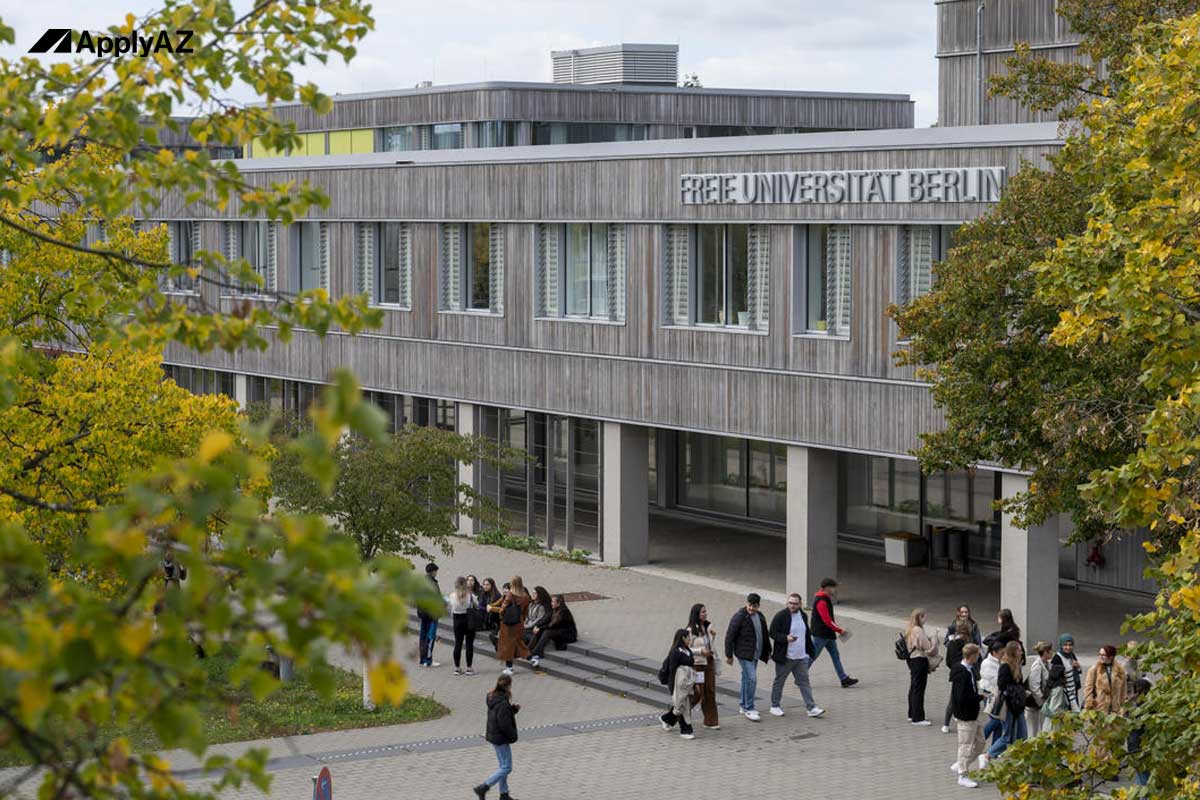
A student guide to The Free University of Berlin
First look at The Free University of Berlin
The Free University of Berlin sits in one of Europe’s most international cities, and that shows in daily student life. It is research-driven, broad in subject range, and strongly connected to Berlin’s academic and cultural scene. If you like learning through reading, discussion, and independent work, it can be a strong match. If you need a very structured, classroom-heavy style, you will need to choose your programme carefully.
ApplyAZ helps you start with the right questions, not just a shortlist. Before you fall in love with a name, we look at your background, your subject fit, and the way German admissions really works. That early clarity saves months, and it prevents wasted applications to options that look good on paper but do not match your profile.
What studying feels like there (teaching, exams, pace)
Expect a lot of self-managed study. Lectures can be large, seminars are more interactive, and reading loads can be heavy. In many tracks, you build your own timetable from modules, and you must track rules carefully. The pace can feel calm week to week, then intense near deadlines and exam periods. This surprises students who expect weekly graded homework like some other systems.
Assessment styles vary by field, but written exams, term papers, presentations, and research projects are common. A typical student who does well is not “naturally brilliant”, but organised. They plan their semester early, keep a simple weekly routine, and start writing tasks sooner than feels necessary. ApplyAZ supports this planning by turning programme rules into a clear action plan you can actually follow.
English-taught options and how to check the right track
You will find English-taught options, but you should not assume every track is fully in English. Some programmes are taught in English, some have mixed-language modules, and some offer English courses within a broader German-taught degree. The difference matters because it affects visa planning, part-time work stress, and how confident you feel in class from day one.
To check the right track, focus on evidence in the programme details, not rumours. A practical way to verify fit is to use this checklist:
- Look at the language of instruction for each module, not only the programme title
- Check entry requirements for language certificates and specific prior coursework
- Confirm whether the thesis and core seminars can be completed in English
ApplyAZ helps you read these details the way admissions teams read them, so you choose a realistic path and avoid last-minute surprises.
Admissions reality: what matters most (and what doesn’t)
German admissions is often strict and document-based. What matters most is whether your previous studies match the subject requirements for the degree you want. This is not only about your degree title. It is about what you studied, how much of it, and whether your courses align with the required foundation. A strong CV cannot replace missing academic content if the programme expects it.
What matters less than students think: branding, personal connections, and long motivational speeches. A motivation letter can help, but it usually works only when the academic fit is already clear. A common scenario is a student with good grades who gets rejected because their coursework does not match the programme structure. ApplyAZ focuses on preventing that outcome by checking fit early and recommending paths that are academically defensible.
Documents students underestimate (prepare early)
Most students prepare the obvious documents, then lose time on the hard ones. The hidden risk is not effort, it is timing. If one document takes weeks to issue or legalise, your entire plan can slip. Start early, even if you are “not ready” to apply yet. Being ready is built through documents, not motivation.
Here are documents that commonly cause delays:
- Full transcripts with course titles and grades for every semester
- Degree certificate or proof of expected graduation, in the right format
- Clear syllabus or course descriptions when programmes check academic content
- Language certificates that match the exact requirement, not “similar” tests
ApplyAZ supports document readiness by reviewing for completeness, readability, and compliance, so you submit what the university can actually process without back-and-forth.
Tuition and real costs in daily life
Many students hear “Germany is free” and stop thinking. Tuition can be low at public universities, but you still need to plan for real monthly costs. You will likely pay a semester contribution and handle expenses like rent, health insurance, transport, food, and study materials. Berlin is exciting, but it is also competitive for housing, and that alone can shape your budget and stress level.
The smart approach is to plan costs in categories, not as one big number. A typical student underestimates early expenses: deposits, temporary accommodation, and initial setup costs. ApplyAZ helps you build a practical cost plan that matches your timeline. Finance it with loan options via ApplyAZ, if you need to bridge the gap between arrival costs and your long-term funding plan.
Scholarships and funding: how to think, not guess
Funding works best when you treat it like a strategy, not a wish. Scholarships can depend on the programme, your profile, your timing, and sometimes your nationality or academic background. Many students only search scholarship names and assume they will “apply later”. Later becomes too late, because funding paths often require early preparation and specific documents.
A calm way to approach it is to decide your funding mix: personal funds, family support, scholarship targets, and a backup plan. Then you build your application timeline around that mix. ApplyAZ supports scholarship strategy by helping you choose realistic targets, prepare the right evidence, and avoid relying on a single outcome. The goal is not to guess, but to plan so you stay in control even if one route does not work.
Housing and arrival planning (what to decide before you land)
Housing in Berlin can be the hardest practical part, and it affects everything else. Without a stable address, you may struggle with basic steps after arrival. Many students waste money by choosing the first available option, then getting stuck in a poor location or an expensive short-term setup. Decide your priorities early, and treat housing as a project with deadlines.
Before you land, make these decisions:
- Your maximum budget and how long you can afford temporary housing
- Whether you can accept shared living, and what boundaries matter to you
- Your arrival timeline and the documents you need ready for registration steps
ApplyAZ helps you map these choices to your admission and visa timeline, so you arrive with fewer unknowns and a clearer plan for the first weeks.
After graduation: work options and direction
The strongest outcomes come from planning your direction early, not in your final semester. In Berlin, opportunities can be broad, but competition is real. Your field matters, your language comfort matters, and your ability to show relevant projects matters. A typical student who succeeds starts building proof early: coursework projects, internships, research assistance, or practical work that fits their target role.
Also think about the “permission to stay and work” side of the journey. Rules and pathways exist, but they require planning and proper documents. ApplyAZ supports you by helping you align your programme choice with career direction and practical steps, so graduation does not feel like a cliff edge. You want your final year to look like a transition, not a restart.
How ApplyAZ supports you step-by-step
ApplyAZ supports you end-to-end, but the value is in the details at each stage. We start by shortlisting based on true academic fit, not just what sounds attractive. Then we build document readiness so your file is clear, complete, and aligned with German admissions expectations. After that, we support your applications with structured timelines and programme-specific positioning.
We also guide scholarship strategy and visa preparation with a practical mindset. That means planning risks early: missing documents, late timelines, and unrealistic funding assumptions. A common mistake is treating each step as separate. In reality, the steps connect. Your programme choice affects your documents, which affect your timeline, which affects funding and visa planning. ApplyAZ helps you connect the chain, so your plan holds together under real deadlines.
How ApplyAZ Gets You In
Most students find one program they like and hope for the best. That is not how we work.
It starts with a quick eligibility check, about 2 minutes, so you instantly know if this opportunity is a real option for your profile. If you are eligible, you book a private one-to-one consultation with one of our experts, where you get a clear and personalised plan built around your exact situation: your best-fit programs, your real deadlines, your scholarship path, and your exact next steps.
If you decide to move forward with us after that call, you enroll, upload your documents, and we take it from there. Our admissions team goes through your transcripts course by course, maps your background against real university requirements, and builds you a shortlist of 20 or more programs that you genuinely qualify for, across prestigious public universities, career-forward degrees taught in English, with strong graduate placement records. You review them, approve the ones you like, and then you lay back.
We write your CV and motivation letter for each program, submit every application, and track every deadline. Alongside admissions, we actively work on securing scholarships that fit your program, university, and country, whether that is DSU, DAAD, or other funding available to your profile, so you have the strongest possible shot at studying public (€0 for eligible students) with your living costs covered. Then we stay with you through visa preparation, arrival, and every practical step that follows.
Depending on your profile, you may qualify for far more programs, universities, and funding opportunities than you would ever find on your own. The only way to know is to start.
Check your eligibility now. It takes about 2 minutes. Because everything begins there.
Master in Global East Asia at The Free University of Berlin
A quick sense-check: who Master in Global East Asia suits
Master in Global East Asia at The Free University of Berlin suits students who want to study East Asia through more than one lens. It fits you if you enjoy linking politics, economics, society, culture, and regional history. It also suits you if you can handle reading-heavy study and want to build a clear research question over time, not just learn facts.
A typical good fit is a graduate from Asian Studies, International Relations, Political Science, Sociology, Economics, History, or related fields. If you come from a different area, it can still work, but only if your transcript shows relevant modules and you can explain your interest with a clear academic story. ApplyAZ helps you test fit early by mapping your prior coursework to what the programme usually expects.
What you will gain by the end (real outcomes)
By the end, you should be able to analyse East Asia with strong academic discipline. That means you can read research critically, compare countries and regions without oversimplifying, and write structured arguments with evidence. You will likely learn how to work with academic sources in more than one language environment, even if the programme itself is in English.
You also gain a practical skill many students miss: turning a broad interest into a focused research problem. A common scenario is a student who starts with "I want to study China and Japan" and finishes with a thesis question that is specific, testable, and well-grounded. ApplyAZ supports you by helping you build that focus early, so your motivation letter, module choices, and thesis direction all align.
The learning style you should expect
Expect independent study. Seminars often require you to read before class, discuss ideas, and write regularly. You may have fewer weekly graded tasks than in some education systems, but that does not mean it is easy. The workload becomes real when multiple papers and presentations land at the same time.
You should also expect academic precision. Claims need sources. Arguments need structure. If you prefer clear right-or-wrong answers, this may feel uncomfortable at first. Students who do well create a weekly routine, keep reading notes organised, and start writing early. ApplyAZ guides students on how to plan the semester in a realistic way, so deadlines do not pile up and cause avoidable stress.
Modules, projects, and thesis (how the year often flows)
The year often starts with core modules that build shared foundations. These may introduce key debates, regional frameworks, and methods. Then you move into more specialised topics, where you start shaping your own interests through elective choices and seminar themes.
Projects usually take the form of papers, presentations, and research proposals. The thesis becomes easier when you treat earlier work as stepping stones. A common mistake is choosing electives that look interesting but do not build toward a thesis question. ApplyAZ helps you think backward from the thesis: what skills you must build, which modules support your topic, and how to keep your plan coherent across the year.
Entry requirements (clear checklist)
Entry decisions often come down to academic match, not only overall grades. Use this simple checklist to judge readiness before you apply:
- A relevant first degree with enough coursework connected to East Asia or the programme's core themes
- Proof you can study at the required language level (usually English, and sometimes additional expectations depending on track)
- A transcript that shows methods, research writing, or analytical coursework, not only general survey subjects
- A motivation letter that shows a focused academic reason, not tourism or lifestyle reasons
If any item is unclear, do not guess. ApplyAZ helps you interpret requirements the way an admissions team does and identify what needs evidence.
How to read your transcript against the requirements
Start by listing your modules and grouping them by theme: region, discipline, and method. Admissions teams often look for proof that you can handle the programme's core work. A transcript with relevant themes and strong analytical modules can outweigh a transcript that is high-scoring but unrelated.
Here is useful decision logic. If your transcript shows several courses on East Asia, international politics, regional economics, history, or society, you are likely on the right track. If you have only one or two loosely connected modules, you may need to strengthen your academic narrative and show clear links through your statement and supporting documents. ApplyAZ reviews transcripts course by course and flags gaps early, so you do not waste an application on a mismatch.
Documents to prepare early (avoid delays)
Most delays come from documents students assume are "easy". Start early because universities can be strict about format and completeness. A typical delay happens when a student submits a transcript without course details, then the university requests clarifications, and deadlines pass.
Prepare these early, in clean and readable form: your full transcript for all semesters, your degree certificate or official proof of expected graduation, language certificates, and identity documents as required. If your degree structure is unusual, you may also need course descriptions or a syllabus summary. ApplyAZ runs a document readiness check and helps you organise files so your application is complete and consistent.
Tuition, fees, and living costs (real planning)
Public universities in Germany often have low tuition, but you still pay semester contributions and you must plan for real monthly living costs. Berlin can be exciting, but it can also be expensive and competitive for housing. Rent and deposits can shape your entire budget, especially in the first weeks.
Do not plan your finances as one big number. Break it down into rent, insurance, transport, food, and arrival costs like deposits and temporary accommodation. Finance it with loan options via ApplyAZ if you need a structured way to cover upfront costs while you stabilise your budget. ApplyAZ supports you by aligning your cost plan with your timeline, so money issues do not become last-minute visa and arrival risks.
Scholarships and funding (smart approach)
Funding works best when you treat it as a portfolio, not a single hope. Many students apply with a vague idea of "I will find a scholarship later". Later often clashes with deadlines and missing documents. A smarter approach is to pick a few realistic funding paths early and prepare the evidence they usually need.
Think in three layers: your base budget, scholarships you will pursue seriously, and a backup option if funding is late or partial. This protects you from panic decisions. ApplyAZ supports scholarship strategy by building a timeline, checking what is realistic for your profile, and ensuring your documents support your funding story as well as your admission story.
Career direction after Master in Global East Asia
This degree can support careers where regional expertise and analysis matter. Common directions include policy, research support roles, international organisations, NGOs, consulting with regional focus, journalism and analysis, business roles tied to East Asian markets, and further doctoral study.
The key is choosing a direction early enough to build evidence. A student who wants policy work should select modules and paper topics that show policy analysis. A student aiming for research should build methods and a thesis topic with depth. ApplyAZ helps you connect programme choices to a clear direction, so your CV and experience grow in a believable line rather than looking random.
How ApplyAZ supports you step-by-step
ApplyAZ guides you end-to-end. We start with programme fit, based on your transcript and academic story. Then we move to document readiness, so your application is complete, consistent, and easy for the university to assess. After that, we build an application plan around real deadlines and the sequence that avoids delays.
We also support scholarship strategy and visa guidance as part of one connected plan. Many students treat these as separate tasks, and that creates risk. When your programme choice, funding plan, and documents align, the process becomes calmer and more predictable. ApplyAZ's role is to reduce uncertainty, prevent avoidable mistakes, and help you move step-by-step with clarity.
We Handle Everything. You Just Need to Qualify.
You upload your transcripts. We go through them carefully, match you to 20 or more English-taught programs at prestigious public universities with strong placement records, write your applications, and actively pursue every scholarship available for your profile, whether that is DSU, DAAD, or others depending on the university and country.
You review your shortlist, approve what fits, and we take care of the rest.
The only thing left for you to do right now is find out if you qualify.
Check your eligibility. It takes about 2 minutes.
Tuition and scholarships
Public universities in Germany charge no tuition fees for international students. A semester contribution typically applies, covering administrative costs and often a public transport pass.
DAAD (German Academic Exchange Service) offers scholarships for international master's students, covering living costs and a travel allowance. Apply through the DAAD portal separately from your university application.
The Deutschlandstipendium provides €300 per month, co-funded by the federal government and private sponsors. Applications go through the university's scholarship office after enrolment.
For Indian applicants
Indian graduates with a degree recognised by AIU (Association of Indian Universities) can apply to German public universities through uni-assist. The uni-assist portal handles degree equivalency verification and is the standard route for most non-EU applicants. Check your eligibility with us first.
Similar programmes
More free programmes in this city

They Began right where you are

