

Master in Finance
Master in Finance at University of Applied Sciences Hamburg splits between core finance skills and applied work: valuation tasks, risk topics, and analysis using real datasets. ApplyAZ manages the admissions paperwork, scholarship search, and visa process for students applying here.
Master
4 semesters
Hamburg
English
University of Applied Sciences Hamburg



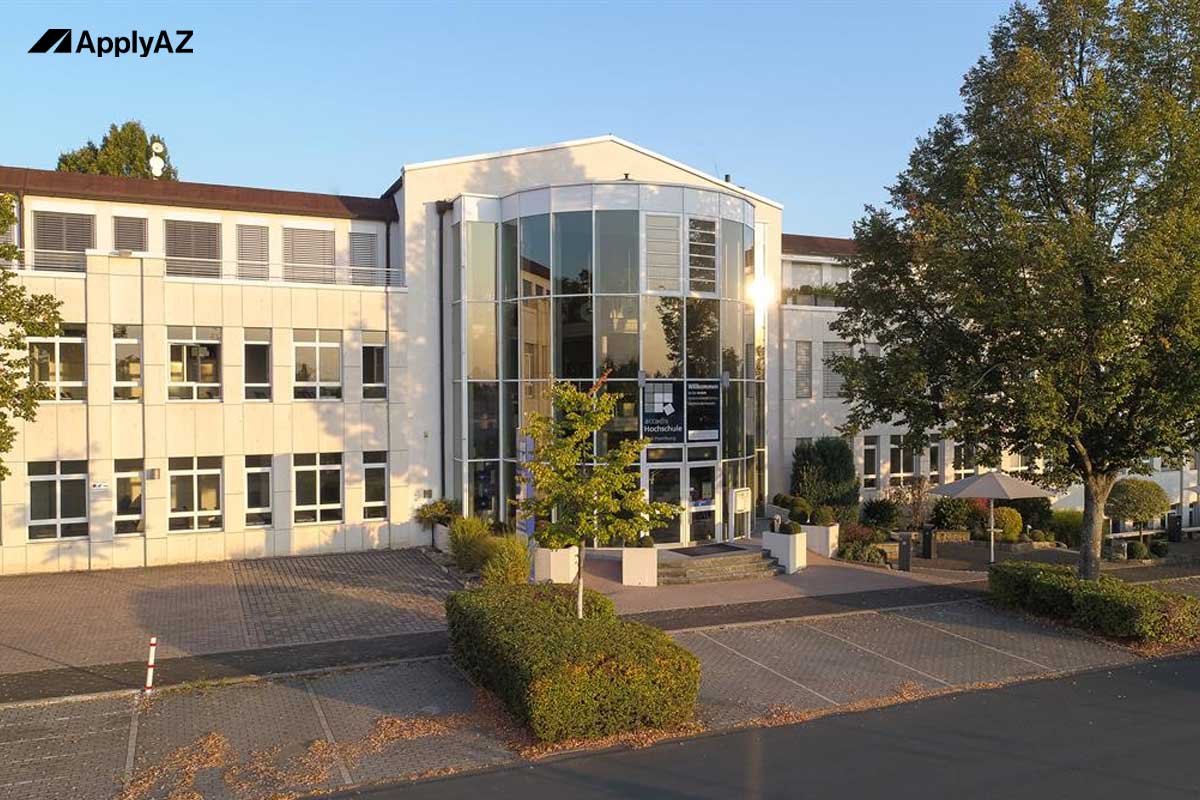
Why accadis Hochschule Bad Homburg works well for international students
accadis Hochschule Bad Homburg is in Germany, close to Frankfurt, which can make travel, internships, and networking easier. Many international students in Germany want a calm campus but also access to a big job market. That mix is useful. If you are comparing English-taught programs in Germany and planning to study in Germany in English, location is not a small detail.
A quick caution: students often choose only by rankings. A better approach is fit. Ask yourself three things:
- Is the programme taught fully in English, or partly in German?
- Can you afford the full cost, not just tuition?
- Does the city give you part-time work options?
English-taught study options at accadis Hochschule Bad Homburg
If your goal is to study in Germany in English, start by checking the programme language on the official course page and the module list. Some programmes look “English-friendly” but still require German for group work, projects, or internships. That gap is a common surprise for international students in Germany, especially in the first semester.
Before you shortlist, use this quick checklist:
- Teaching language: 100% English or mixed?
- Entry requirements: degree match, subject credits, and minimum grades
- Proof of language: IELTS/TOEFL accepted, minimum scores listed
- Intake: winter, summer, or both
- Practical elements: internship, projects with companies, thesis support
If you want to keep options open, shortlist a few similar English-taught programs in Germany in nearby cities too. It protects you if one deadline is earlier than expected.
Tuition and what you really pay (simple cost map)
“Cheap” can mean different things in Germany. Public German universities often charge low semester contributions, which makes them popular when people search cheap tuition universities Germany. A private institution can still feel affordable if the full plan is realistic, but you must map the real cost early so you do not get stuck mid-process.
Use this simple cost map:
- Tuition: the published tuition for accadis Hochschule Bad Homburg
- Semester costs: admin fees, student services, and any required charges
- Study materials: books, software, and course tools
- Living costs in Germany: rent, health insurance, transport, food
- One-time costs: deposits, flights, residence permit fees
Common mistake: students budget only for tuition and forget housing deposits and the first month of living costs. That is where many plans break.
Admissions step-by-step (clear and calm)
German university application steps feel simple when you take them in order. For international students in Germany, the main stress comes from documents and timing, not from “hard” forms. Some applicants will use uni-assist, while others apply directly. The method depends on the programme and the university’s process.
Step-by-step checklist:
- Confirm the right intake and deadline for accadis Hochschule Bad Homburg
- Prepare documents: passport, transcripts, grading scale, degree certificate
- Translate documents if needed (official requirements vary)
- Prepare language proof (IELTS/TOEFL) and check validity dates
- Write a focused CV and motivation letter that matches the programme
- Apply through the stated route (direct portal or uni-assist)
- Track your email daily and reply fast to any document requests
A small human touch: set a reminder to check spam folders. Offer letters and document questions often land there.
If you want a fast reality check on eligibility before you invest time in documents, use: ApplyAZ [Eligibility Check]
Scholarships and funding (realistic and useful)
Scholarships in Germany exist, but they are competitive and often tied to strong academics, clear goals, or specific profiles. Treat scholarships as a plan to reduce cost, not as the only plan. For international students in Germany, the strongest applications usually combine good documents, a sensible budget, and a clear reason for choosing Germany and the programme.
Funding checklist to build a realistic plan:
- Scholarships in Germany: check what fits your profile and timeline
- Personal funds: savings plan for the first months
- Family support: documented support if needed
- Part-time work: plan hours around study load
- Housing strategy: shared flats can reduce living costs in Germany
Quick caution: many students apply for scholarships too late. Some deadlines are earlier than university deadlines, so start your shortlist early.
Jobs and career outcomes after graduation in Germany
Germany has a strong job market, but outcomes depend on skills, location, and how early you start building experience. If you study in Germany in English, your job search can still be successful, but German language skills often expand your options. Many international students in Germany begin with English roles and add German level-by-level.
Career checklist for the first 90 days on campus:
- Build a German-style CV and a clean LinkedIn profile
- Join one student society or industry group
- Apply for internships early, even if you feel “not ready”
- Track applications in a simple sheet and follow up
- Start basic German as soon as your schedule stabilises
Practical example: students who do one project with a real company often find interviews easier. It gives you stories, results, and references.
How ApplyAZ helps you apply with less stress
A German university application becomes easier when your file is complete, consistent, and submitted on time. ApplyAZ supports international students in Germany with clear steps: programme shortlisting, document checks, CV and motivation letter shaping, and guidance on the German student visa path after admission. The goal is to reduce mistakes that cause delays, rejections, or missed deadlines.
Support checklist you can expect from a structured process:
- Eligibility review based on your background and goals
- Shortlist of English-taught programs in Germany, including low-cost paths
- Document checklist and naming consistency checks
- uni-assist guidance when it applies
- German student visa document planning and timeline guidance
When you are ready to move, use: ApplyAZ [Book a Free Consultation]
Run an eligibility check or book a free consultation so you can choose the right intake, build a clean plan, and apply with confidence.
Many international students in Germany want one thing: study in Germany in English, keep costs low, and still graduate with a degree that makes sense for the job market. That is why English-taught programs in Germany get so much attention. But there is a common confusion. People hear “Germany is affordable” and assume every option sits in public German universities with near-zero fees. In reality, cheap tuition universities Germany include some private options too, and your total cost depends on fees, rent, and visa rules.
This article explains what studying Finance MSc
at accadis Hochschule Bad Homburg can look like, how to plan the budget, and how to compare it with public German universities without getting lost in small details. One quick warning before you start. Do not choose based only on tuition. Living costs can quietly become the bigger number.
English-taught programs in Germany, study in Germany in English, cheap tuition universities Germany, and public German universities: how to choose with less stress
If you are comparing English-taught programs in Germany, start with a clean shortlist. Many students jump between ten websites and end up more confused. Keep it simple. Check language, entry rules, and the real budget. Then compare private options with public German universities in a fair way, not a “free vs paid” shortcut.
Use this quick filter:
- Language: fully English, mixed, or German-taught
- Route: direct application or uni-assist
- Total cost: tuition plus rent, insurance, and transport
- Fit: finance focus, maths level, and assessment style
- Timing: deadlines vs German student visa appointment dates
A small human touch: people often confuse “semester fee” at public German universities with tuition. They are not the same. Both still need budgeting.
What Finance MSc
is really about (simple overview)
Finance MSc
focuses on how money moves inside companies and across markets. You learn how to read risk, value businesses, and make decisions with data. It is not only about stock charts. It can include corporate finance, valuation, portfolio thinking, and financial reporting. Expect numbers, but also clear writing and structured reasoning.
A simple example: two firms want to merge. Finance is not just the price. It is the risk, the funding plan, the timing, and what can go wrong. If you like structured problem-solving, this field fits.
Why accadis Hochschule Bad Homburg is a good place to study Finance MSc
accadis Hochschule Bad Homburg can suit students who want a focused English classroom and a clear path through coursework. Many international students in Germany prefer environments where feedback is direct and expectations are stated early. That reduces guesswork and helps you plan your term.
Before you commit, check these points:
- Teaching style: case-led learning, exams, or continuous assessment
- Support: office hours, feedback cycles, and academic guidance
- Practical element: projects, company cases, or applied assignments
- Career help: CV support, interview prep, and networking events
If you are comparing with public German universities, remember that class size and structure can be very different. Some students thrive in large lectures. Others do better with tighter guidance.
Modules, projects, and thesis (what your year may look like)
Your year in Finance MSc
is likely split between core finance skills and applied work. You may handle valuation tasks, risk topics, and analysis using real datasets. Group work can appear, even in finance, because employers want collaboration and clear communication, not only technical ability.
You can expect work like:
- Valuation and financial modelling assignments
- Risk and investment analysis tasks
- Case studies with short written briefs
- A thesis that answers one clear finance question
Quick warning: do not leave your thesis planning to the last minute. Data access, supervisor availability, and topic approval can take longer than you think.
Entry requirements and eligibility (easy checklist)
Entry requirements Germany vary by university. Some programmes accept a wider range of backgrounds, while others need specific finance or maths courses. The fastest way to avoid delays is to prepare documents early and keep file names clean. It sounds small, but it saves time.
Use this checklist:
- A recognised bachelor’s degree (finance, business, economics, or related)
- Official transcripts, plus grading scale
- CV in a simple format (easy to scan)
- Motivation letter aligned with Finance MSc
- Proof of English if required
- Passport and ID documents ready for upload
- Portfolio or extra proof only if the programme asks
Some applications go through uni-assist. If that applies, plan extra processing time. Many students miss this and then panic close to deadlines.
ApplyAZ [Eligibility Check]
Tuition, fees, and living costs (real planning)
If your aim is cheap tuition universities Germany, you need to plan the whole picture. Tuition is one line. Monthly life is the other line. Public German universities can be low tuition, but rent in popular areas is still real money. Private options may cost more in tuition, yet still sit within a controlled budget if you plan early.
Plan in three layers:
- Tuition and mandatory fees: paid per term or per year
- Monthly basics: rent, health insurance, food, phone, transport
- One-time costs: housing deposit, setup costs, visa paperwork
A small reality check: many students forget the housing deposit can be two or three months of rent. That is often due before you move in.
Scholarships and funding options
Scholarships in Germany exist, but they are competitive and usually limited in number. Some support high grades, some support specific profiles, and some depend on external foundations. Also, scholarships and visa funding proof are not the same thing. Even with scholarship support, you still need to follow German student visa rules.
Funding options to consider:
- University-linked awards and fee reductions (if offered)
- External scholarships in Germany from foundations
- Part-time student work as budget support, not full funding
- Family support and savings plan for visa proof
Keep your documents organised. Scholarship deadlines can be earlier than course deadlines. That catches people off guard every year.
Career paths and jobs after graduation
Jobs after graduation in Germany for finance graduates often link to corporate finance, banking, consulting, audit, risk, or analytics. Your exact path depends on skills and language level. English can work in many international teams, but German helps for client-facing roles and many local firms.
Common directions include:
- Financial analyst in companies
- Corporate finance and treasury roles
- Risk and compliance roles
- Audit and advisory support roles
- Investment and portfolio support roles
A simple tip: build proof early. One good project and a clean CV can beat vague “interest in finance” statements.
How ApplyAZ helps you apply step-by-step
The hardest part is not filling a form. It is getting every document correct, on time, and in the right format. ApplyAZ helps you shortlist options, check your file, and follow the correct admissions route. You also get support for scholarship planning and visa readiness, so steps happen in the right order.
What the process can look like:
- Shortlisting: match your background to Finance MSc
and alternatives - Document checks: transcripts, grading scale, translations, CV, motivation letter
- Application route: direct portal or uni-assist where needed
- Scholarship planning: realistic options based on your profile
- Visa guidance: German student visa document checklist and timing
ApplyAZ [Book a Free Consultation]
Run an eligibility check or book a free consultation.
Tuition and scholarships
Public universities in Germany charge no tuition fees for international students. A semester contribution typically applies, covering administrative costs and often a public transport pass.
DAAD (German Academic Exchange Service) offers scholarships for international master's students, covering living costs and a travel allowance. Apply through the DAAD portal separately from your university application.
The Deutschlandstipendium provides €300 per month, co-funded by the federal government and private sponsors. Applications go through the university's scholarship office after enrolment.
For Indian applicants
Indian graduates with a degree recognised by AIU (Association of Indian Universities) can apply to German public universities through uni-assist. The uni-assist portal handles degree equivalency verification and is the standard route for most non-EU applicants.
How ApplyAZ supports you
Not sure if your qualifications meet the entry requirements? Check your eligibility before you start your application — it takes a few minutes and confirms whether your background is a fit.
Similar programmes
More free programmes in this city

They Began right where you are

