

Master in Digital Transformation
Master in Digital Transformation at Dortmund University of Applied Sciences and Arts suits students who want to lead technology-driven organisational change. ApplyAZ maps out the entry requirements, funding routes, and visa timeline for this program specifically.
Master
4 semesters
Dortmund
English
Dortmund University of Applied Sciences and Arts


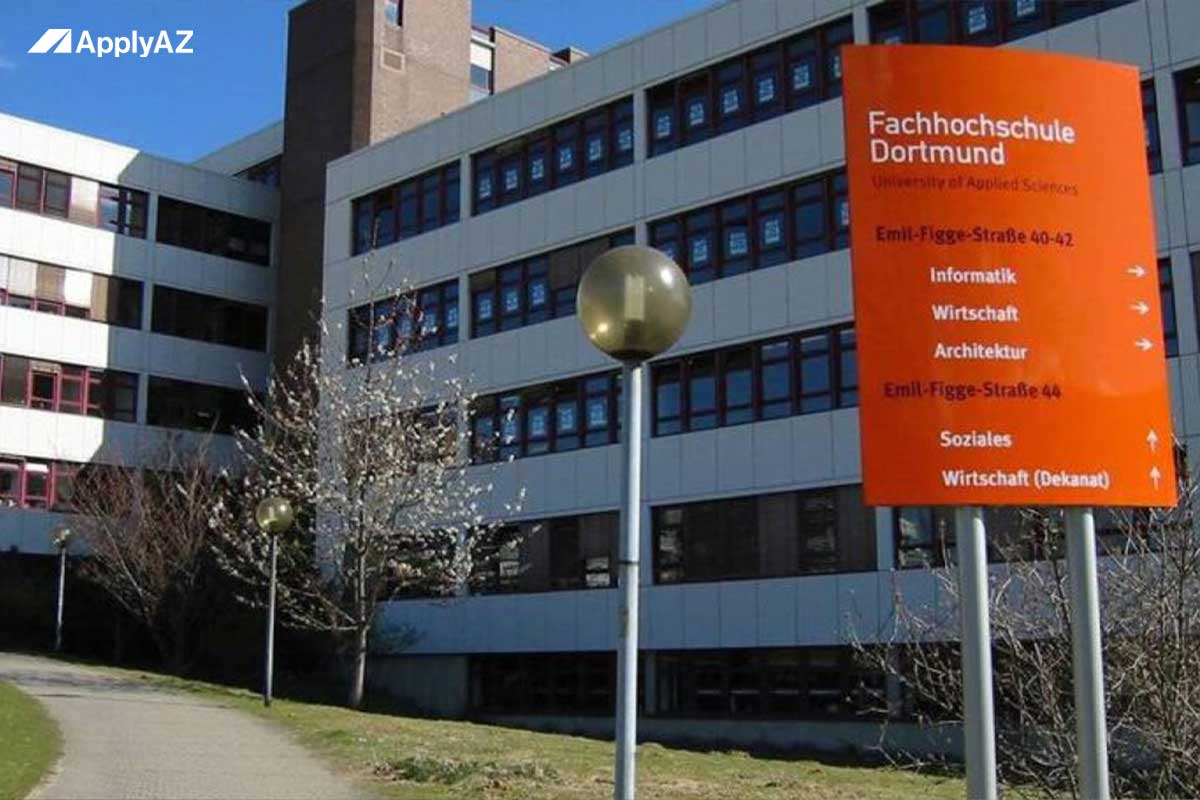
Studying at Dortmund University of Applied Sciences and Arts
First look at Dortmund University of Applied Sciences and Arts
Dortmund University of Applied Sciences and Arts is a strong option for students who want practical, career-linked study in Germany. It is a public university in a major city with industry, transport links, and student life. For many international students, the main attraction is not only the degree itself, but the applied learning model. You are usually expected to connect theory to projects, labs, design work, case tasks, or professional contexts.
ApplyAZ helps at this stage by turning a broad interest into a clear plan. Many students start with only a country in mind. They do not yet know whether they fit a university of applied sciences better than a traditional research university. That early distinction matters because it changes your course shortlist, document strategy, and the kind of academic profile that will look strongest.
A common misunderstanding is thinking that all public universities in Germany feel the same. They do not. The teaching style, pace, and programme structure can be very different. A student who learns best through hands-on work and clear application often performs better in this environment than in a highly theoretical setup. That is why your first decision should be about learning fit, not just city or tuition.
What studying feels like there (teaching, exams, pace)
At Dortmund University of Applied Sciences and Arts, a typical student experience is structured and steady rather than loose and self-directed. You should expect regular coursework, practical assignments, and deadlines that build over the semester. In many applied programmes, the learning rhythm rewards consistency. Students who leave everything for the exam period often feel pressure quickly, especially in the first semester.
Exams are only one part of performance in many programmes. Depending on the faculty, you may also see presentations, lab work, project submissions, reports, or group tasks. This matters for international students because success is not only about memorising content. Time management, teamwork, and clear communication become part of your academic result.
ApplyAZ supports students here by helping them choose programmes that match how they actually study, not how they wish they studied. For example, a student with good technical ability but weaker exam confidence may still do very well in a programme that includes project-based assessment. This is the kind of fit decision that improves outcomes before the application is even submitted.
English-taught options and how to check the right track
Students often search for “English-taught” and stop there. That is not enough. The real question is whether the programme is fully taught in English, partly taught in English, or English-taught with some modules, internship expectations, or administrative steps that still require German. At Dortmund University of Applied Sciences and Arts, you need to check the exact programme page and current regulations for each option you consider.
The second thing to check is the academic track, not just the programme title. Two programmes can sound similar but lead to different outcomes. One may be more technical and mathematical, while another is more management-oriented or design-led. A typical student loses time by applying to titles that sound attractive but do not match their previous coursework.
Use this simple filter before shortlisting:
- Match your bachelor subjects to the programme modules, not only the title
- Check language requirements for admission and for graduation-related components
- Review whether the programme expects prior technical depth, portfolio work, or specific methods
- Look at internship or project expectations if you want industry exposure during study
ApplyAZ helps students compare these details side by side so they do not build a shortlist on assumptions. That saves time and reduces weak applications.
Admissions reality: what matters most (and what doesn’t)
Many students think admission decisions are mainly about one headline number, such as CGPA. In reality, your academic fit is usually more important than GPA alone. A solid GPA helps, but admissions teams also look at whether your previous degree content matches the programme, whether your documents are clear, and whether your application shows a logical progression.
What usually matters most is alignment. If your background supports the curriculum, your application becomes easier to defend. If the match is weak, even a strong GPA may not solve the problem. This is especially true in applied programmes where universities want to see that you can handle the course structure from day one.
What matters less than students think is over-designing the application. Fancy CV layouts, overlong motivation letters, and copied phrasing do not create trust. Clear, accurate, well-structured documents do. ApplyAZ focuses on this practical side by building a realistic shortlist first, then preparing applications that are specific to each programme instead of repeating the same generic file everywhere.
Documents students underestimate (prepare early)
The biggest delays usually come from documents that students assume are simple. They focus on the motivation letter and forget the supporting paperwork that can block an application or later delay enrolment. At Dortmund University of Applied Sciences and Arts, as with many German institutions, document quality and consistency matter more than students expect.
A common scenario is a student who has all documents, but names, dates, subject titles, or translations do not match across files. That creates confusion and extra requests. Another common issue is waiting too long for official transcripts, language proof, or certified copies. These are avoidable delays if you plan early.
Documents often underestimated:
- Transcripts with clear subject names and grading scale context
- Degree certificate or provisional completion proof
- Language certificate that matches the programme requirement exactly
- Passport validity and correct personal details across all files
- Course descriptions or module outlines when academic fit needs proof
ApplyAZ supports students by checking document readiness early, before deadlines become tight. That reduces panic edits and improves submission quality.
Tuition and real costs in daily life
One reason students choose Germany is that public education can be far more affordable than many other destinations. Still, “low tuition” does not mean “low total cost.” At Dortmund University of Applied Sciences and Arts, students should plan the full picture: semester-related fees, rent, food, transport, insurance, study materials, and first-arrival setup costs.
The first months are usually the most expensive. A typical student pays for deposits, temporary housing, local registration-related needs, basic furniture items, and daily expenses before they feel settled. If you only budget for monthly rent, your plan may break early. Practical financial planning is part of application planning, not something to think about after admission.
ApplyAZ helps students build realistic cost expectations and compare options based on their actual budget comfort. Finance it with loan options via ApplyAZ. This is especially useful for students who can manage long-term costs but need a structured plan for the early-stage expenses that arrive before scholarships or part-time work become realistic.
Scholarships and funding: how to think, not guess
Students often treat scholarships like a lucky outcome. A better approach is to treat funding as a strategy. That means understanding which scholarships are linked to region, programme type, financial profile, timing, or document quality. In Germany, funding routes vary a lot, so guessing based on social media posts is a weak plan.
A common mistake is applying for admission first and only later asking about funding. By then, key documents may not be prepared in the right format, or deadlines may be close. Good funding planning starts early because it can affect how you prepare financial records, translations, and your timeline for visa steps.
ApplyAZ supports students by aligning scholarship strategy with the programme shortlist and application timeline. This helps students focus on realistic options instead of chasing every scholarship name they hear. The goal is not to “try everything.” The goal is to build a funding path that matches the student’s profile and timing with the least avoidable risk.
Housing and arrival planning (what to decide before you land)
Housing planning is one of the most stressful parts of moving to Germany, and students often start too late. In a city like Dortmund, the right question is not only “Can I find a room?” but “What kind of housing setup helps me start classes without chaos?” A cheap option far from campus may cost more in time, transport, and stress during the first semester.
Before arrival, students should decide their priorities clearly. Some need the lowest cost. Others need a short commute, quiet study space, or flexibility for a later move. A typical student makes a better decision when they choose a temporary safe option first, then move after they understand the city and class routine.
Decide these points before flying:
- Your maximum monthly housing budget including utilities
- Commute tolerance in minutes, not just rent price
- Temporary vs long-term housing strategy
- What documents you may need for housing applications
- Your first two weeks plan for registration, SIM, banking, and campus access
ApplyAZ helps students prepare this arrival plan so the transition is manageable and does not disrupt the start of studies.
After graduation: work options and direction
Students often ask only one question: “Can I get a job after graduation?” A better question is, “Does this programme build the kind of profile employers in Germany can use?” At Dortmund University of Applied Sciences and Arts, the applied nature of study can be a strong advantage if you use projects, internships, and coursework to build evidence of your skills.
What usually helps most is not just the final degree title. Employers often look for proof of problem-solving, tools, project experience, communication, and reliability. A typical student who starts career planning early, improves German step by step, and chooses projects carefully is in a stronger position than someone who waits until the last semester.
ApplyAZ supports students by helping them choose programmes with sensible career direction from the start. That means looking at curriculum depth, industry relevance, and the kind of graduate profile the programme tends to produce. Good career outcomes usually begin with a good academic fit and realistic planning, not last-minute job searching.
How ApplyAZ supports you step-by-step
ApplyAZ acts as a guide through the full process, from first shortlist to visa preparation. For Dortmund University of Applied Sciences and Arts, this means helping you understand whether the university and programme style fit your background, then turning that into a practical application and funding plan. The focus is clarity at each stage, not generic advice.
Students usually need support in five places: choosing the right track, preparing documents, managing deadlines, planning funding, and avoiding mistakes in visa preparation. These are connected. If one step is weak, the next step becomes harder. ApplyAZ helps keep these steps aligned so your process stays organised and realistic.
A common scenario is a student who is qualified but loses time because they apply too broadly, prepare documents too late, or misunderstand programme requirements. With the right support, the same student can submit stronger applications with less stress. That is the value of step-by-step guidance: fewer avoidable errors, better decisions, and a process you can actually manage.
How ApplyAZ Gets You In
Most students find one program they like and hope for the best. That is not how we work.
It starts with a quick eligibility check, about 2 minutes, so you instantly know if this opportunity is a real option for your profile. If you are eligible, you book a private one-to-one consultation with one of our experts, where you get a clear and personalised plan built around your exact situation: your best-fit programs, your real deadlines, your scholarship path, and your exact next steps.
If you decide to move forward with us after that call, you enroll, upload your documents, and we take it from there. Our admissions team goes through your transcripts course by course, maps your background against real university requirements, and builds you a shortlist of 20 or more programs that you genuinely qualify for, across prestigious public universities, career-forward degrees taught in English, with strong graduate placement records. You review them, approve the ones you like, and then you lay back.
We write your CV and motivation letter for each program, submit every application, and track every deadline. Alongside admissions, we actively work on securing scholarships that fit your program, university, and country, whether that is DSU, DAAD, or other funding available to your profile, so you have the strongest possible shot at studying public (€0 for eligible students) with your living costs covered. Then we stay with you through visa preparation, arrival, and every practical step that follows.
Depending on your profile, you may qualify for far more programs, universities, and funding opportunities than you would ever find on your own. The only way to know is to start.
Check your eligibility now. It takes about 2 minutes. Because everything begins there.
Master in Digital Transformation at Dortmund University of Applied Sciences and Arts
A quick sense-check: who Master in Digital Transformation suits
Master in Digital Transformation suits students who want to work at the intersection of business change, technology adoption, and process improvement. It is usually a good fit for people who are interested in how organisations redesign systems, teams, and workflows when digital tools change the way work is done. If you enjoy both strategy and execution, this direction may suit you well.
ApplyAZ helps students test fit early because “digital transformation” is a broad term. Some students expect a technical software degree. Others expect a pure management degree. In reality, many programmes in this area sit between these two. The best fit is often a student who can understand business goals and also work comfortably with technology concepts.
A common scenario is background A from business, management, or operations with some analytics or systems exposure. Background B from IT or engineering may also fit well, especially if the student wants to move toward transformation roles rather than only technical delivery. The key is showing the right mix of relevance and direction.
What you will gain by the end (real outcomes)
By the end of Master in Digital Transformation, students usually gain a clearer understanding of how organisations plan and implement change in response to digital tools, data, and new operating models. This often includes stronger skills in process thinking, stakeholder communication, and practical decision-making. You should be able to see not only what technology can do, but what an organisation can realistically adopt.
Another real outcome is better cross-functional thinking. Students often arrive with knowledge from one side only, either business or technology. During the programme, many learn how to speak across departments and connect goals, systems, timelines, and implementation limits. That ability is valuable because transformation work usually fails when teams cannot align.
ApplyAZ helps students judge whether this outcome matches their career goal. If you want deep technical engineering work only, another programme may fit better. If you want to work on organisational change, systems adoption, or digital strategy implementation, this programme can be a stronger match.
The learning style you should expect
The learning style in Master in Digital Transformation is often applied, discussion-based, and project-oriented. You should expect case analysis, team tasks, presentations, and assignments that ask you to connect frameworks with real organisational situations. A typical student will need both analytical thinking and clear communication, because success often depends on explaining trade-offs, not only identifying them.
Many students underestimate the workload because the title sounds broad. The challenge is usually in the combination of tasks. You may manage several deadlines at once, work in groups, and prepare practical outputs that require structure and clarity. This can feel demanding if you are used to exam-only systems.
ApplyAZ helps students prepare for this by setting realistic expectations before application. We also help them choose a programme path that matches their strengths. For example, a student who is strong in technical thinking but weaker in presentations may still fit well, but should expect to improve communication skills during the programme.
Modules, projects, and thesis (how the year often flows)
In many digital transformation master’s programmes, the flow often begins with core concepts, methods, and organisational foundations, then moves into applied work such as projects, implementation cases, and strategy-focused tasks. The exact module names vary, but the pattern is usually similar. Students first build a shared language, then apply it to practical decisions and change scenarios.
Projects often become central because transformation is not learned well in theory alone. A common scenario is a team task where students must evaluate a process, propose a digital improvement path, and justify choices based on cost, feasibility, and stakeholder impact. This kind of work develops judgement, not just textbook knowledge.
The thesis usually works best when students choose a focused problem, such as adoption barriers, process redesign, implementation planning, or change management in a specific context. ApplyAZ helps students think about fit and direction early so their module choices and project work support a stronger thesis pathway later.
Entry requirements (clear checklist)
Entry requirements for Master in Digital Transformation usually combine academic relevance, language proof, and complete documentation. The first step is understanding what is essential and what may be flexible. Students often make the mistake of rejecting themselves too early or assuming they qualify without checking the transcript-level fit.
Use this checklist to review your profile:
- A recognised bachelor’s degree in a relevant or related field
- Coursework that supports business, technology, systems, analytics, or process learning
- Language proficiency that matches the programme requirement
- Clear and complete academic documents
- Any additional conditions that need clarification before applying
ApplyAZ helps students turn the requirement text into decision logic. Background A may fit directly if it already includes management, analytics, information systems, or operations. Background B may need bridging through better explanation of project work, internships, or transcript evidence. The goal is a realistic application strategy, not assumptions.
How to read your transcript against the requirements
For Master in Digital Transformation, your transcript should be read as evidence of readiness, not only as a record of grades. Admissions teams often want to see whether your previous study supports the blend of business and technology thinking required for this kind of programme. That means looking at subject content, not just your degree title.
A typical strong transcript may show modules in management, IT, data analysis, operations, systems, business processes, or related areas. A student with a narrower background can still be a good fit, but the application usually needs a clearer explanation. For example, a business graduate with strong analytics coursework may fit better than expected. An engineering graduate with process and systems exposure may also fit strongly.
ApplyAZ supports this stage by mapping your coursework to the programme logic and identifying what needs stronger explanation. This helps avoid a common mistake, which is writing a generic motivation letter that does not match the academic evidence already in your file.
Documents to prepare early (avoid delays)
Document preparation is where many strong applications slow down. Students often spend too much time polishing one statement and too little time checking whether core documents are complete, consistent, and ready in the correct format. For Master in Digital Transformation, delays usually come from missing records, translation issues, or mismatched details across documents.
Prepare these early:
- Degree certificate or provisional completion letter
- Full transcript with readable course titles and grades
- Language certificate that matches the requirement exactly
- Passport and identity details checked for consistency
- CV and motivation letter aligned with the programme focus
- Any supporting proof of relevant internships or projects, where useful
ApplyAZ helps students sequence this work so important items are not left to the end. That practical planning reduces last-minute stress, improves document quality, and helps students submit stronger applications on time.
Tuition, fees, and living costs (real planning)
Germany is attractive because public higher education can be affordable, but students still need a full financial plan. For Master in Digital Transformation at Dortmund University of Applied Sciences and Arts, your planning should include semester-related fees, rent, food, transport, insurance, internet, and day-to-day expenses. These are predictable, but only if you build your budget early.
The most common budgeting mistake is underestimating arrival costs. A typical student needs money for temporary housing, deposit, transport setup, and basic living items before routines become stable. If your plan only covers monthly rent and food, the first month can feel difficult. A better approach is to plan for both startup costs and regular costs.
ApplyAZ helps students plan this realistically based on common student situations and timelines. Finance it with loan options via ApplyAZ. This helps students avoid unnecessary financial pressure at the start and make better decisions about housing, travel timing, and early-stage setup.
Scholarships and funding (smart approach)
Scholarships and funding should be planned as part of the same strategy as admissions, not as a separate task later. For Master in Digital Transformation, students often lose time because they treat funding as a list of names instead of a timeline-based process. In practice, eligibility, document readiness, and deadlines shape what is realistic.
A common mistake is chasing too many options with weak preparation. A stronger approach is to focus on funding routes that match your profile and timing, then prepare the right documents early. This improves quality and reduces confusion. Funding decisions usually become easier when the programme choice, budget, and application sequence are already clear.
ApplyAZ supports students by aligning scholarship strategy with the programme shortlist and the wider study plan. That means helping students think practically about what to pursue first, what evidence to prepare, and how funding planning connects to later visa preparation and overall financial stability.
Career direction after Master in Digital Transformation
Master in Digital Transformation can lead to roles connected to change implementation, process improvement, technology adoption, and cross-functional coordination. The exact direction depends on your previous background. A student with business experience may move toward transformation support, operations improvement, or digital process roles. A student with technical training may move toward implementation or solution-focused roles with broader business responsibility.
This is why career fit should be judged before applying. The degree is strongest when it builds on what you already know and moves you into a clearer next role. It is less effective if chosen only because “digital” sounds current. A typical successful student uses projects and thesis work to show practical understanding, not only interest.
ApplyAZ helps students choose this programme when it supports a real career path. That includes checking background fit, likely outcomes, and how to present the transition clearly in the application so the programme choice makes sense from the start.
How ApplyAZ supports you step-by-step
ApplyAZ supports students applying to Master in Digital Transformation at Dortmund University of Applied Sciences and Arts through the full process, from first fit review to visa guidance. We begin by checking whether the programme matches your academic background and career direction. Then we help shape a practical plan for documents, applications, funding, and timeline management.
Students often struggle because each step is handled separately. They shortlist first, then discover requirements gaps, then rush documents, then worry about funding too late. ApplyAZ helps connect these steps. That makes the process clearer and reduces avoidable delays. The goal is not only to apply, but to apply with the right structure.
A typical student arrives with mixed advice from websites, friends, and social media. Our role is to turn that into a focused plan with realistic programme choices, stronger applications, and better preparation for the next stages. This improves confidence and helps students move forward with fewer mistakes.
We Handle Everything. You Just Need to Qualify.
You upload your transcripts. We go through them carefully, match you to 20 or more English-taught programs at prestigious public universities with strong placement records, write your applications, and actively pursue every scholarship available for your profile, whether that is DSU, DAAD, or others depending on the university and country.
You review your shortlist, approve what fits, and we take care of the rest.
The only thing left for you to do right now is find out if you qualify.
Check your eligibility. It takes about 2 minutes.
Tuition and scholarships
Public universities in Germany charge no tuition fees for international students. A semester contribution typically applies, covering administrative costs and often a public transport pass.
DAAD (German Academic Exchange Service) offers scholarships for international master's students, covering living costs and a travel allowance. Apply through the DAAD portal separately from your university application.
The Deutschlandstipendium provides €300 per month, co-funded by the federal government and private sponsors. Applications go through the university's scholarship office after enrolment.
For Indian applicants
Indian graduates with a degree recognised by AIU (Association of Indian Universities) can apply to German public universities through uni-assist. The uni-assist portal handles degree equivalency verification and is the standard route for most non-EU applicants. Check your eligibility with us first.
Similar programmes
More free programmes in this city

They Began right where you are

