

Master in Data Science
Master in Data Science at Hamburg University of Technology suits students who like turning messy information into decisions with maths and code. Longer term, typical directions include data science, machine learning engineering, analytics, and domain roles that combine data with a field like logistics, manufacturing, or energy. ApplyAZ supports applicants through the entry requirements, scholarship options, and visa steps tied to this program.
Master
4 semesters
Hamburg
English
Hamburg University of Technology



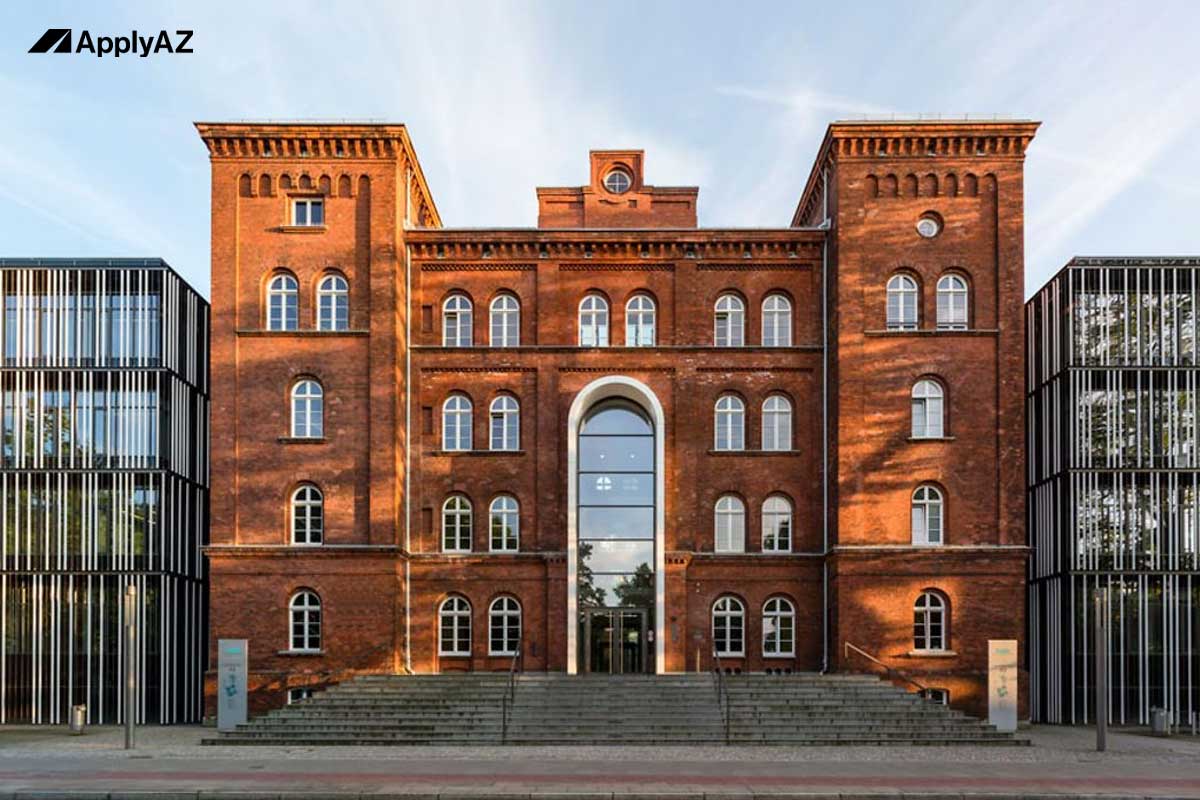
Hamburg University of Technology
First look at Hamburg University of Technology
Hamburg University of Technology is a focused engineering university. It is smaller than many “full” universities, so it feels more specialised and more technical. You will notice this in the course lists, the campus conversations, and the kind of student community it attracts. If you want a broad humanities-style experience, it may feel narrow. If you want a clear engineering identity and strong links between methods and real systems, it can be a good match.
ApplyAZ uses this first look to save you time. We help you map your background to the university’s style, not just the title of a programme. Many students choose a university because of the city name, then struggle when the teaching approach is more mathematical, more project-heavy, or more research-driven than expected. This step is about avoiding that mismatch early.
What studying feels like there (teaching, exams, pace)
Expect a structured pace and a strong emphasis on fundamentals. Lectures often move quickly, and you are expected to keep up with problem sets, reading, and lab or project work. Exams can be intense because they test both concepts and application. A common scenario is a student who did well in a more memorisation-based system, then finds they must show method, assumptions, and clear reasoning under time pressure.
You will usually do best if you plan your week like a work schedule. Block time for revision, group work, and consultation hours. Do not wait for “exam season” to start learning. ApplyAZ supports students by helping them understand what “academic readiness” really means here: not just having the degree, but having the right foundation, the right evidence in your documents, and a realistic plan for the workload.
English-taught options and how to check the right track
Hamburg University of Technology offers several English-taught options, especially in engineering and related technical fields. The key is to check the track and the teaching language of core modules, not only the headline. Some programmes are fully in English, while others may include a mix. You should read the module handbook and look at the first-year course list. That is where the real language demand shows up.
Use a simple checklist when you compare options:
- Are the compulsory modules taught in English, or only electives?
- Do assessments require long written reports, or mostly problem-solving?
- Does the programme expect a specific prior toolkit (maths, coding, lab skills)?
ApplyAZ supports this step by shortlisting only the options that truly match your academic profile and language readiness, so you do not waste an application on a track that quietly assumes a different background.
Admissions reality: what matters most (and what doesn’t)
What usually matters most is academic fit. The university wants to see that your prior degree matches the programme’s foundation, and that you can handle the level. This is not only about your final GPA. It is also about the courses you completed, the topics covered, and how coherent your story is. A typical rejection happens when the title looks related, but the transcript shows missing core areas that the master’s programme depends on.
What matters less than many students think: flashy certificates, generic recommendation letters, and a motivation letter that repeats the programme webpage. Those items do not fix a mismatch in prerequisites. ApplyAZ helps you present your profile with clarity: we identify your strongest matching modules, explain your academic direction consistently, and avoid over-claiming. A clean, truthful application often beats a “big” application that feels unfocused.
Documents students underestimate (prepare early)
Students often underestimate how strict document formats can be. Even when you have the right degree, small issues can slow everything down: missing page stamps, unclear grading scales, translations that do not match originals, or transcripts that do not list course credits properly. Another common problem is waiting too long for official letters from the university, which can create last-minute stress when deadlines are close.
Prepare these early, even before you feel “ready” to apply:
- Official transcript with all semesters and grading scale information
- Degree certificate or proof of graduation (as required)
- Clear, consistent translation set (if your documents are not in English or German)
- Language certificate that matches the programme language requirement
ApplyAZ supports this step by doing a readiness review: we catch the small issues that cause delays, and we help you build a clean package that an admissions office can assess quickly.
Tuition and real costs in daily life
In Germany, many public universities do not charge classic tuition fees for most programmes. Instead, you usually pay a semester contribution, and then your main costs are daily life. Hamburg is a major city, so rent is often the biggest pressure point. A typical student budget challenge is not the university payment, but finding housing without overpaying, while also covering health insurance, transport, and deposits.
Plan your costs in “phases,” not as one number. Before arrival, you may need funds for deposits, first-month rent, and setup costs. After arrival, your monthly spending becomes more stable if you choose housing and transport wisely. ApplyAZ supports students by helping them plan these phases realistically, so you are not surprised by timing, cash flow, and the early weeks that cost more than expected.
Scholarships and funding: how to think, not guess
Many students guess their funding chances based on rumours or one person’s story. A better approach is to treat funding like a strategy: match your profile to the scholarship type, the programme, and the timeline. Some funding is merit-driven, some is need-based, and some is tied to specific goals or institutions. Your plan should include what you can apply for, when you can apply, and what documents you must prepare in advance.
Funding is also about resilience. You should have a primary plan and a backup plan. This is where budgeting, timing, and documentation all connect. Finance it with loan options via ApplyAZ. We support students by creating a funding map around your real pathway, so you are not relying on hope. The aim is to reduce uncertainty and make your study plan stable enough to follow through.
Housing and arrival planning (what to decide before you land)
Housing in Hamburg can be competitive, so you should treat it as a project with deadlines. Decide early what you can accept: distance to campus, maximum rent, and whether you can start with a temporary place. A common scenario is a student who waits for a “perfect” room, then arrives and has to take an expensive short-term option. Planning is not about perfection. It is about reducing risk.
Before you land, lock these decisions:
- Your temporary plan for the first weeks if long-term housing is not secured
- Your documents for registration and contracts (copies, scans, certified versions where needed)
- Your arrival timeline so you can handle admin steps without panic
ApplyAZ supports this step by helping you plan the sequence: what to do first, what can wait, and how to avoid the mistakes that cost time and money in the first month.
After graduation: work options and direction
After graduation, your outcomes depend on direction more than luck. Students who do well usually choose one or two target paths early: a technical role in industry, a research track, or a bridge into a specialised field like data-heavy engineering work. Your projects, thesis topic, and internship choices can then support that path. Waiting until the final semester often leads to a rushed job search with a weaker story.
Think in evidence. Employers and supervisors look for proof of skills: projects, tools used, and problem-solving examples. Build that evidence during your studies. ApplyAZ supports students by helping them plan a coherent pathway from programme choice to career direction. The goal is not to “predict” outcomes, but to make your profile easier to understand and easier to trust when you apply for roles.
How ApplyAZ supports you step-by-step
ApplyAZ is your guide through the entire process, from shortlisting to arrival planning. We start by aligning your academic background with programmes that are realistic for your transcript and your skill base. Then we move into document readiness, where we help you prepare a clean, consistent application package that avoids common rejection triggers. After that, we manage applications with a timeline mindset, so deadlines and requirements do not surprise you.
We also support scholarship strategy and visa guidance as connected steps, not separate tasks. Students often treat them as afterthoughts, then struggle with timing. We keep your plan practical: what to prepare now, what to decide later, and how to reduce risk at each stage. You stay informed, you stay in control, and you avoid the common mistakes that turn a good plan into a stressful one.
How ApplyAZ Gets You In
Most students find one program they like and hope for the best. That is not how we work.
It starts with a quick eligibility check, about 2 minutes, so you instantly know if this opportunity is a real option for your profile. If you are eligible, you book a private one-to-one consultation with one of our experts, where you get a clear and personalised plan built around your exact situation: your best-fit programs, your real deadlines, your scholarship path, and your exact next steps.
If you decide to move forward with us after that call, you enroll, upload your documents, and we take it from there. Our admissions team goes through your transcripts course by course, maps your background against real university requirements, and builds you a shortlist of 20 or more programs that you genuinely qualify for, across prestigious public universities, career-forward degrees taught in English, with strong graduate placement records. You review them, approve the ones you like, and then you lay back.
We write your CV and motivation letter for each program, submit every application, and track every deadline. Alongside admissions, we actively work on securing scholarships that fit your program, university, and country, whether that is DSU, DAAD, or other funding available to your profile, so you have the strongest possible shot at studying public (€0 for eligible students) with your living costs covered. Then we stay with you through visa preparation, arrival, and every practical step that follows.
Depending on your profile, you may qualify for far more programs, universities, and funding opportunities than you would ever find on your own. The only way to know is to start.
Check your eligibility now. It takes about 2 minutes. Because everything begins there.
Master in Data Science
A quick sense-check: who Master in Data Science suits
Master in Data Science at Hamburg University of Technology suits students who like turning messy information into decisions with maths and code. Strong fits include Computer Science, Data Science, Statistics, Mathematics, Engineering with solid programming, or quantitative economics. A common “needs-bridging” profile is someone with good coding but weak linear algebra and probability, or the opposite. You should be comfortable learning fast and building projects with imperfect data. ApplyAZ helps you judge fit by comparing your transcript and projects against the programme’s expected toolkit, not just your interest in AI.
What you will gain by the end (real outcomes)
You should graduate with the ability to frame problems, choose models responsibly, and explain results in a way others can trust. Real outcomes include stronger statistical thinking, practical machine learning skills, and experience working with data pipelines and evaluation. Many students also improve their ability to communicate trade-offs, like accuracy versus interpretability, or speed versus robustness. ApplyAZ helps you present these outcomes in your application by linking your prior work to data science decisions, rather than listing buzzwords or generic “passion for data” statements.
The learning style you should expect
Expect a workload that combines theory, coding, and iteration. You will likely do problem sets, programming assignments, and projects where “getting it to run” is only the start. Exams may test both understanding and method. A typical challenge is time management: projects can expand endlessly if you do not set boundaries and document choices. You will do best if you plan weekly practice and keep a routine of revising maths foundations. ApplyAZ helps you avoid mismatch by checking if your background supports this pace and by shaping your story around evidence of disciplined work.
Modules, projects, and thesis (how the year often flows)
Many students experience an early phase focused on foundations: statistics, optimisation, machine learning basics, and programming practices. Later, modules often become more applied, with projects that simulate real workflows: data cleaning, feature work, model selection, evaluation, and reporting. The thesis commonly acts as a “capstone proof” where you show independence and rigour. Risks often come from thesis planning and topic scope. ApplyAZ supports you by helping you choose a credible direction for your profile and preparing your application story so it matches what you can truly deliver.
Entry requirements (clear checklist)
Use this checklist to evaluate readiness:
- A relevant bachelor’s with quantitative content
- Programming ability (often Python and basic tooling)
- Mathematics foundations (linear algebra, calculus basics)
- Probability and statistics (essential, not optional)
- Evidence of projects or applied work is a strong advantage
ApplyAZ reviews your transcript and project evidence to clarify what is clearly covered and what needs explanation, so the admissions reader sees your readiness quickly.
How to read your transcript against the requirements
Create a simple mapping: list your modules and tag them as maths, stats, CS, data-related, and projects. Admissions reviewers want to see foundations, not just a “data” title. A common mistake is highlighting deep learning courses while ignoring weak probability or linear algebra coverage. Another mistake is claiming “industry experience” without showing what you built or measured. ApplyAZ helps you write a clean interpretation of your transcript, and we help you present your project evidence in a way that signals method and judgement, not just tool names.
Documents to prepare early (avoid delays)
Prepare documents with accuracy and consistency:
- Transcript and degree proof with clear module names
- Grading scale information when available
- CV that lists projects with outcomes and methods, not only tasks
- Motivation letter that explains fit with foundations and goals
- Language proof matching the programme requirement
ApplyAZ checks alignment across documents so your project dates, degree dates, and module titles do not conflict, which is a common cause of delays and follow-up questions.
Tuition, fees, and living costs (real planning)
Public university costs in Germany can be manageable, but daily life planning is still necessary. Hamburg can be expensive, especially housing. Budget for deposits, first rent, insurance timing, and basic setup costs. Also plan for a stable routine, because financial stress often hits study performance. Finance it with loan options via ApplyAZ. We help you plan costs as a timeline, not a single number, so you understand what you need before arrival and what you need monthly once life stabilises.
Scholarships and funding (smart approach)
Funding improves when you treat it like a process: identify what fits your profile, confirm timelines, and prepare documents early. Many students lose time by applying late or relying on incomplete paperwork. You should also separate “nice to have” funding from “must have” funding so your plan stays realistic. A strong approach is to build a primary pathway and a backup. ApplyAZ supports you by aligning funding strategy with admissions timing and visa steps, so you do not end up with funding decisions arriving after your critical deadlines.
Career direction after Master in Data Science
Typical directions include data science, machine learning engineering, analytics, and domain roles that combine data with a field like logistics, manufacturing, or energy. Employers look for proof: projects, code quality, evaluation choices, and the ability to explain limitations. Your thesis can become a portfolio piece if it is well-scoped and clearly documented. A common mistake is trying to look like “everything AI” and ending up with no clear story. ApplyAZ helps you shape a focused direction so your CV reads like a candidate for specific roles.
How ApplyAZ supports you step-by-step
ApplyAZ guides you from fit to execution. We shortlist programmes based on your foundations and evidence, then review documents so the file is clean and credible. We help craft a CV and motivation letter that show method, not marketing. We also manage the application plan around deadlines, and we build a scholarship strategy that matches your timeline. Visa guidance comes as a practical sequence, not an afterthought. You make the final choices, and we keep the plan realistic and organised.
We Handle Everything. You Just Need to Qualify.
You upload your transcripts. We go through them carefully, match you to 20 or more English-taught programs at prestigious public universities with strong placement records, write your applications, and actively pursue every scholarship available for your profile, whether that is DSU, DAAD, or others depending on the university and country.
You review your shortlist, approve what fits, and we take care of the rest.
The only thing left for you to do right now is find out if you qualify.
Check your eligibility. It takes about 2 minutes.
Tuition and scholarships
Public universities in Germany charge no tuition fees for international students. A semester contribution typically applies, covering administrative costs and often a public transport pass.
DAAD (German Academic Exchange Service) offers scholarships for international master's students, covering living costs and a travel allowance. Apply through the DAAD portal separately from your university application.
The Deutschlandstipendium provides €300 per month, co-funded by the federal government and private sponsors. Applications go through the university's scholarship office after enrolment.
For Indian applicants
Indian graduates with a degree recognised by AIU (Association of Indian Universities) can apply to German public universities through uni-assist. The uni-assist portal handles degree equivalency verification and is the standard route for most non-EU applicants. Check your eligibility with us first.
Similar programmes
More free programmes in this city

They Began right where you are

