

Master in COOP Design Research
Master in COOP Design Research at Anhalt University of Applied Sciences can lead to roles where research and design meet: UX research, service design, product design research, design strategy, and innovation roles. ApplyAZ guides students through this program's specific admissions, funding, and visa process.
Master
2 semesters
Dessau-Roßlau
English
Anhalt University of Applied Sciences


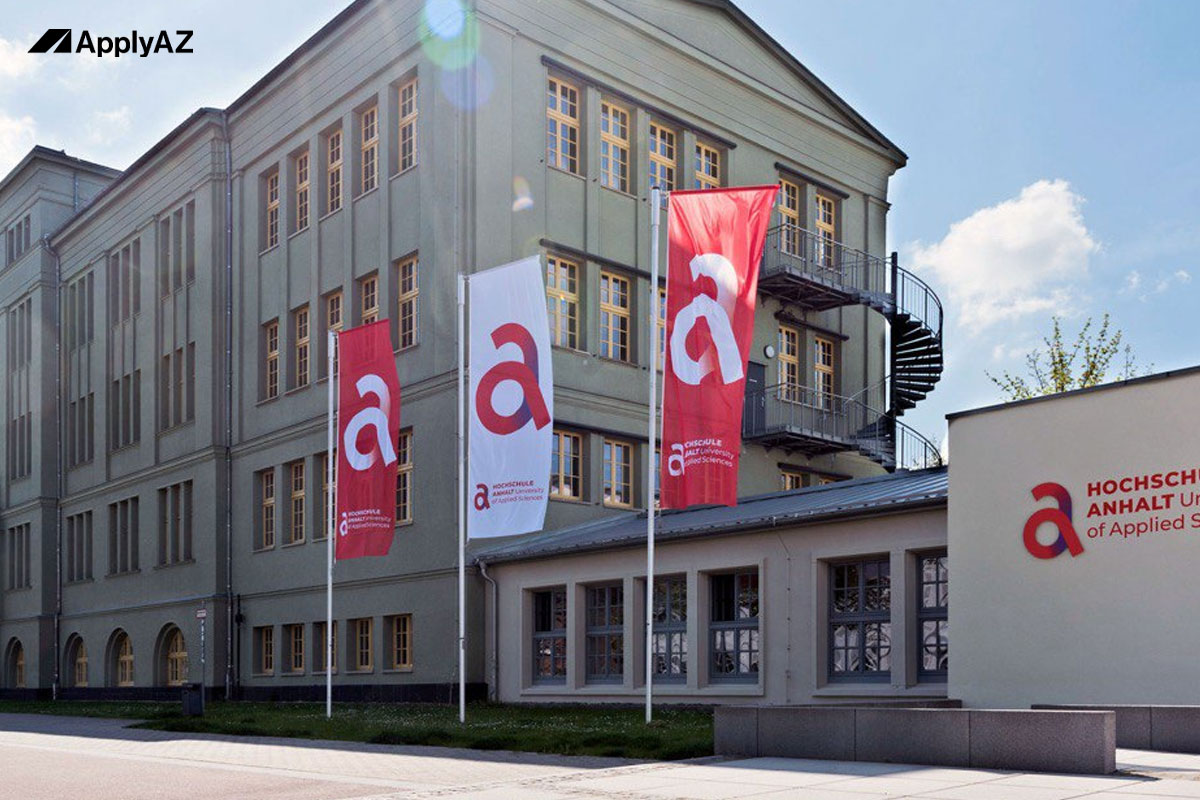
Why Anhalt University of Applied Sciences works well for international students
Anhalt University of Applied Sciences sits in Germany’s public higher education system, which matters if you want low study costs. Many international students in Germany choose this path because tuition is often low compared with private options. You still pay semester fees, and you still need a budget for living costs in Germany, but the overall plan can stay affordable.
A quick caution: low tuition does not mean “no paperwork”. Most delays happen because students upload the wrong file version or miss a small form field. Start early, keep every document in one folder, and name files clearly. That simple habit saves weeks when you move from application to enrolment and the German student visa stage.
Checklist to decide if it fits:
- You want to study in Germany in English and keep costs controlled
- You are fine with practical, applied learning and project work
- You can plan housing and living costs in Germany before arrival
- You are ready to follow a structured German university application process
English-taught study options at Anhalt University of Applied Sciences
If your goal is to study in Germany in English, look for programmes clearly marked as English-taught in the course catalogue and entry requirements. Some degrees are fully in English, while others use a mix (for example, English classes with German electives). Always read the language rules for your exact programme, not the general faculty page.
One common mistake: students assume “English-taught” means no German is needed at all. In daily life, basic German helps with housing, part-time jobs, and admin letters. You can still start with English-taught programs in Germany and build German step by step after arrival. That mix is realistic and very common for international students in Germany.
Before you shortlist programmes, do this:
- Confirm the teaching language for the full degree, not one semester
- Check if internships are required and what language workplaces expect
- Note required subjects from your Bachelor’s transcript (module match)
- List tests you already have (IELTS/TOEFL) and their expiry dates
Tuition and what you really pay (simple cost map)
Anhalt University of Applied Sciences is part of the public German universities landscape. That often supports the “cheap tuition universities Germany” plan because you usually pay a semester contribution rather than high tuition. Still, you should map the full cost, because the biggest part is often living costs in Germany, not the university bill.
Think of your costs in three boxes: university fees, living, and setup. Setup costs hit in the first month and surprise many students. Bring a buffer. If your budget is tight, plan cheaper cities, shared flats, and early housing searches. Costs change by city and lifestyle, so make a personal estimate, not a generic number.
Simple cost checklist:
- Semester contribution and what it includes (often transport/services)
- Health insurance plan and monthly payment
- Rent deposit, first month rent, basic furniture or kitchen items
- Visa and residence steps, plus travel to Germany and local registration
Admissions step-by-step (clear and calm)
A German university application feels heavy only when you do it all at once. Split it into steps and you will move faster. Start by confirming your entry requirements and your deadline. Then prepare documents and only after that choose the submission route. Some applicants use uni-assist, while others apply directly to the university portal, depending on nationality and programme rules.
A practical tip: make a “one-page facts sheet” for yourself. Put your name spelling, passport number, degree title, dates, grading scale, and contact info. Copy from this sheet every time. Many rejections happen because one field does not match the passport or transcript format.
Step-by-step checklist:
- Choose one programme at a time and read its entry page carefully
- Prepare documents: passport, transcript, degree certificate, grading scale
- Check if uni-assist is required for your route and programme
- Upload clean scans, then review every field before final submission
- Track replies, respond fast, and keep proof of payments if needed
Mid-article support link: ApplyAZ [Eligibility Check]
Scholarships and funding (realistic and useful)
Scholarships in Germany exist, but they are competitive and often linked to strong grades, clear goals, or specific profiles. Treat scholarships as a bonus plan, not your only plan. The safer approach is: choose public German universities with low fees, build a solid budget for living costs in Germany, then apply for funding where you truly match the criteria.
Funding can also be non-scholarship support: family support, savings, part-time work, or regional student support rules. For international students in Germany, timing matters. Many scholarship deadlines come earlier than programme deadlines. If you wait until you “get admitted”, you may miss the best funding windows.
Funding checklist:
- List scholarships in Germany that match your field, country, and level
- Prepare a simple CV and a clear motivation story (no long essays first)
- Collect proof documents early (grades, work letters, certificates)
- Build a backup budget that works even without funding
Jobs and career outcomes after graduation in Germany
Germany has a strong job market for graduates, but outcomes depend on skills, city, and how early you start building experience. If you choose Anhalt University of Applied Sciences, aim to collect proof of skills while you study: projects, internships, and a clean portfolio. Employers like to see what you can do, not only what you studied.
A small caution from real life: many students delay German learning because classes are in English. Later, they struggle in interviews or at work. Even basic German can help you get more interviews and handle workplace life. If you study in Germany in English, treat German as your weekly routine, not a future plan.
Career-ready checklist:
- Build a portfolio from semester one (projects, reports, GitHub, case work)
- Apply for internships early and track application dates like a pipeline
- Learn basic German for daily and workplace use (small, consistent practice)
- Use career services, job fairs, and alumni groups to find leads
How ApplyAZ helps you apply with less stress
A calm plan beats rushed effort. ApplyAZ helps you choose the right English-taught programs in Germany, align your profile with entry rules, and avoid the common German university application errors that waste time. We focus on low-cost routes through public German universities where possible, so your budget stays realistic from day one.
You get support across the full journey: programme shortlist, document checks, uni-assist guidance when needed, and a clear timeline for the German student visa. It is not magic. It is a structured process, done carefully, so you stay in control and avoid last-minute panic.
Final checklist before you start:
- Confirm your degree match and required subjects
- Prepare documents and translations in the right format
- Decide your route: uni-assist or direct application
- Build a monthly budget for living costs in Germany
- Plan your visa timeline early and keep funds organised
Near-end support link: ApplyAZ [Book a Free Consultation]
Run your eligibility check or book a free consultation, and we will help you map the simplest path to Anhalt University of Applied Sciences with clear steps and fewer surprises.
What COOP Design Research is really about (simple overview)
COOP Design Research is for people who want to study design as a research practice, not only as “making nice visuals”. You learn how to ask better questions, test ideas, and document results in a clear way. It fits students who want to study in Germany in English and still choose a cost-smart route through public German universities.
A common confusion: some applicants think “design research” is only academic writing. It is not. You still create. You just create with evidence. If you enjoy interviews, prototypes, field notes, and learning from users, this style often feels natural.
Quick self-check:
- You like problem framing more than decoration
- You can explain your choices with reasons and examples
- You are open to critique and iteration
- You want English-taught programs in Germany with a practical edge
Why Anhalt University of Applied Sciences is a good place to study COOP Design Research
Anhalt University of Applied Sciences sits inside the public German universities system. That matters if you are looking at cheap tuition universities Germany, because public routes often mean lower study costs than private schools. Your focus shifts from “can I afford tuition?” to “can I plan living well?” which is more manageable for many international students in Germany.
Another human detail: portfolio expectations can feel unclear at first. The safest approach is to show process. Include drafts, research notes, and what you learned, not only finished images. Reviewers often want to see how you think, not just what you can polish.
What usually helps in your application:
- A portfolio with context, not only outcomes
- A short project story: problem, method, result, reflection
- Proof you can study in Germany in English (language scores if required)
- A clear reason for choosing COOP Design Research in Germany
Modules, projects, and thesis (what your year may look like)
Expect a rhythm of seminars, workshops, and project blocks. You may work in teams, then shift to individual research. The thesis phase usually feels smoother if you start collecting questions early. Keep a small “research diary” from week one. It sounds basic, but it gives you material when you later write your proposal and defend your choices.
Simple example: you study a service problem on campus. First you observe, then you interview students, then you map insights, then you prototype one improvement. Your final output can be a system, a tool, a service, or a research-led design proposal.
Project survival checklist:
- Choose one topic you can access in real life (not a distant industry)
- Set a weekly routine for fieldwork notes
- Save evidence: photos, transcripts, sketches, test feedback
- Keep one folder for “thesis seeds” from day one
Entry requirements and eligibility (easy checklist)
Entry rules depend on the programme and your background. Do not assume “design” means only graphic design. Programmes like COOP Design Research often welcome mixed profiles if you can show your thinking and your process. Your German university application will usually ask for academic documents, language proof, and a portfolio or project evidence.
Quick warning: many students lose time because their documents have different name spellings. Make sure your passport name matches your transcripts and certificates. Fixing that late can delay admissions and your German student visa timeline.
Eligibility checklist:
- Recognised Bachelor’s degree (or equivalent)
- Transcript and grading scale
- Proof of English ability (if required for study in Germany in English)
- Portfolio showing process and research thinking
- Motivation text that matches COOP Design Research in Germany
- Check if uni-assist applies to your route
Tuition, fees, and living costs (real planning)
Anhalt University of Applied Sciences is part of the public German universities landscape, which supports the cheap tuition universities Germany goal. In many cases, the main payment is a semester contribution, not high tuition. Still, you should plan like an adult: rent, insurance, food, and setup costs can be bigger than expected, especially in your first month.
Here is the practical mistake: students budget for “monthly costs” but forget the first-month spike. Deposits, basic furniture, and admin fees hit fast. Build a buffer. A calm budget makes your study in Germany in English plan much safer.
Budget checklist:
- Semester contribution and what it includes
- Rent deposit + first month rent
- Health insurance monthly payment
- Transport, phone plan, basic groceries
- One-time setup: bedding, kitchen items, local registration costs
Mid-article link: ApplyAZ [Eligibility Check]
Scholarships and funding options
Scholarships in Germany can help, but most are competitive. Treat them as a strong support, not the only plan. The best strategy is often a mix: pick public German universities for low study costs, then apply for funding where your profile truly fits. Some funding expects clear goals, strong grades, or a specific background.
A small human touch: people often apply to every scholarship they see. That burns time and energy. Pick a short list and tailor your documents properly. A focused application looks more serious and is easier to manage alongside admissions steps.
Funding checklist:
- List 5 to 8 scholarships in Germany you truly match
- Prepare a clean CV and a short, clear study plan
- Collect proof early: grades, certificates, work letters
- Keep a backup budget in case funding does not come through
Career paths and jobs after graduation
COOP Design Research can lead to roles where research and design meet. Think UX research, service design, product design research, design strategy, and innovation roles. Jobs after graduation in Germany often reward people who can show real projects, not only theory. Your portfolio becomes your proof. Keep it updated during the programme, not after.
Another realistic point: English helps you start, but German can widen options. Even basic workplace German can improve interviews, teamwork, and client communication. If you study in Germany in English, start learning German slowly and steadily.
Career checklist:
- Build 3 to 5 case studies with research methods and outcomes
- Track tools you use (interview guides, analysis, prototyping)
- Apply early for internships and student jobs
- Learn basic German for workplace and daily admin
- Keep a simple LinkedIn and portfolio site updated
How ApplyAZ helps you apply step-by-step
Applying to public German universities can feel simple, until it is not. One missing document, one wrong upload, or one uni-assist detail can slow everything down. ApplyAZ helps you shortlist the right English-taught programs in Germany, check documents, and keep your timeline clean. We also guide your planning for scholarships in Germany and the German student visa steps.
You stay in control, but you are not alone. The goal is fewer surprises and fewer last-minute fixes. That is what reduces stress.
Step-by-step checklist with ApplyAZ support:
- Shortlist: confirm COOP Design Research in Germany fit and alternatives
- Document check: transcripts, grading scale, language proof, portfolio order
- Application route: uni-assist or direct, based on your profile
- Submission and follow-up: track replies, fix small issues fast
- Visa planning: timeline, key documents, realistic cost plan
Near-end link: ApplyAZ [Book a Free Consultation]
Run an eligibility check or book a free consultation, and we will help you plan your application to COOP Design Research at Anhalt University of Applied Sciences with clear steps and a realistic budget.
Tuition and scholarships
Public universities in Germany charge no tuition fees for international students. A semester contribution typically applies, covering administrative costs and often a public transport pass.
DAAD (German Academic Exchange Service) offers scholarships for international master's students, covering living costs and a travel allowance. Apply through the DAAD portal separately from your university application.
The Deutschlandstipendium provides €300 per month, co-funded by the federal government and private sponsors. Applications go through the university's scholarship office after enrolment.
For Indian applicants
Indian graduates with a degree recognised by AIU (Association of Indian Universities) can apply to German public universities through uni-assist. The uni-assist portal handles degree equivalency verification and is the standard route for most non-EU applicants.
How ApplyAZ supports you
Not sure if your qualifications meet the entry requirements? Check your eligibility before you start your application — it takes a few minutes and confirms whether your background is a fit.
Similar programmes
More free programmes in this city

They Began right where you are

