

Master in Biomedical Engineering
Master's degree • Biomedical Engineering at Hamburg University of Applied Sciences in Germany suits students who enjoy building solutions at the boundary of engineering and healthcare. In terms of outcomes, graduates often move toward medical device companies, health technology teams, quality and regulatory-adjacent roles, clinical engineering contexts, or applied R&D. For this program, ApplyAZ helps with eligibility checks, scholarship strategy, and visa preparation.
Master
3 semesters
Hamburg
English
Hamburg University of Applied Sciences



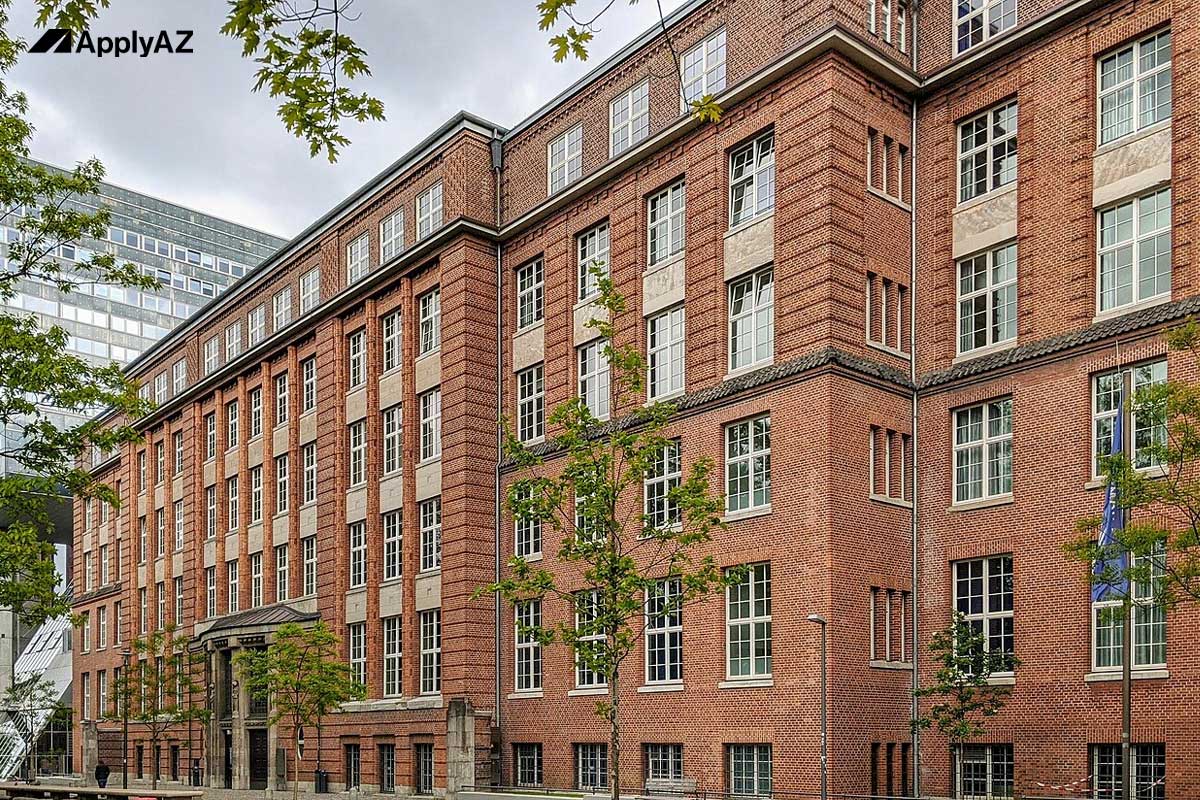
Biomedical Engineering
A quick sense-check: who Master's degree • Biomedical Engineering suits
Master's degree • Biomedical Engineering at Hamburg University of Applied Sciences in Germany suits students who enjoy building solutions at the boundary of engineering and healthcare. A typical fit is someone with a bachelor’s in biomedical engineering, electrical engineering, mechanical engineering, mechatronics, or a closely related field with strong maths and physics.
If your background is mostly life sciences, you may still fit if you have enough engineering fundamentals and practical technical work. If you dislike labs, prototyping, and debugging, this path can feel frustrating. ApplyAZ helps you sense-check fit early by comparing your past modules and projects with what the programme expects, so you avoid applying to something that looks right but does not match your foundation.
What you will gain by the end (real outcomes)
By the end, you should be able to work with medical devices and health technologies in a structured way: understand requirements, model systems, evaluate performance, and document decisions. You will likely improve how you translate clinical needs into engineering specs, which is a skill employers value.
You should also gain stronger confidence with applied research methods and evidence-based evaluation, especially in projects and the thesis. A common outcome is a portfolio of technical work you can explain clearly: what problem you solved, how you tested it, and what trade-offs you chose. ApplyAZ helps you plan for these outcomes from the start by aligning your module choices and thesis direction with the roles you want after graduation.
The learning style you should expect
Expect a practical learning style with a steady cadence of assignments, lab work, and project milestones. Teaching often rewards consistency over last-minute exam cramming. If you are organised and comfortable with iterative work, you will do well. If you prefer only theory and written exams, you may find the pace demanding.
Group work is common, and you will need to communicate technical ideas simply. A typical student learns as much from project collaboration as from lectures. ApplyAZ supports you by helping you prepare for the learning style before you arrive, including what study habits usually work in applied engineering programmes and how to present your work clearly in reports and presentations.
Modules, projects, and thesis (how the year often flows)
Most students experience the year as two phases: taught modules that build technical depth, then a project-heavy period that leads into the thesis. Early on, you often balance several modules at once, each with its own assessments. Later, projects become more focused and time-intensive.
The thesis usually works best when it is tied to a real problem: a device workflow, a data-driven evaluation, or a system optimisation task. A common mistake is choosing a thesis topic that is too broad, then losing time defining scope. ApplyAZ helps you plan a realistic thesis direction early, so you can select modules and projects that naturally build the skills your thesis will require.
Entry requirements (clear checklist)
Entry requirements vary by track, but you should prepare for a logic like: relevant bachelor’s degree, sufficient technical credits, and proof of language level. Your strongest position is when your transcript clearly shows engineering fundamentals and applied coursework.
Use this checklist as a starting point:
- A recognised bachelor’s in a closely related engineering field
- Evidence of maths, physics, and core engineering modules
- Relevant lab work or technical projects
- Language proof as required for the programme
ApplyAZ reviews your profile against the typical logic universities use, flags gaps early, and tells you what is essential versus what may be flexible depending on your exact module history.
How to read your transcript against the requirements
Do not read requirements as a list of course titles. Read them as skills. A module called “Signals” might satisfy an electronics requirement, while a module called “Medical Imaging” might satisfy both systems and applied analysis, depending on the content. What matters is what you studied, not only the name.
A good self-check is to group your transcript into buckets: maths, physics, electronics, mechanics, programming, and biomedical applications. If one bucket is empty, that is a risk. If you are unsure, you need course descriptions ready. ApplyAZ does this mapping for you and explains it simply, so your application story matches the academic evidence in your transcript.
Documents to prepare early (avoid delays)
Delays often come from documents that look “simple” but take weeks to finalise. Start early so you do not lose a deadline because of translation, certification, or missing details. A typical student realises too late that course descriptions are required or that the grading scale is unclear.
Prepare these early:
- Official transcript and degree certificate, with consistent names and dates
- Course descriptions or syllabi that show content and hours
- Grading scale or university note explaining your evaluation system
- Language certificate and passport scan with matching details
ApplyAZ guides your document readiness step-by-step, checks consistency across files, and helps you avoid the most common administrative rejections.
Tuition, fees, and living costs (real planning)
In Germany, many students focus on tuition and forget the real cost drivers: housing, deposit, health insurance, and first-month setup. Even when tuition is low, the start is expensive because several payments happen at once. A common scenario is budgeting for rent but not for deposit, temporary housing, and registration-related costs.
Plan your money in a timeline: what you must pay before arrival, what you pay in the first two weeks, and what becomes monthly. ApplyAZ helps you build this plan so you are not forced into rushed housing decisions or last-minute financial stress, which can affect your study start more than the academic workload.
Scholarships and funding (smart approach)
Scholarships work best when you treat them as a strategy, not a lottery. Start by separating funding types: merit-based, need-based, and programme or region-specific options. Then align them to your deadlines and the documents you can realistically produce on time. Many students miss opportunities simply because they start late.
You should also plan a backup route that still lets you enrol if funding takes longer. Finance it with loan options via ApplyAZ. ApplyAZ supports you by building a funding plan that matches your profile and timeline, and by keeping scholarship tasks aligned with admissions steps so you do not create delays by chasing the wrong options.
Career direction after Master's degree • Biomedical Engineering
Graduates often move toward medical device companies, health technology teams, quality and regulatory-adjacent roles, clinical engineering contexts, or applied R&D. Your direction depends on what you can demonstrate: device understanding, validation thinking, data analysis, or systems design. Employers often want proof that you can work safely and document decisions clearly.
A common mistake is staying “general” for too long. You need a theme across projects and the thesis. ApplyAZ helps you choose a coherent direction early, so your CV reads as a focused profile, not a list of unrelated modules. That focus can matter more than small grade differences when you compete for internships and entry roles.
How ApplyAZ supports you step-by-step
ApplyAZ guides students end-to-end: programme fit, document check, application plan, scholarship strategy, and visa guidance. For Master's degree • Biomedical Engineering, we start by mapping your transcript to the likely prerequisite logic, so you apply only where you have a real academic match. Then we organise your documents so the file is complete, consistent, and clear.
We also shape your CV and motivation letter to reflect the programme’s applied nature and your technical evidence, not vague claims. Throughout, we keep a structured timeline so you do not lose time on avoidable delays. You stay in control of decisions, and we handle the process details that most students only learn after they miss a deadline.
We Handle Everything. You Just Need to Qualify.
You upload your transcripts. We go through them carefully, match you to 20 or more English-taught programs at prestigious public universities with strong placement records, write your applications, and actively pursue every scholarship available for your profile, whether that is DSU, DAAD, or others depending on the university and country.
You review your shortlist, approve what fits, and we take care of the rest.
The only thing left for you to do right now is find out if you qualify.
Check your eligibility. It takes about 2 minutes.
Tuition and scholarships
Public universities in Germany charge no tuition fees for international students. A semester contribution typically applies, covering administrative costs and often a public transport pass.
DAAD (German Academic Exchange Service) offers scholarships for international master's students, covering living costs and a travel allowance. Apply through the DAAD portal separately from your university application.
The Deutschlandstipendium provides €300 per month, co-funded by the federal government and private sponsors. Applications go through the university's scholarship office after enrolment.
For Indian applicants
Indian graduates with a degree recognised by AIU (Association of Indian Universities) can apply to German public universities through uni-assist. The uni-assist portal handles degree equivalency verification and is the standard route for most non-EU applicants. Check your eligibility with us first.
Similar programmes
More free programmes in this city

They Began right where you are

