

Master in Automotive Systems
Master in Automotive Systems at Esslingen University of Applied Sciences suits students who want deep technical training in modern vehicle systems. ApplyAZ supports applicants through the entry requirements, scholarship options, and visa steps tied to this program.
Master
3 semesters
Esslingen
English
Esslingen University of Applied Sciences



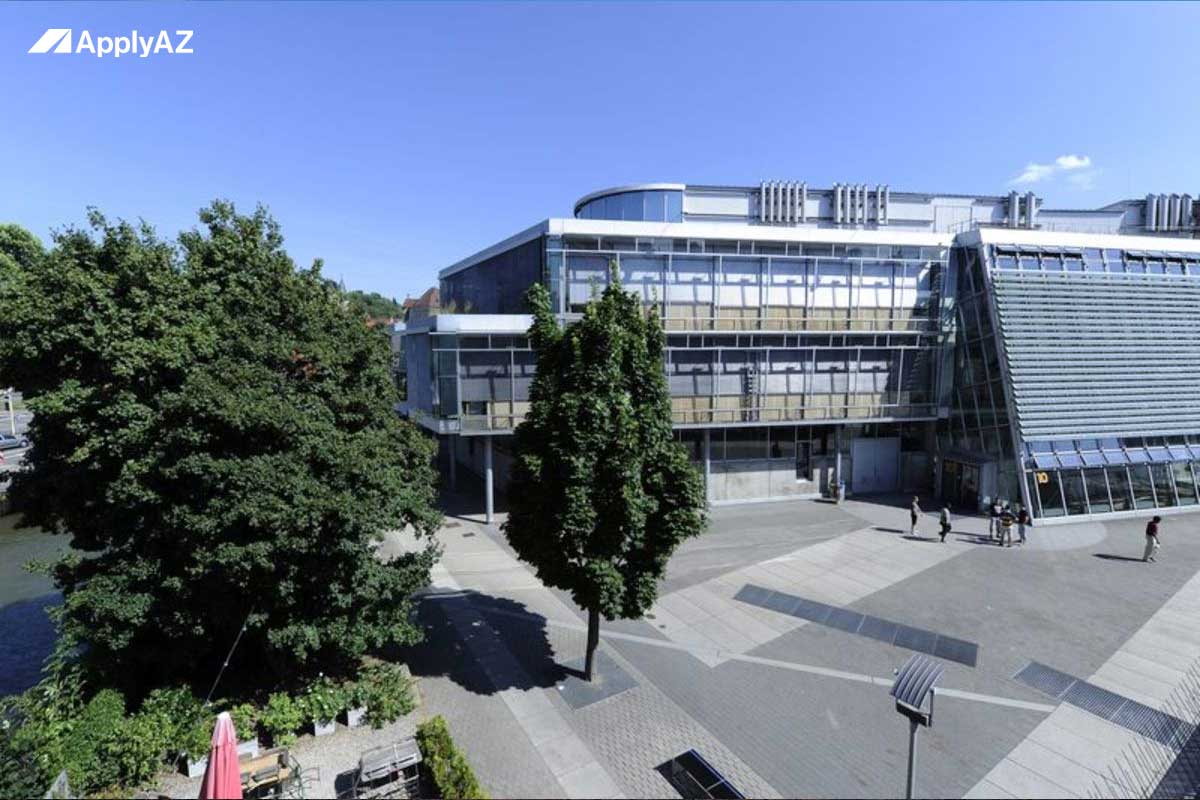
Studying at Esslingen University of Applied Sciences
First look at Esslingen University of Applied Sciences
Esslingen University of Applied Sciences is a practical, career-focused public institution in Germany. For many international students, the main attraction is not only the degree itself, but the way applied universities connect study with industry needs. This matters because students often choose a university by name first, then realise later that teaching style and course design were the bigger factors for their success.
At ApplyAZ, we help students start with the right questions before they build a shortlist. With Esslingen University of Applied Sciences, the useful first look is this: what kind of learner does well here, what type of programmes are strongest, and how the university’s applied model fits your goals. A student who wants hands-on projects and job-ready learning may find this environment more suitable than a theory-heavy route.
A common misunderstanding is to compare every German university in the same way. In practice, Germany has different types of institutions, and that changes the student experience. Esslingen University of Applied Sciences is usually a better fit for students who want structured teaching, practical assignments, and a clearer bridge to employment, especially in technical and industry-linked fields.
What studying feels like there (teaching, exams, pace)
Studying at Esslingen University of Applied Sciences usually feels structured and demanding in a practical way. Many students expect a flexible system where they can leave everything to the exam period. What usually happens instead is that courses require regular attendance, project work, lab work, and continuous effort across the semester. This is good for students who learn best by doing, but it can be difficult for students who are used to last-minute preparation.
The pace can feel fast, especially in the first semester. International students are adapting to a new education system, a new country, and sometimes a new academic language style at the same time. Even when a programme is in English, assignment instructions, administrative systems, and day-to-day life still require strong organisation skills.
Exams may include written tests, presentations, reports, group projects, and practical assessments. A typical student underestimates group work at first. In applied programmes, teamwork is not only a classroom task. It is also training for how companies operate. This is one reason employers often value graduates from applied universities. At ApplyAZ, we explain this early so students choose a university model that matches how they actually study, not only what they want to study.
English-taught options and how to check the right track
Many students search for “English-taught” and stop there. That is not enough. At Esslingen University of Applied Sciences, the important check is whether the specific programme is fully taught in English, partly in English, or includes German components later in the course. Students also need to check whether internship, thesis, or placement opportunities may require German in practice, even if the classroom language is English.
A common scenario is a student finding a programme title that looks perfect, then applying without checking the curriculum structure. Later, they realise the technical focus is different from what they expected. The right way to compare options is to read the module list, see the balance of theory and applied work, and check whether the course supports the career direction you want after graduation.
ApplyAZ helps students review the programme track in a practical way. We look at whether the course content fits your background, whether the pace is realistic, and whether the outcomes match your goals. This avoids a common mistake, which is choosing a programme based only on the title instead of the actual modules and learning path.
Admissions reality: what matters most (and what doesn’t)
Students often think admission depends on one thing only, such as CGPA. In reality, admissions decisions are usually based on a combination of factors. At Esslingen University of Applied Sciences, what matters most is often your academic fit for the programme, how clearly your previous studies connect to the course, and whether your documents show a coherent profile.
What matters less than students expect is trying to make the application sound impressive without evidence. A polished statement cannot fix missing prerequisites. A high score also does not always help if the subject background does not match the course requirements. This is why strong planning is more useful than last-minute document polishing.
Useful things to check early:
- Whether your bachelor’s subjects match the programme modules
- Whether the programme expects specific credits in key areas
- Whether language proof must be submitted by the deadline or can come later
- Whether work experience is required, preferred, or not needed at all
At ApplyAZ, we guide students through this reality check step by step. The goal is not to make an application look bigger than it is. The goal is to present the right profile to the right programme with clean, complete documents and a clear academic story.
Documents students underestimate (prepare early)
Most students prepare transcripts and passports first, which is correct, but they often underestimate the documents that take the most time. These usually include detailed academic records, course descriptions, grading explanations, language certificates, and formal translations if needed. In many cases, the delay is not with the student. It is with the university, exam office, or document issuer in the home country.
Another common issue is inconsistency across documents. A name format may differ between passport and degree certificate. Dates may be written in different formats. Course titles may be abbreviated in one transcript and fully written in another. Small mismatches can create unnecessary back-and-forth during review, especially close to deadlines.
Documents to prepare earlier than you think:
- Full academic transcripts and final degree certificate (or current enrolment proof if pending)
- Language test results and test booking plan if results are not ready yet
- CV in a clear academic format
- Motivation letter drafts tailored to programme fit, not generic study goals
- Passport validity check for the full application and visa timeline
ApplyAZ supports students here by building a document readiness plan, not only a document list. That difference matters. A list tells you what exists. A readiness plan tells you what to request now, what to translate, what to update, and what can become a deadline risk later.
Tuition and real costs in daily life
When students think about Germany, they often focus only on tuition. That is helpful, but incomplete. At Esslingen University of Applied Sciences, the bigger planning issue is usually total living cost and cash flow in the first months. Even when tuition is manageable compared with many other countries, students still need a realistic plan for housing, deposits, food, transport, insurance, and setup costs after arrival.
A typical student budget problem is not overspending on lifestyle. It is underestimating one-time costs. For example, the first weeks may include a rent deposit, local registration costs, transport setup, supplies, and temporary accommodation if long-term housing is not ready. These costs can create stress even for careful students.
At ApplyAZ, we help students think in phases: before departure, first month after arrival, and regular monthly living costs. This makes the plan more accurate. It also helps families understand that “affordable country” does not always mean “low upfront cash need.” The strongest plans are simple, realistic, and built early.
Scholarships and funding: how to think, not guess
Many students treat funding like luck. A better approach is to treat it like strategy. Scholarships and funding options for Germany can depend on the university, the programme, the student profile, timing, and document quality. The key point is to avoid guessing based on social media claims. What worked for one student may not apply to another because the programme, intake, and background are different.
At ApplyAZ, we help students build a funding plan alongside the admissions plan, not after it. This is important because some funding paths require early preparation, stronger documentation, or a different shortlist strategy. Students also need to know what is realistic to cover with scholarship support and what may need personal or family funding.
Funding planning should include three layers: scholarships, family support, and backup financing. This is where many students make better decisions and feel calmer. Finance it with loan options via ApplyAZ. One short sentence can hide a big advantage here: when students know their funding routes early, they choose programmes and timelines with more confidence and fewer last-minute compromises.
Housing and arrival planning (what to decide before you land)
Housing is one of the biggest practical stress points for international students in Germany. Students often spend too much time comparing perfect options and too little time building a workable plan. For Esslingen University of Applied Sciences, the smart approach is to decide your housing strategy before you travel, including what you will accept as a temporary option if a long-term room is not ready.
A common scenario is a student arriving with only a few days of accommodation booked, expecting to find a permanent room immediately. Sometimes that works, but often it creates pressure and bad decisions. It is usually better to have a staged plan: temporary stay, active search, and a clear move-in budget.
Decide these before departure:
- Your monthly rent range and maximum limit
- Whether you prefer shared housing or private housing for the first semester
- How long you can stay in temporary accommodation if needed
- What documents landlords may ask for and how you will present them
ApplyAZ supports students with arrival planning by helping them prepare for the sequence of tasks, not just the flight. Registration, insurance, local setup, and housing all affect each other. Students who understand this sequence usually settle faster and start classes with less stress.
After graduation: work options and direction
Students often ask one question first: “Will I get a job?” A better question is, “Does this university and programme move me in the right direction?” After graduation from Esslingen University of Applied Sciences, outcomes depend on your field, language level, internship choices, project quality, and how early you build your profile. The degree matters, but your decisions during the programme matter just as much.
Applied universities can be strong for students who want industry-facing experience. Employers often look for evidence that you can work with tools, projects, deadlines, and teams. This means your internship, thesis topic, and project portfolio can shape your options after graduation more than students expect when they first apply.
At ApplyAZ, we encourage students to choose with the end in mind, but without forcing a narrow path too early. A typical student does best when they pick a programme that fits both their current background and their next likely step. That usually leads to better grades, stronger projects, and better job outcomes than choosing a course only because it sounds popular.
How ApplyAZ supports you step-by-step
ApplyAZ is most useful when students want clarity, not just information. With Esslingen University of Applied Sciences, we support students from shortlisting through visa guidance, and we stay practical at every stage. Early on, we help students compare programme fit, teaching style, and admissions requirements. Later, we help with document readiness, application planning, and funding strategy so the process stays organised.
Students commonly misunderstand where applications fail. It is often not because they are weak candidates. It is because the process is not managed well. Deadlines are missed, documents are inconsistent, or the programme choice is not aligned with the academic background. Our role is to reduce those errors and build a clear path from decision to submission.
We also help students prepare for the transition after admission. That includes planning for finances, housing, and visa steps in the right order. The goal is a complete journey plan, not a rushed application. This is why students feel more confident. They know what to do now, what to prepare next, and what usually happens at each step.
How ApplyAZ Gets You In
Most students find one program they like and hope for the best. That is not how we work.
It starts with a quick eligibility check, about 2 minutes, so you instantly know if this opportunity is a real option for your profile. If you are eligible, you book a private one-to-one consultation with one of our experts, where you get a clear and personalised plan built around your exact situation: your best-fit programs, your real deadlines, your scholarship path, and your exact next steps.
If you decide to move forward with us after that call, you enroll, upload your documents, and we take it from there. Our admissions team goes through your transcripts course by course, maps your background against real university requirements, and builds you a shortlist of 20 or more programs that you genuinely qualify for, across prestigious public universities, career-forward degrees taught in English, with strong graduate placement records. You review them, approve the ones you like, and then you lay back.
We write your CV and motivation letter for each program, submit every application, and track every deadline. Alongside admissions, we actively work on securing scholarships that fit your program, university, and country, whether that is DSU, DAAD, or other funding available to your profile, so you have the strongest possible shot at studying public (€0 for eligible students) with your living costs covered. Then we stay with you through visa preparation, arrival, and every practical step that follows.
Depending on your profile, you may qualify for far more programs, universities, and funding opportunities than you would ever find on your own. The only way to know is to start.
Check your eligibility now. It takes about 2 minutes. Because everything begins there.
Building a Future in Automotive Systems
A quick sense-check: who Master in Automotive Systems suits
Master in Automotive Systems at Esslingen University of Applied Sciences usually suits students who already have a solid technical base and want to move closer to vehicle-level integration. This is a good fit for learners who enjoy systems thinking, not only single components. If you like understanding how electronics, software, control, and mechanical functions work together, this programme may suit you well. ApplyAZ helps at this stage by checking whether your background supports the programme logic, not just the title.
A common mismatch happens when a student likes cars but has limited technical depth in engineering maths, control, or electronics. Interest alone is not enough for a strong start. A typical strong-fit profile is someone from automotive, mechatronics, electrical, electronics, or mechanical engineering with project exposure. A profile from a nearby field can still work, but may need careful transcript review and planning. ApplyAZ guides students on whether they are ready now or need a better programme sequence first.
What you will gain by the end (real outcomes)
By the end of Master in Automotive Systems, students usually aim to think and work at system level. That means understanding requirements, interfaces, testing logic, and how different subsystems affect performance and safety. The real value is not only technical knowledge, but the ability to solve integrated engineering problems. This matters in automotive work because many roles require coordination across hardware, software, and validation teams rather than isolated subject expertise.
A typical student gains more than classroom learning when projects are used well. Project choices often shape career direction after graduation. For example, one student may build strength in embedded and control-focused work, while another may move toward validation, simulation, or system integration. ApplyAZ helps students choose this programme with a realistic view of outcomes, so expectations match what the degree is designed to develop and what employers usually look for in entry roles.
The learning style you should expect
At Esslingen University of Applied Sciences, an applied engineering programme usually means structured teaching, practical tasks, and steady workload across the term. Students should expect a rhythm that includes lectures, problem-solving, project work, and exam preparation running in parallel. This can feel intense at first, especially for international students adjusting to a new academic system. The key point is that success usually comes from consistency, not last-week revision alone.
Group work and technical communication often matter more than students expect. In automotive systems topics, your ability to explain a design choice, document test results, or work with teammates can affect your performance and learning speed. A common mistake is focusing only on technical content and ignoring time planning. ApplyAZ prepares students for this style early so they choose the programme knowing the pace and the learning habits needed to perform well.
Modules, projects, and thesis (how the year often flows)
The year often flows in a practical sequence: foundation or advanced modules first, then stronger project application, and later thesis planning. Even when module names vary, students should expect a mix of system-oriented subjects, engineering analysis, and applied assignments. The smart way to read the structure is to ask what the programme is training you to do by the end. If the answer is integration and problem-solving in automotive contexts, the modules should support that path step by step.
Projects are not just academic tasks. They are where students test whether they can apply theory under deadlines. A common scenario is a student doing well in lectures but struggling in project coordination. That does not mean the student is weak. It usually means they need better planning and clearer role management in teams. The thesis stage then becomes stronger when students use projects to identify a topic area early. ApplyAZ helps students plan with this flow in mind, especially for timeline and document readiness.
Entry requirements (clear checklist)
Students should treat entry requirements as a decision system, not a guessing game. Some points are essential and usually non-negotiable, while others may need clarification from the programme side. The most important starting point is your academic background and subject relevance. A strong application usually shows a degree that connects clearly to the programme, plus supporting evidence through modules, grades, and sometimes project or work exposure.
Use this simple checklist when reviewing Master in Automotive Systems:
- Essential: a relevant engineering bachelor’s background with clear technical foundations
- Essential: complete academic documents and consistent records
- Often required: language proof as specified by the programme
- Needs clarification: borderline subject backgrounds or missing module depth
- Helpful but not always essential: practical projects, internships, industry exposure
ApplyAZ helps students sort these into three groups: ready now, ready with clarification, and better suited to a different path first.
How to read your transcript against the requirements
Many students read only the degree title on their transcript and assume that is enough. Admissions review is usually more detailed. For Master in Automotive Systems, the stronger approach is to compare your modules against the programme’s expected technical base. A student from mechatronics may fit well if control, electronics, and systems subjects are clear. A student from mechanical engineering may also fit, but should check whether electronics or automation depth is sufficient for the programme pace.
A useful way to judge fit is to label your prior modules into groups: maths and modelling, mechanics, electrical or electronics, control or automation, software basics, and applied projects. Background A may be strong in mechanics and design but need bridging in control systems. Background B may be strong in electronics and coding but weaker in vehicle dynamics or mechanical applications. ApplyAZ reviews transcripts this way so students do not overestimate fit based on degree title alone.
Documents to prepare early (avoid delays)
Students usually prepare passport and degree papers first, but delays often come from less obvious documents. The biggest risks are incomplete transcripts, unclear grading scales, missing course descriptions, and late language test results. For technical programmes, course descriptions can be especially useful when your degree title is broad and the admissions team needs to see what you actually studied. ApplyAZ helps students prepare these early because document delays often hurt strong candidates more than weak profiles.
Common mistakes and how to avoid delays:
- Waiting for the final deadline before requesting university-issued documents
- Submitting inconsistent names or dates across documents
- Using a generic CV and motivation letter with no programme fit logic
- Ignoring translation or certification timelines where needed
- Assuming language scores will arrive in time without a backup plan
A clear document plan reduces stress and protects your application quality. It also makes later visa preparation easier because your records are already organised.
Tuition, fees, and living costs (real planning)
Students often focus on tuition first, but the real planning challenge is total cost over time. For Master in Automotive Systems, you need a practical budget that includes tuition or programme fees where applicable, semester-related costs, accommodation, food, transport, insurance, and setup expenses after arrival. A common mistake is building a monthly budget but forgetting one-time costs such as deposits, temporary stay, local registration needs, and essential purchases in the first weeks.
At ApplyAZ, we help students plan in phases instead of one number. This gives a more realistic picture and helps families prepare cash flow, not just total cost. A typical student manages well on a reasonable budget when the first month is planned properly. Students struggle more when they underestimate the arrival phase. Good planning here also supports better decisions later, because you are less likely to rush into unsuitable housing or expensive short-term arrangements.
Scholarships and funding (smart approach)
Students should approach scholarships and funding with a strategy, not hope. For Master in Automotive Systems, the right question is not only “Is there funding?” but “Which funding paths fit my profile, timeline, and documents?” Some funding routes are competitive, some are conditional, and some require early preparation. ApplyAZ guides students in building a funding plan in parallel with admissions, so decisions about programme choice and timing support the strongest overall outcome.
A smart funding plan usually has layers. First, identify scholarship opportunities that match your profile and intake timing. Second, plan family or personal contribution clearly. Third, prepare a backup option so your application timeline does not collapse if one funding route is delayed. Finance it with loan options via ApplyAZ. This works best when students decide early, because last-minute funding stress often leads to rushed choices in housing, travel, and visa planning.
Career direction after Master in Automotive Systems
Career direction after Master in Automotive Systems usually depends on the skills you build during the programme, not only the degree title. Students commonly move toward roles linked to systems integration, testing and validation, embedded applications, controls, simulation support, or development coordination in automotive and related mobility sectors. The strongest profiles often show a clear technical theme across modules, projects, and thesis work, even if they started with a broad interest in the field.
A common mistake is waiting until graduation to think about career direction. In practice, your second major project or thesis topic can shape your early opportunities. A typical student improves outcomes by choosing projects that match a target function and building a small evidence trail of work quality. ApplyAZ helps students choose the programme with this in mind, so they enter with realistic goals and a plan to use the year well, not just complete the degree.
How ApplyAZ supports you step-by-step
ApplyAZ supports students from the first programme-fit decision to visa guidance, with a practical process that reduces avoidable mistakes. For Master in Automotive Systems, we help you judge fit based on transcript content, technical foundations, and the likely pace of the course. Then we support document check, application planning, and a timeline that keeps important tasks in order. This is especially useful for students from adjacent backgrounds who need a careful strategy rather than a rushed application.
We also support scholarship strategy and funding planning in parallel, because admissions decisions and financial planning affect each other. Later, we guide students through visa preparation and arrival planning so the move is organised and realistic. The goal is simple: clear decisions, clean documents, and fewer delays. Students usually do best when they understand what is essential, what is flexible, and what needs clarification early in the process.
We Handle Everything. You Just Need to Qualify.
You upload your transcripts. We go through them carefully, match you to 20 or more English-taught programs at prestigious public universities with strong placement records, write your applications, and actively pursue every scholarship available for your profile, whether that is DSU, DAAD, or others depending on the university and country.
You review your shortlist, approve what fits, and we take care of the rest.
The only thing left for you to do right now is find out if you qualify.
Check your eligibility. It takes about 2 minutes.
Tuition and scholarships
Public universities in Germany charge no tuition fees for international students. A semester contribution typically applies, covering administrative costs and often a public transport pass.
DAAD (German Academic Exchange Service) offers scholarships for international master's students, covering living costs and a travel allowance. Apply through the DAAD portal separately from your university application.
The Deutschlandstipendium provides €300 per month, co-funded by the federal government and private sponsors. Applications go through the university's scholarship office after enrolment.
For Indian applicants
Indian graduates with a degree recognised by AIU (Association of Indian Universities) can apply to German public universities through uni-assist. The uni-assist portal handles degree equivalency verification and is the standard route for most non-EU applicants. Check your eligibility with us first.
Similar programmes
More free programmes in this city

They Began right where you are

