

Master in Arts in Archaeology of the Ancient World
Master in Arts in Archaeology of the Ancient World at The Free University of Berlin suits students who want broad but serious training across ancient world archaeology. On the career side, this programme can support careers in museums, cultural heritage, research assistance, archives, education, and archaeology-adjacent roles. ApplyAZ supports applicants through the entry requirements, scholarship options, and visa steps tied to this program.
Master
4 semesters
Berlin
English
The Free University of Berlin


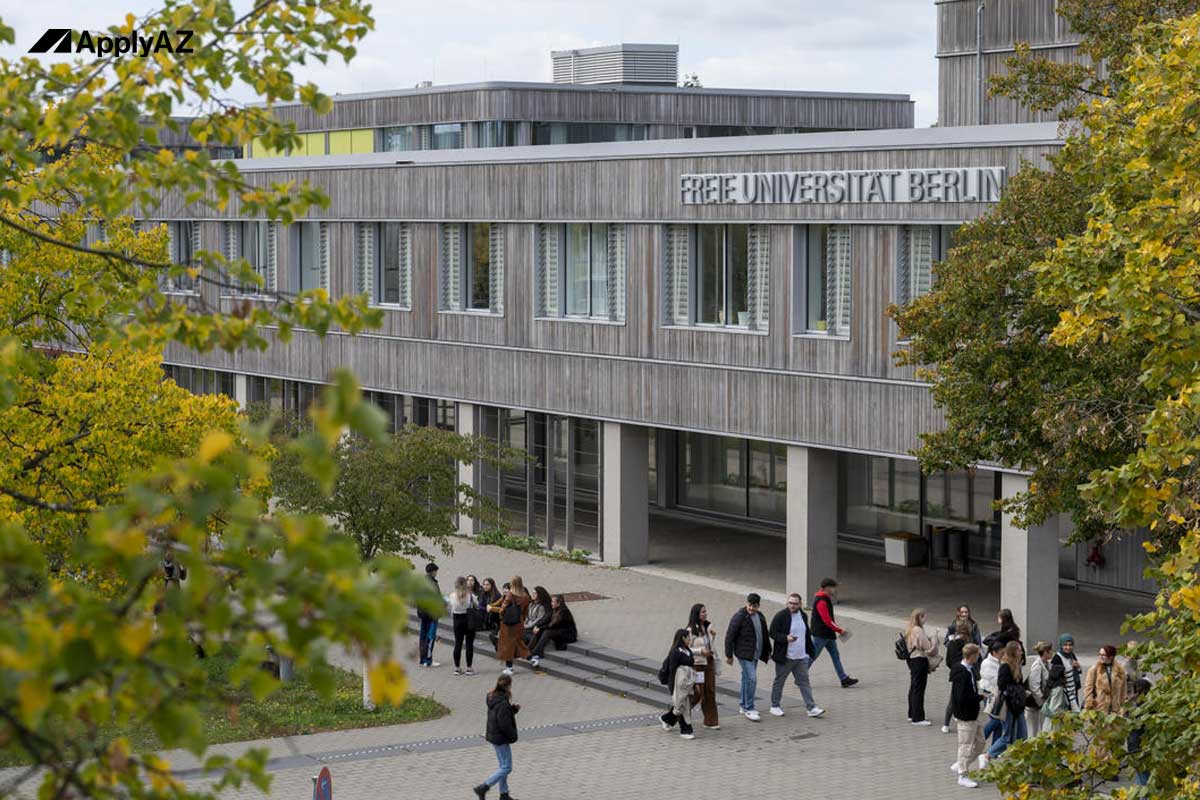
Studying Archaeology at Freie Universit�t Berlin
FU Berlin is one of Germany's Excellence Initiative universities - a status it has held since 2006. For archaeology specifically, the Department of History and Cultural Studies brings together Near Eastern, Prehistoric, and Classical Archaeology under one roof, which is unusual even among large German universities.
The university was founded in 1948 in West Berlin and is based in the Dahlem district. It runs 12 departments with over 150 programmes and has more than 200 bilateral international partnerships worldwide. The academic culture is research-oriented and independent - this matters for how your programme will actually feel day to day.
What studying here feels like
Teaching in humanities and cultural studies at FU Berlin is seminar-heavy. You will read a lot, write a lot, and be expected to contribute in class discussions. Lectures exist but are not the main format at master's level.
The pace across the semester can feel uneven - calm for stretches, then dense near submission deadlines. Assessment is mostly through written work: papers, presentations, and your thesis. There are no weekly quizzes or continuous graded homework in the style of some other systems.
You manage your own timetable by selecting modules each semester. Keeping track of credit requirements, deadlines, and thesis planning is your responsibility, not the university's.
Admissions reality
FU Berlin checks your transcript carefully against the 60-credit archaeology requirement. The degree title matters less than the content. A history degree with significant archaeology modules can qualify; a general humanities degree with one archaeology elective likely will not.
Non-German degrees must go through the uni-assist portal. The process has specific formatting requirements for certified translations and document order. Incomplete submissions are rejected without review.
Living in Berlin
Berlin is one of Germany's more affordable major cities, but housing is competitive. Student accommodation through the Studierendenwerk has long waitlists - apply as early as possible, ideally before you receive your admission letter.
The Dahlem campus is in the southwest of the city, well connected by U-Bahn (U3 line). Most students live in the surrounding districts: Steglitz, Zehlendorf, Sch�neberg. Average rent for a shared flat room runs roughly ?600 to ?800 per month.
Berlin's public transport pass is included in your semester contribution. No separate ticket purchase is needed for travel within the city.
After graduation - archaeology and cultural heritage in Berlin
Berlin has one of the highest concentrations of museums and cultural institutions in Europe. The Staatliche Museen zu Berlin, the Pergamon, the Neues Museum, the Humboldt Forum, and numerous smaller research institutes all sit within the city.
Graduates from archaeology programmes move into museum roles, cultural heritage management, academic research, fieldwork positions, and archival work. Academic positions typically require a PhD after the master's. Non-academic paths in heritage and cultural policy are more directly accessible with this degree.
How ApplyAZ supports you
We verify your transcript against the 60-credit archaeology requirement before you build an application. We handle the uni-assist submission and check your document package for the formatting issues that cause rejections. For Berlin specifically, we also flag housing timelines early - most students underestimate how quickly they need to act on accommodation after admission.
MA Archaeology of the Ancient World at Freie Universit�t Berlin
This programme combines three archaeology disciplines - Prehistoric, Near Eastern, and Classical - into a single two-year degree. You are not locked into one track from day one. The structure lets you build a specialism gradually, with room for electives across FU Berlin's wider ancient studies courses.
Who this suits
You need a bachelor's degree with at least 60 credit points in archaeology or an archaeology-focused related field - history, art history, cultural anthropology, or historical geography. If your degree is in a nearby field but light on archaeology content, check your transcript against that 60-credit threshold before applying.
Applicants from India and other countries where degrees are accredited by a national authority (such as AIU) must apply through the uni-assist portal, which handles degree equivalency verification for German universities. This is standard process, not an extra hurdle.
No German language knowledge is required for admission. That said, living in Berlin and accessing some archival or field resources will be easier with basic German over time.
What you will study
The programme is divided into a specialisation area (35 ECTS) and a complementary area (15 ECTS). In the specialisation, you choose one of the three disciplines as your focus. The complementary area lets you pull from ancient languages, historical studies, or other departments across the university.
The final semester is dedicated to your master's thesis. You can also include an internship as part of your practical modules.
Entry requirements
A completed bachelor's degree of at least 180 ECTS is required, with a minimum of 60 credit points covering archaeology-related content. There is no minimum GPA stated for this programme.
Applicants with non-German degrees must apply through the uni-assist portal. German degree holders apply directly via FU Berlin's online system.
Language requirement
English at C1 level is required unless your bachelor's was taught in English. Accepted certificates and minimum scores:
IELTS Academic: 7.0 overall minimum.
TOEFL iBT: 100 overall, with at least 25 in writing.
Cambridge CAE or CPE: grades A to C. Cambridge FCE: grades A or B.
Certificates must not be older than three years at the time you apply.
Application deadline
There is one intake per year, starting in October. The application window opens around mid-April and closes in mid-August. There is no summer semester entry for this programme.
Late applications are not reviewed and deferrals are not offered. If you miss the window, you reapply the following year.
Tuition and costs
Germany does not charge tuition fees at public universities - this applies equally to international students, regardless of where you are from. Freie Universit�t Berlin is a public university, so there are no tuition fees for this programme.
A semester contribution is charged each semester, which covers administrative costs and a public transport pass valid across Berlin.
Scholarships
DAAD (German Academic Exchange Service) offers several scholarships for international master's students at German universities, including funding for living costs and a one-off travel allowance. Applications are submitted through the DAAD portal and are separate from your university application.
The Deutschlandstipendium provides ?300 per month from the federal government and private sponsors. It is open to all students enrolled at a German university, including international applicants. Freie Universit�t Berlin nominates students for this scholarship each year.
Career direction
Graduates typically go into academic research, museum work, cultural heritage roles, fieldwork positions, or institutions focused on ancient studies. Berlin's museum landscape - including the Pergamon, Neues Museum, and Staatliche Museen zu Berlin - is a practical resource for students interested in curatorship or conservation-adjacent work.
How ApplyAZ supports you
We check your transcript against the 60-credit archaeology requirement before you spend time on a full application. We also handle the uni-assist submission, which has specific formatting rules that cause problems for first-time applicants. Not sure if your background qualifies? Check your eligibility with us first.
Similar programmes
More free programmes in this city

They Began right where you are

