

Master in Artificial Intelligence
Master in Artificial Intelligence at Brandenburg University of Technology Cottbus-Senftenberg suits students who enjoy turning maths and code into working systems. ApplyAZ manages the admissions paperwork, scholarship search, and visa process for students applying here.
Master
4 semesters
Cottbus
English
Brandenburg University of Technology Cottbus-Senftenberg


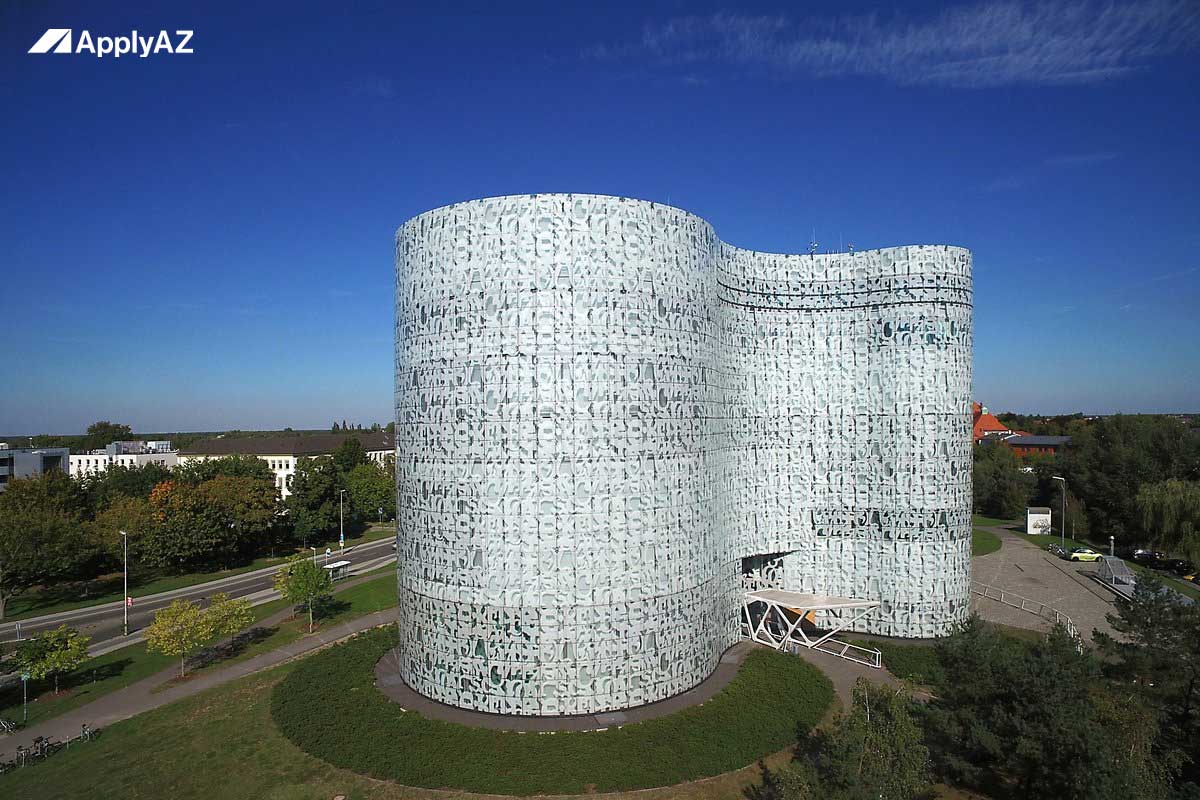
A practical guide to Brandenburg University of Technology Cottbus-Senftenberg
First look at Brandenburg University of Technology Cottbus-Senftenberg
Brandenburg University of Technology Cottbus-Senftenberg sits in the state of Brandenburg and is built around two connected locations: Cottbus and Senftenberg. It is a public university, which means the study culture is structured, rules-based, and strongly tied to academic standards. If you like clear expectations and steady progress, that can feel reassuring. If you want constant hand-holding, it may feel strict at first.
When ApplyAZ helps students shortlist, we start with a simple question: what do you want your degree to do for you in two years? At this university, many programmes link closely to engineering, technology, and applied sciences. The environment tends to suit students who enjoy problem-solving and who are comfortable learning through a mix of theory and practical work.
What studying feels like there (teaching, exams, pace)
In many German public universities, teaching can feel independent. You get lectures and seminars, but you are expected to plan your week, keep up with reading, and prepare early for exams. The pace often feels calm week to week, then intense near assessment periods. Students who build a routine early usually do well. Students who wait for “midterm pressure” can get overwhelmed quickly.
Exams can be written, oral, project-based, or a mix, depending on the module. Retakes may be possible, but they come with timelines and rules. That is why ApplyAZ supports you with planning, not just admissions: we help you understand how your modules will stack, how workload builds, and how to avoid common traps like taking too many heavy technical courses in the same term.
English-taught options and how to check the right track
You may find English-taught options, but you should always confirm the exact track, the language of each module, and whether the thesis can be done in English. A common misunderstanding is assuming that “English-taught” means everything is English from day one to graduation. Sometimes the programme is English, but electives or administrative steps expect some German. That does not make it impossible, but it does change your preparation plan.
Use this quick checklist when you review a programme:
- Check the language of instruction for modules, not just the programme title
- Look for the required proof of English and accepted test types
- Confirm if internships, labs, or group projects have German requirements
- Verify the campus location (Cottbus or Senftenberg) for your course delivery
ApplyAZ helps you verify these details early, so you do not build your plan on assumptions that later cost you time.
Admissions reality: what matters most (and what doesn’t)
Admissions decisions often come down to fit and readiness. Fit means your prior degree matches the academic direction of the programme, including key subjects. Readiness means you can prove that fit clearly, with clean documents, clear course titles, and a consistent story. Students sometimes focus too much on “perfecting” a CV while ignoring the academic mapping that the university actually uses to judge applications.
What usually matters most is whether your transcript shows the right foundation for the first semester modules. What matters less is having extra certificates that do not connect to the curriculum. ApplyAZ supports you by checking your academic alignment, spotting gaps early, and advising on realistic programme choices. The goal is a shortlist that respects both your ambition and the programme’s real entry expectations.
Documents students underestimate (prepare early)
Most students know they need a passport, transcript, and degree certificate. The problems usually start with the documents around those basics. Missing stamps, unclear grading scales, untranslated pages, or inconsistent names can delay an application even when the student is academically strong. Another common issue is waiting too long to request official copies, then rushing when deadlines are close.
Prepare these early, even if you are not ready to submit:
- Official transcript with grading scale (or a separate grading legend if needed)
- Degree certificate or provisional certificate, depending on your status
- Translations that follow required format and completeness
- Passport name consistency across all documents (including older certificates)
ApplyAZ checks document readiness like a quality review. The aim is fewer back-and-forth requests and fewer last-minute surprises.
Tuition and real costs in daily life
At a public university in Germany, tuition is often not charged in the way many students expect. Instead, you usually plan around the semester contribution and your living costs. Your monthly budget will depend on housing, city costs, and your lifestyle, not just what the university charges. Students sometimes underestimate day-to-day costs because the word “public (€0 for eligible students)” sounds like “cheap overall.” It is better to build a realistic plan from the start.
Daily life costs usually include rent, a deposit for housing, health insurance, local transport, groceries, and small one-time setup costs after arrival. ApplyAZ helps you map these costs into a timeline, so you know what must be paid before you travel, what comes in the first two weeks, and what becomes a stable monthly routine. That planning reduces stress more than any shortcut.
Scholarships and funding: how to think, not guess
Scholarships and funding work best when you treat them like a strategy, not a hope. Many students search for a single “full scholarship” and ignore smaller or more realistic support paths, or they confuse different funding types with different eligibility rules. A smarter approach is to separate your plan into: what you can fund yourself, what you can fund through support, and what timing constraints apply to each option.
ApplyAZ helps you organise funding around your real timeline and profile, including which scholarships are worth pursuing and which ones may not match your background. We also help families understand the cash flow of studying in Germany, because timing matters as much as totals. Finance it with loan options via ApplyAZ, when that is the right fit for your situation and repayment comfort.
Housing and arrival planning (what to decide before you land)
Housing is often the most stressful part of the move, mainly because it is time-sensitive and competitive. Students sometimes focus only on price, then realise they are far from campus or locked into a contract that makes daily life harder. It helps to decide what you value most: shortest commute, lowest rent, a quieter area, or easier access to services. There is no “best” choice, only the best match for your routine.
Before you arrive, decide these basics:
- Which campus you will be based on (Cottbus or Senftenberg)
- Your commute limit (minutes you can realistically do daily)
- Your preferred housing type (shared flat, studio, dorm-style)
- Your first-month setup budget (deposit, basic items, admin costs)
ApplyAZ supports arrival planning by turning vague preferences into clear decisions and a step-by-step preparation list.
After graduation: work options and direction
After graduation, students usually do best when they already have direction, even if it is not a single fixed job title. Your direction can be an industry, a role family, or a skill set you want to build. In Germany, the transition from study to work often rewards students who start early: internships, student jobs, project work, and networking through university labs or industry-linked modules can matter a lot.
ApplyAZ helps you think beyond “get a job” and into “build a profile.” That includes choosing programmes with the right project structure, planning your semester workload so you have time for practical experience, and preparing documents and timelines that match your post-study plans. A typical student who plans early feels more confident by the time the final thesis begins.
How ApplyAZ supports you step-by-step
ApplyAZ stays involved from the first shortlist to the final visa-ready plan. We start by narrowing programmes to those that match your academic foundation and your goals, then we shift into document readiness. That includes spotting gaps, improving clarity, and making sure your file looks consistent and complete. After that, we support the application process in a structured way, so you always know what comes next and why it matters.
We also help you think through scholarship strategy and funding timing, then guide you through visa preparation with a practical checklist and clear sequencing. The point is not to overwhelm you with information, but to reduce uncertainty. If you want a calm, personalised shortlist and a document readiness review for Brandenburg University of Technology Cottbus-Senftenberg, you can speak with ApplyAZ. We will help you plan the steps in the right order and avoid the common mistakes that slow students down.
Learning Artificial Intelligence in Cottbus and Senftenberg
A quick sense-check: who Master in Artificial Intelligence suits
Master in Artificial Intelligence at Brandenburg University of Technology Cottbus-Senftenberg suits students who enjoy turning maths and code into working systems. You should be comfortable with abstract thinking, but also patient with debugging and testing. If you like clear right and wrong answers only, AI can feel messy. Many tasks involve trade-offs, imperfect data, and results that must be explained, not just produced.
ApplyAZ starts guidance here, because fit is not only about admission. A typical good fit is a student with Computer Science, Software Engineering, Data Science, or Electrical Engineering who has already touched linear algebra, probability, and programming. A workable fit can also be Maths or Physics, if you have practical coding projects. A tougher fit is a business-only background with light maths.
What you will gain by the end (real outcomes)
By the end, you should be able to design, train, and evaluate machine learning models with a clear method. You learn to choose the right approach for a problem, rather than forcing deep learning into everything. You also learn how to measure performance properly, because accuracy alone often hides real weakness. Good AI work is not magic. It is careful framing, data handling, and disciplined testing.
Real outcomes usually include a stronger portfolio of projects, better technical communication, and a clearer direction toward roles like machine learning engineer, data scientist, AI engineer, or research assistant. Some students aim for a PhD track. Others want industry roles. ApplyAZ helps you decide early which direction fits you best, because your module choices, projects, and thesis topic should match that plan.
The learning style you should expect
Expect a mix of lectures, seminars, labs, and self-study. German public universities often give you a lot of freedom, but they also expect independence. You will be responsible for keeping up with weekly material and starting assignments early. If you delay, the workload can suddenly feel heavy near deadlines. Students who create a steady routine in the first month usually settle well.
AI courses often move between theory and practice. You might learn an idea in a lecture, then implement it, test it, and write a report. Exams may include written tests, oral exams, projects, or a combination. ApplyAZ supports you by helping you understand how workload builds across the semester, so you do not accidentally stack too many demanding modules at once.
Modules, projects, and thesis (how the year often flows)
In the first phase, most students strengthen foundations: core machine learning, statistical thinking, and key tools for model building. This is where gaps show quickly. If you missed probability or linear algebra in your bachelor’s, you will feel it here. The second phase often becomes more specialised, with electives that shape your profile. That is why early planning matters. Your electives become your story.
Projects usually become the bridge between study and career. A typical student does one or two serious projects where they clean data, build baselines, try improvements, and explain results. The thesis then becomes a deeper version of that work, sometimes linked to a lab or an applied topic. ApplyAZ helps you plan this flow from the start, because the best thesis topics are rarely found at the last minute.
Entry requirements (clear checklist)
Entry requirements vary by programme, but AI degrees nearly always revolve around the same essentials. Use this checklist to sense-check yourself before you invest time in documents and planning:
- A relevant bachelor’s degree with strong quantitative content
- Solid programming ability (usually Python is expected in practice)
- Maths foundations: linear algebra and calculus
- Probability and statistics, at least introductory level
- Prior coursework or projects in algorithms, data structures, or ML are a strong advantage
Some parts can be flexible, but you must clarify them early. ApplyAZ helps you interpret the requirements correctly and decide what needs evidence, what can be explained through projects, and what might require a different programme choice.
How to read your transcript against the requirements
Do not read your transcript like a list of course names. Read it like proof of skills. A course called “Engineering Mathematics” might cover the exact maths an AI programme wants, but the name alone does not show that. Another student might have “Statistics for Business” which sounds relevant, yet it may not include the depth needed for machine learning. Universities usually look for content and level, not just titles.
A useful method is to map your courses into three buckets. First, clear matches, like linear algebra, probability, algorithms, or machine learning. Second, partial matches, like general maths or data analysis courses that need explanation. Third, missing areas. A common scenario is a student from Electrical Engineering who has strong maths but needs clearer proof of software and algorithms. ApplyAZ does this mapping with you and helps you present it cleanly.
Documents to prepare early (avoid delays)
Most delays are not caused by weak profiles. They are caused by messy files. Name mismatches, unclear translations, missing grading explanations, and incomplete transcripts can create weeks of back-and-forth. The earlier you prepare, the calmer the process feels. Even if you are still deciding, getting documents ready is never wasted effort.
Prepare these early to reduce risk:
- Official transcript and degree certificate (or provisional certificate if applicable)
- Grading scale or official grading explanation from your institution
- Course descriptions or syllabi for key subjects like maths, programming, and ML
- English test proof if required, with the correct format and validity
- Passport and name consistency across all documents
ApplyAZ reviews your documents as a quality check, not just a checklist, so the file reads clearly to the university.
Tuition, fees, and living costs (real planning)
For public universities in Germany, tuition is often not charged the way students expect. Instead, you usually plan around the semester contribution and your living costs. Living costs are the real budget driver, and they change based on housing, lifestyle, and how quickly you settle. The first month is often more expensive due to deposits and setup costs. Students who only budget for monthly rent can get stressed in the first weeks.
Plan your costs in a timeline, not just a monthly number. Think about pre-arrival costs, arrival-week costs, and steady monthly costs. This includes housing deposits, health insurance, transport, groceries, and basic setup items. ApplyAZ helps you build a realistic plan that matches your situation and avoids last-minute funding pressure that can disrupt your visa timeline.
Scholarships and funding (smart approach)
Funding works best when you stop thinking in “one big scholarship” and start thinking in layers. Some students can self-fund living costs but need help with the initial move. Others can cover the move but need stability for monthly expenses. The best approach is to build a plan that survives even if one funding option does not work out. That is calm planning, not pessimism.
ApplyAZ supports scholarship strategy by matching your profile to realistic options and by planning timing, because funding timelines often do not match university timelines. If a loan is the right fit for your family’s comfort and repayment plan, you can also Finance it with loan options via ApplyAZ. The goal is to choose a plan you can sustain, not one that looks perfect on paper.
Career direction after Master in Artificial Intelligence
AI careers reward focus. “AI” is too broad as a job target. A clearer direction might be applied machine learning, data engineering for ML systems, computer vision, natural language processing, or AI for industrial systems. Your electives and thesis should support that direction. A typical mistake is choosing modules based on what sounds exciting, then graduating with a scattered profile that is hard to explain in interviews.
You will be more competitive if you can show a repeatable process: define a problem, build baselines, improve models, evaluate properly, and explain results. That is what employers trust. ApplyAZ helps you shape your choices so your CV reads like a coherent story, and so your thesis becomes evidence of the exact work you want to do next.
How ApplyAZ supports you step-by-step
ApplyAZ begins by checking programme fit in a practical way: your background, your transcript evidence, and your goal after graduation. Then we move into document readiness, where we help you build a clean, consistent file that reduces delays. After that, we create an application plan with the right sequencing, so deadlines, translations, and university requirements do not clash.
We also guide scholarship strategy and funding timelines, then support visa planning with clear steps and realistic budgeting. The point is to reduce confusion and prevent small mistakes from turning into long delays. If you share your background with ApplyAZ, we can review your fit for Master in Artificial Intelligence at Brandenburg University of Technology Cottbus-Senftenberg, build a sensible shortlist, and set a document readiness plan. You move forward with clarity, not guesswork.
Tuition and scholarships
Public universities in Germany charge no tuition fees for international students. A semester contribution typically applies, covering administrative costs and often a public transport pass.
DAAD (German Academic Exchange Service) offers scholarships for international master's students, covering living costs and a travel allowance. Apply through the DAAD portal separately from your university application.
The Deutschlandstipendium provides €300 per month, co-funded by the federal government and private sponsors. Applications go through the university's scholarship office after enrolment.
For Indian applicants
Indian graduates with a degree recognised by AIU (Association of Indian Universities) can apply to German public universities through uni-assist. The uni-assist portal handles degree equivalency verification and is the standard route for most non-EU applicants. Check your eligibility with us first.
Similar programmes
More free programmes in this city

They Began right where you are

