
Contents
Legal Rights to Work as a Student
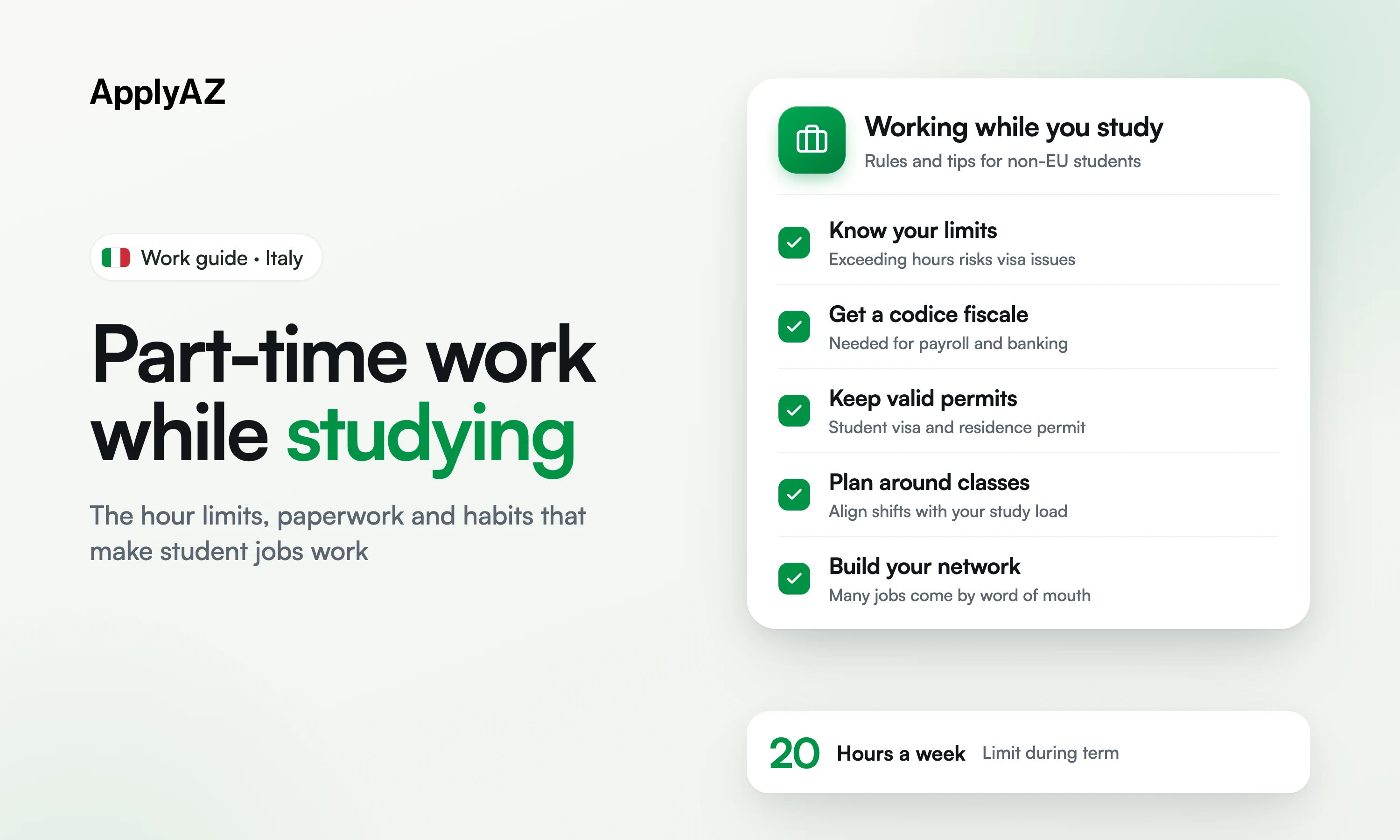
International students who hold a valid Italian student visa and residence permit are legally allowed to work while studying. Students from non-EU countries can work up to 20 hours per week during academic terms. This limit ensures that academic success remains the priority while still allowing meaningful work experience. Over holidays and breaks, students may sometimes increase their working hours, depending on local regulations and employer flexibility.
EU/EEA students do not face the same restrictions as non-EU students, but they still need a tax identification number (codice fiscale) to work legally. Obtaining a codice fiscale is straightforward and necessary for payroll, banking, and even signing rental contracts.
It is important to note that working illegally, exceeding hours, or taking on jobs without proper documentation can result in fines, visa issues, or future employment restrictions. Students should always verify their employment rights and obligations with their university's international office or local labour authorities.
Where Students Typically Work
Part-time work options vary by city and your Italian language proficiency. In larger cities, there are more opportunities in hospitality, retail, and creative sectors, while smaller towns may focus on tourism or local services. Common roles include:
- Hospitality and service sector jobs: Cafes, restaurants, hotels, and catering. These positions are often flexible and offer valuable communication and teamwork experience.
- Retail positions: Working in shops, boutiques, or supermarkets helps students learn customer service, sales techniques, and inventory management.
- On-campus roles: Universities sometimes hire students as library assistants, research aides, or administrative support, providing convenient hours and exposure to academic projects.
- Freelance and skill-based work: Tutoring, content creation, graphic design, web development, translation, and social media support are increasingly popular among international students. These opportunities often allow remote work and flexible schedules.
Networking is key. Many part-time positions are found through word-of-mouth, university career services, or student associations. Students who proactively attend job fairs, workshops, and professional networking events increase their chances of landing meaningful work.
.jpeg)
Benefits Beyond the Pay Cheque
Working while studying in Italy provides benefits that go far beyond finances. Students develop time management skills, learn to navigate workplace dynamics, and gain confidence in professional settings. Exposure to Italian culture and professional norms enhances intercultural competence, a skill highly valued by employers worldwide.
Moreover, part-time work often leads to internships or full-time opportunities after graduation. Employers value candidates who have shown initiative, reliability, and adaptability while balancing academics and work commitments.
Tips for a Successful Student Work Experience
- Plan your schedule: Align work hours with academic commitments to avoid overloading yourself.
- Know your rights: Understand your visa limitations, contract details, and local labour laws.
- Build your network: Connect with colleagues, professors, and local professionals for mentorship and guidance.
- Enhance language skills: Even basic Italian improves employability and workplace integration.
- Track your experience: Keep a record of skills gained, projects completed, and achievements for future resumes.

Conclusion
Working part-time in Italy can be a valuable extension of the study experience rather than a distraction from it. When approached with awareness and planning, student employment supports financial independence, professional growth, and cultural integration. Italy may not offer fast or unlimited opportunities, but it does reward consistency, adaptability, and long-term thinking. For international students who balance their academic goals with practical experience, part-time work becomes a meaningful step toward building a sustainable future during and after their studies.
See if a public university in Italy is realistic for you