
Contents
Emphasis on Independent Learning
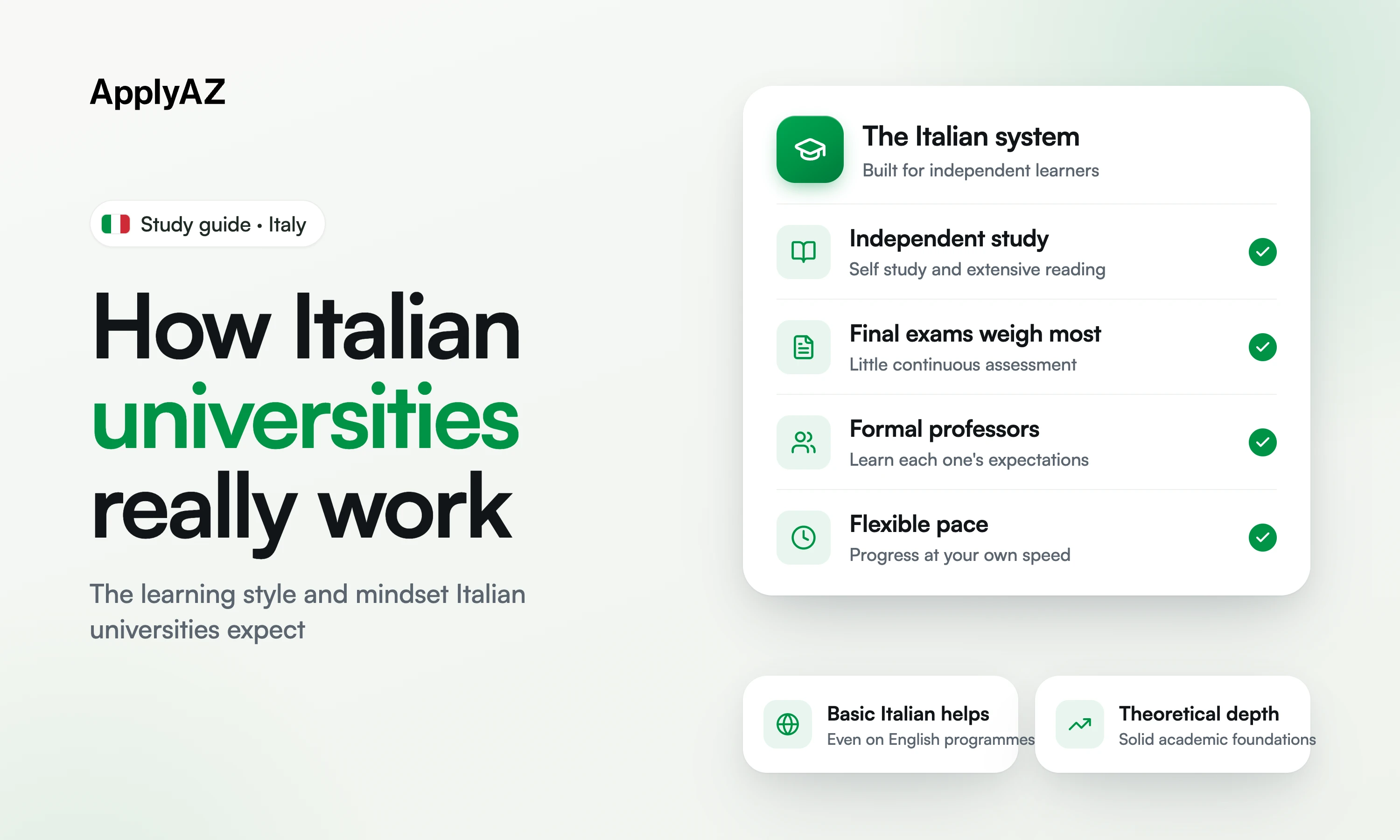
One of the most defining characteristics of Italian higher education is its emphasis on independent learning. Courses are typically professor centred, with lectures focused on theoretical frameworks rather than continuous assessment. Students are expected to take full responsibility for mastering course material through self study, extensive reading, and personal preparation. Continuous assignments, quizzes, and class participation often play a limited role compared to final examinations.
Challenging Assessment Methods
Assessment methods can be challenging for students unfamiliar with them. Many programmes rely heavily on oral exams, either fully oral or combined with written components. These exams test not only subject knowledge but also the student's ability to articulate concepts clearly, think critically, and respond under pressure. Grading follows a 30 point scale, where achieving high marks requires strong conceptual understanding rather than memorisation alone.

Formal but Supportive Academic Relationships
The academic relationship between students and professors is formal but not distant. Professors hold significant authority in course design, exam structure, and evaluation criteria. At the same time, students are expected to demonstrate intellectual maturity, autonomy, and respect for academic rigour. Success often depends on understanding each professor's expectations and adapting study strategies accordingly.
Flexible Academic Structure
Another key feature of the Italian system is its relatively flexible academic structure. While this allows students to progress at their own pace, it can also lead to extended study periods for those who struggle with exam formats or time management. This flexibility rewards disciplined and self motivated students, but it can be demanding for those who rely on structured guidance.

Adapting to Italian Academic Culture
For international students, adaptation is a critical factor. Language, academic conventions, and administrative procedures can initially feel overwhelming. Even in English taught programmes, exposure to Italian academic culture and basic language skills significantly improves both academic performance and daily interactions within the university environment.
Maximising Your University Experience in Italy
Overall, university education in Italy offers solid academic foundations, particularly for students who value theoretical depth and independent learning. However, it is not a system designed for passive participation. Students who approach Italian universities with realistic expectations, strong self discipline, and proactive engagement are far more likely to succeed academically and benefit fully from the experience.
See if a public university in Italy is realistic for you