Contents
Studying in One of the World's Most Unusual Cities
Venice offers a distinctive place to study, with its waterways, history and cultural life. Daily travel and housing need careful planning. This guide explains the universities, student life and practical trade-offs to consider before choosing Venice.
Academic Landscape: Universities and Fields of Study in Venice
Venice is home to respected institutions such as Ca' Foscari University of Venice and IUAV University of Venice. The city is particularly strong in economics, international trade, languages, humanities, environmental sciences, architecture, urban planning, and arts.
Venice attracts students interested in globally oriented, culturally rich, and research driven academic paths rather than purely technical or industry focused programmes.
Who Is Venice Best Suited For? Student Personality Matters
Venice is ideal for students who are independent, adaptable, and intellectually curious. It suits those who enjoy solitude, reflection, and cultural depth more than fast paced city life.
Students who thrive in Venice often appreciate art, history, sustainability, and slower rhythms. It may be less suitable for students who seek constant excitement, nightlife, or large scale student crowds.
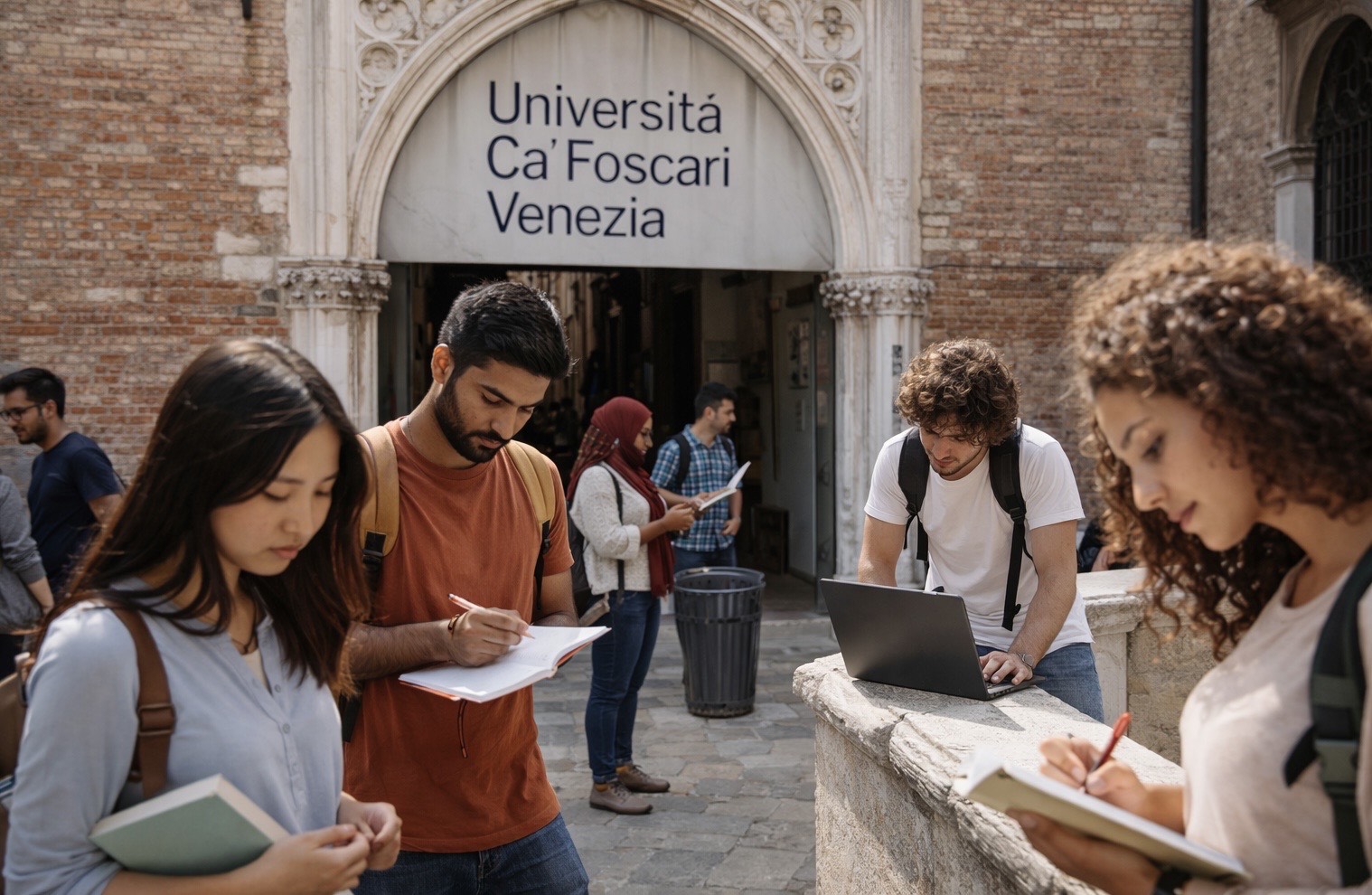
Daily Life in Venice: What Living on Water Really Means
Daily life in Venice requires adjustment. There are no cars, buses, or traditional streets. Movement happens on foot or by boat. Grocery shopping, commuting to university, and socialising all involve navigating bridges and canals.
This creates a calm, almost meditative lifestyle, but it can also be physically demanding and time consuming for some students.
Cost of Living: One of Italy's More Expensive Student Cities
Venice is generally more expensive than many other Italian student cities. Rent, groceries, and transportation can be costly, especially in central areas. Students who choose Venice often need careful financial planning or external support such as scholarships.
Budget conscious students may find cities like Bologna or Padua more affordable alternatives.
Housing Challenges: Finding Student Accommodation in Venice
Housing in Venice can be competitive and limited. Many students live on the mainland in Mestre and commute daily. While this reduces costs, it changes the overall experience of living in Venice.
Students who manage to live in the historic centre enjoy unmatched atmosphere, but availability is limited and planning ahead is essential.

Language Environment: Italian Immersion with International Exposure
Venice offers strong opportunities for Italian language immersion. While many academic programmes are offered in English, daily life requires basic Italian skills.
This makes Venice an excellent choice for students who want to truly integrate linguistically and culturally, rather than remain in an international bubble.
Social Life and Student Community: Quiet but Meaningful
Venice has a smaller and more fragmented student community compared to larger university cities. Social life is quieter, more personal, and often centred around university events, cultural activities, or small gatherings.
Students who value deep connections over large social scenes tend to feel more fulfilled here.
Cultural and Artistic Environment: Learning Beyond the Classroom
Venice functions as a living museum. Students are constantly surrounded by architecture, exhibitions, historical archives, and global cultural events such as the Venice Biennale. For students in arts, humanities, architecture, or cultural studies, the city itself becomes part of their education.

Transportation and Accessibility: Living Without Cars
Public transportation in Venice relies on boats and trains. While the system is reliable, it is not always fast or inexpensive. Students must plan their schedules carefully.
However, Venice's train connections make travelling to other Italian cities relatively easy, especially for academic or personal trips.
Career and Internship Opportunities: Limited but Specialised
Venice is not a major corporate or industrial hub. Career opportunities are more niche, often connected to academia, culture, tourism, sustainability, and international organisations.
Students aiming for corporate careers may need to look beyond Venice after graduation, while those interested in research or cultural fields can benefit greatly.
Advantages of Studying in Venice: What Makes It Special
Venice offers an unmatched sense of place. The calm environment, cultural depth, and academic focus create space for personal growth and intellectual development. Students often describe their time in Venice as transformative, especially in terms of perspective, creativity, and independence.
Disadvantages and Challenges: What to Consider Carefully
Venice can feel isolating, expensive, and logistically complex. Weather related flooding, limited housing, and fewer job opportunities are real challenges. Students who are not prepared for these realities may struggle. Venice rewards patience and resilience, not impulsive decision making.

Conclusion: Is Venice the Right City for Your Academic Journey?
Venice is best suited for thoughtful, culturally oriented students who value depth, reflection, and unique experiences over convenience and speed. It is an exceptional choice for those studying humanities, arts, architecture, languages, and international fields.
For students seeking a traditional student city with affordability and vibrant nightlife, Venice may not be ideal.
But for those ready to embrace its challenges, studying in Venice can become one of the most memorable chapters of their academic life.
See if a public university in Italy is realistic for you